
Oligopeptide-68 functions as a transforming growth factor-beta (TGF-β) receptor antagonist that reduces constitutive and facultative pigmentation by downregulating the microphthalmia-associated transcription factor (MITF), distinguishing its mechanism from direct enzymatic inhibitors like hydroquinone.
Rather than blocking tyrosinase activity at the catalytic site, this synthetic decapeptide intervenes upstream at the transcriptional level to suppress the genetic instructions for melanin synthesis, offering a non-cytotoxic alternative for treating oligopeptide 68 melasma indications where long-term safety is a primary formulation constraint.
This upstream intervention addresses the chronic, relapsing nature of pigmentary disorders without inducing the ochronosis or cellular toxicity frequently associated with gold-standard phenolic agents. The molecular basis for this activity is documented in Western blot analyses demonstrating that TGF-β signaling diminishes MITF promoter activity, leading to measurable decreases in tyrosinase, TRP-1, and TRP-2 protein expression (PubMed).
While traditional depigmenting agents target enzymatic activity, oligopeptide-68 mimics endogenous signaling to reduce the population of fully functional melanocytes producing pigment. This distinction matters for formulators navigating U.S. and Pacific regulatory frameworks, where claims dependent on structural modification of gene expression occupy a different compliance category than pharmacological enzyme inhibition.
Transcriptional Suppression Versus Enzymatic Inhibition
The biological identity of oligopeptide-68 is defined by its ten-amino-acid sequence (Arg-Asp-Gly-Gln-Ile-Leu-Ser-Thr-Trp-Tyr) and its specific antagonism of TGF-β receptors (Sincereskincare). This biomimetic structure allows the peptide to engage signaling pathways that regulate melanocyte differentiation and survival, rather than merely occupying the active site of a metabolic enzyme.
When TGF-β1 binds to its receptor on human melanocytes, it triggers the phosphorylation of Smad2, a downstream mediator that subsequently represses MITF transcription.
Oligopeptide-68 exploits this natural negative feedback loop to achieve depigmentation through physiological mimicry rather than chemical blockade. Western blot data provides the essential verification for this mechanism, confirming that TGF-β1 stimulation leads to time-dependent reductions in MITF protein levels with corresponding declines in tyrosinase and TRP-2 abundance. This cascade is critical because MITF serves as the master regulator for the entire melanogenic apparatus.
Suppressing MITF does not just pause melanin production; it reduces the expression of multiple downstream enzymes simultaneously.
Direct tyrosinase inhibitors, by contrast, leave the transcriptional machinery intact and vulnerable to rebound upregulation when treatment ceases.
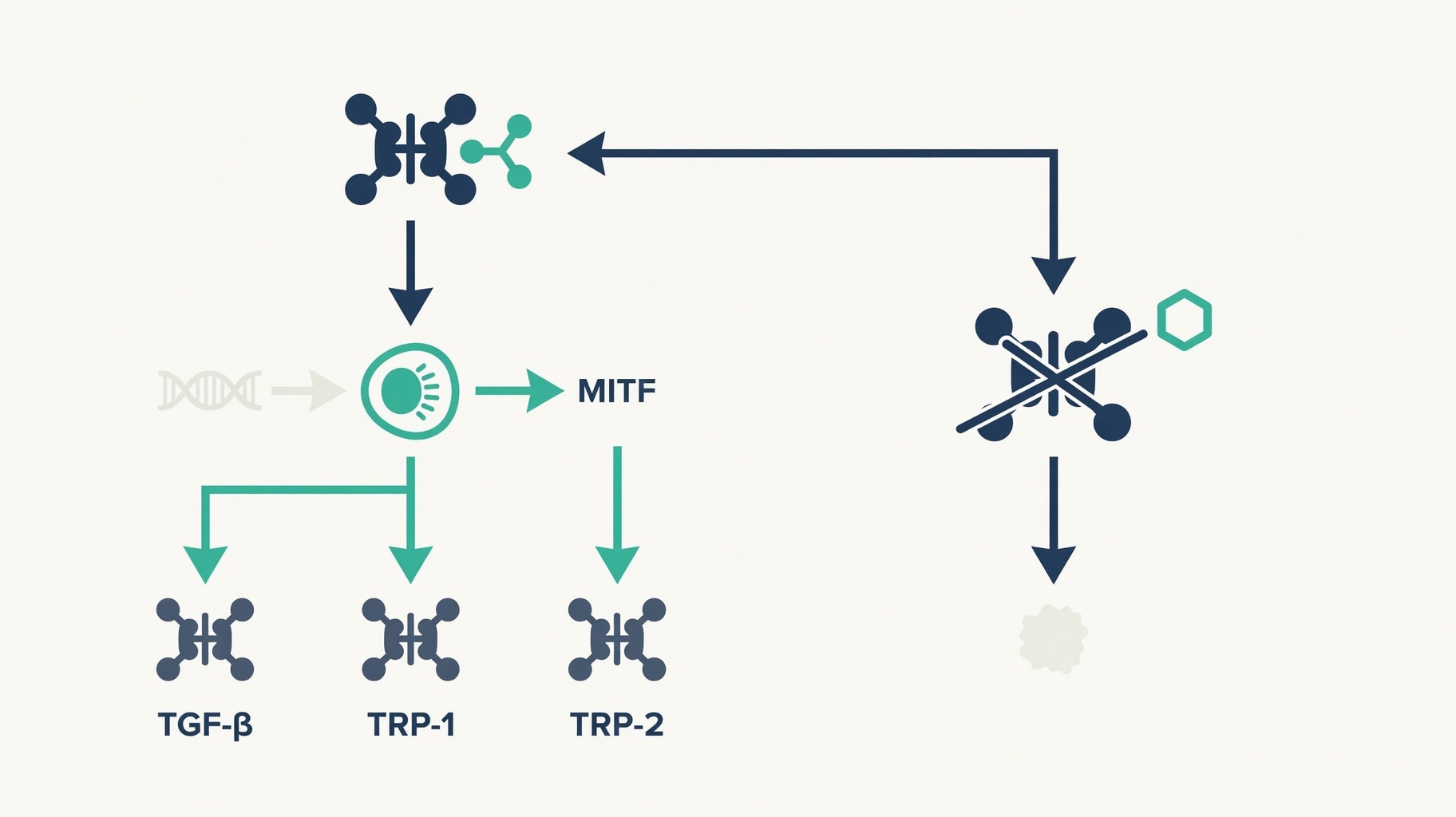
Figure 1: Mechanism of oligopeptide-68 TGF-β antagonism suppressing MITF and melanogenic enzymes versus traditional tyrosinase inhibitors.
This upstream targeting also differentiates oligopeptide-68 from other signaling peptides in the brightening category. While nonapeptide 1 skin brightening mechanisms rely on antagonizing the melanocortin-1 receptor (MC1R) to block α-MSH binding, oligopeptide-68 operates through the TGF-β/Smad axis to alter the cell’s internal transcriptional program. These pathways are not redundant.
MC1R antagonism prevents the initial activation signal triggered by UV exposure or inflammation, whereas TGF-β biomimetic signaling actively represses the genetic machinery required to sustain pigment production once activated.
Formulators increasingly view these targets as complementary rather than competitive, allowing for multi-pathway suppression strategies that address both the initiation and maintenance phases of hyperpigmentation. The precision of this mechanism carries regulatory weight. In jurisdictions where cosmetic claims must be substantiated by structural or functional evidence rather than drug-like efficacy data, demonstrating TGF-β receptor engagement provides a mechanistic anchor distinct from therapeutic claims.
The peptide’s action is framed as modulating the skin’s natural appearance through biomimetic signaling, a categorization that depends entirely on the availability of molecular validation such as phospho-Smad2 and MITF densitometry. Without these datasets, the ingredient risks being classified as an unapproved new drug based on its implied pharmacological intent.
Clinical Benchmarks Against Hydroquinone Standards
Molecular mechanism alone does not establish formulation utility; controlled clinical trials provide the comparative efficacy data necessary to position oligopeptide-68 against established depigmenting standards. A 12-week double-blind randomized controlled trial involving 40 female participants demonstrated statistically significant improvement in melasma severity at both weeks 6 and 12, with no severe adverse reactions reported, as summarized in peptide efficacy reviews.
The absence of cytotoxicity is a defining safety differentiator, as hydroquinone’s efficacy is inextricably linked to its potential for melanocyte destruction and subsequent rebound hyperpigmentation. More direct comparative evidence emerges from research evaluating combination formulations.
A study by Pratchyapurit found that combined use of diacetyl boldine and the TGF-β1 biomimetic oligopeptide-68 provided effective and convenient treatment for facial melasma, with outcomes rated as moderate to significant whitening in nearly 79% of subjects (Frontiers).
These results were achieved with good skin tolerance, contrasting sharply with the irritation and erythema frequently observed in hydroquinone arms of similar trials. The 79% response rate suggests clinical viability for patients who cannot tolerate phenolic agents or who require maintenance therapy after completing a hydroquinone cycle.
The multifactorial etiology of melasma reinforces the rationale for transcriptional targeting. Melasma is now understood as a chronic relapsing disorder involving vascular, inflammatory, and hormonal components beyond simple melanocyte overactivity (Practical Dermatology). Estrogen and progesterone upregulate MITF expression through genomic and non-genomic pathways, creating a persistent drive toward pigmentation that enzymatic inhibitors alone may fail to suppress.
By targeting MITF directly, oligopeptide-68 addresses the convergence point of these hormonal and environmental triggers.
This positions the peptide as a logical component in combination regimens that also include anti-inflammatory agents or vascular modulators like tranexamic acid. However, clinical evidence has limits that formulators must acknowledge. The 40-subject RCT and the Pratchyapurit study represent specific formulations and patient populations. Extrapolating these results to all melasma phenotypes, particularly those with significant dermal or vascular components, requires caution.
No supplied records verify that microencapsulation or specific delivery systems enhance oligopeptide-68 bioavailability in vivo, despite frequent marketing claims to this effect. Regulatory dossiers should rely strictly on the published human trial data and molecular characterization rather than theoretical delivery advantages. The evidence supports oligopeptide-68 as a clinically validated transcriptional modulator, but it does not support universal claims of superiority across all hyperpigmentation presentations or formulation architectures.
Regulatory Positioning in Cross-Border Supply Chains
The classification of oligopeptide-68 diverges significantly between U.S. and Pacific regulatory frameworks, creating compliance friction for brands operating in both markets. In the United States, the ingredient’s permissibility as a cosmetic depends on maintaining claims within structure/function boundaries. Describing the peptide as a TGF-β biomimetic that supports skin tone uniformity through natural signaling pathways aligns with cosmetic regulations, provided the marketing does not imply treatment of a disease.
The moment claims reference melasma specifically or promise therapeutic outcomes comparable to prescription drugs, the product risks FDA enforcement action as an unapproved new drug. The molecular evidence of MITF suppression is scientifically robust but legally sensitive; it proves mechanism without necessarily granting regulatory clearance for disease-treatment claims.
Pacific markets, including Taiwan, Japan, and South Korea, often operate under quasi-drug or functional cosmetic categories that explicitly permit whitening claims when supported by approved active ingredient monographs.
In these jurisdictions, oligopeptide-68 may qualify for functional cosmetic registration if the manufacturer can demonstrate TGF-β biomimetic activity and clinical efficacy through standardized testing protocols. The Western blot data showing MITF and tyrosinase downregulation serves as primary substantiation in these filings (Nbinno). This creates a paradox where the same molecular dataset supports a functional cosmetic claim in Taipei while potentially triggering a warning letter in Washington.
Supply chain decisions must account for this divergence. Manufacturers sourcing oligopeptide-68 for global distribution need certificates of analysis and technical dossiers that satisfy both regulatory paradigms simultaneously. The amino acid sequence must be identical, and the TGF-β receptor antagonism must be verifiable through standardized assays. Any variation in synthesis, purity, or biological activity across batches undermines both the U.S. structure/function rationale and the Pacific functional cosmetic registration.
Cross-border trade in this ingredient therefore depends less on marketing narratives and more on rigorous analytical chemistry and reproducible bioassay validation. The regulatory trajectory for biomimetic peptides remains unsettled. As agencies increasingly scrutinize the boundary between cosmetic signaling modulation and pharmacological receptor targeting, the evidentiary bar for oligopeptide-68 is likely to rise.
Brands that invest in publishing their own clinical and molecular data, rather than relying solely on supplier-provided studies, will be better positioned to defend their claims during regulatory review. The current evidence base establishes oligopeptide-68 as a mechanistically distinct and clinically supported alternative to hydroquinone, but its long-term market access depends on navigating the narrowing gap between cosmetic science and drug regulation.
Pending agency guidance on biomimetic peptide classification will determine whether this ingredient remains a viable cosmetic option or transitions into a regulated therapeutic category.
Further Clinical & Regulatory Context
For deeper analysis and cross-referenced evidence, see: - Related Clinical & Pharmacological Analysis: Decapeptide-12 Kinetics Define Regulatory Safety Margin Over Hydroquinone - Related Clinical & Pharmacological Analysis: Cosmetic Peptides Pharmacology: Receptor Mechanisms vs. Clinical Evidence Limits - Related Clinical & Pharmacological Analysis: Acetyl Hexapeptide-8 Safety Ceiling and SNARE Inhibition Mechanics Define Cosmetic Utility