
Cosmetic peptides pharmacology is defined by specific receptor interactions and extracellular matrix modulation, but the translation of these mechanisms into verified clinical outcomes is strictly limited by transdermal penetration thresholds and industry-sponsored trial designs.
Signal peptides such as palmitoyl pentapeptide-4 function as matrikine analogs that bind fibroblast receptors to stimulate extracellular matrix synthesis, yet their clinical validation relies primarily on manufacturer-funded split-face trials rather than independent regulatory drug approval pathways, according to a guide on Matrixyl peptides.
Neurotransmitter-inhibiting peptides modulate the SNARE complex to reduce dynamic wrinkles, but they do not replicate the pharmacological potency or duration of botulinum toxin injections approved as drugs.
The distinction matters for regulatory compliance and technical procurement. Under U.S. Food and Drug Administration regulations, these molecules remain cosmetic ingredients despite their bioactive signaling, creating a persistent evidentiary gap between proposed mechanism and verified therapeutic outcome.
A comprehensive review of anti-aging cosmeceuticals published in Cosmetics noted that while bioactive peptides offer multifunctional effects on extracellular matrix remodeling, supportive clinical evidence is frequently modest, with trials often lasting only eight to sixteen weeks and enrolling fewer than 150 participants as reported in MDPI. Technical buyers and formulators must handle this disparity between robust in vitro gene expression data and the constrained reality of human efficacy substantiation.
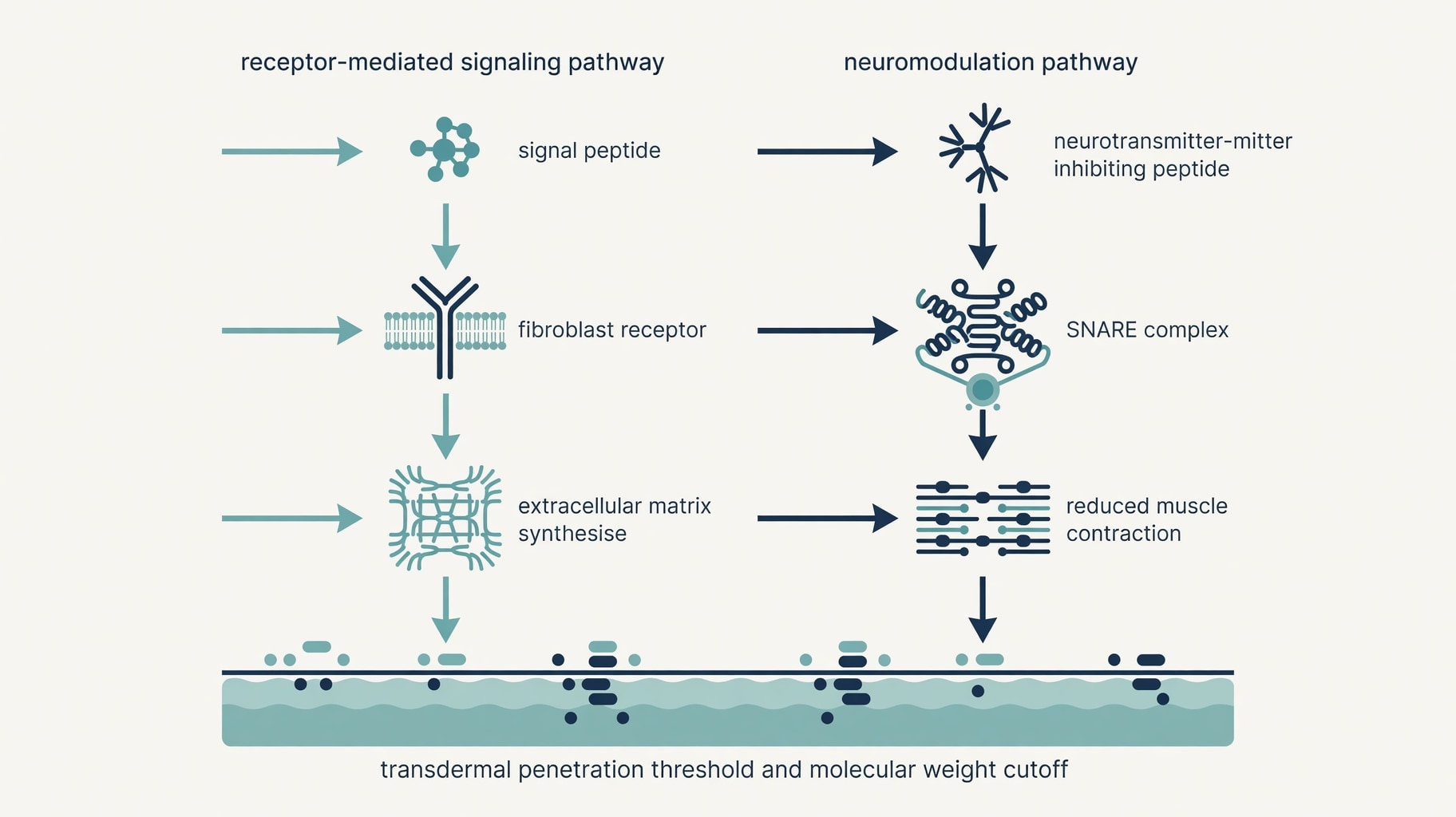
Figure 1: Receptor signaling pathways of cosmetic peptides contrasted against barriers to clinical validation and regulatory classification.
Receptor Mechanisms and Matrikine Signaling
The pharmacological classification of topical peptides rests on three distinct functional categories: signal peptides, neurotransmitter-inhibiting peptides, and carrier peptides. Each category operates through a specific molecular target, yet the quality of clinical substantiation varies significantly across these classes. Signal peptides represent the most commercially prevalent category. These short-chain amino acid sequences, typically comprising three to ten amino acids, are designed to mimic endogenous matrikines.
Matrikines are bioactive fragments released during the proteolytic breakdown of extracellular matrix proteins.
A 2024 review in Pharmacology and Therapeutics described how synthetic matrikine-analog peptides engage fibroblast receptors to signal increased production of collagen, elastin, and hyaluronic acid without triggering the inflammatory cascade associated with acute wound injury, according to Superpower’s technical guide.
Palmitoyl pentapeptide-4 serves as the reference standard for this class. Robinson and colleagues documented measurable improvements in wrinkle depth and skin roughness in a split-face randomized controlled trial over twelve weeks. Separate research by Bauza, Oberto, Berghi, and Dal Farra in 2004 demonstrated a significant reduction in wrinkle surface area with a KTTKS-derived peptide, as cited in industry technical literature. However, these studies were conducted by or on behalf of ingredient manufacturers.
Independent, head-to-head comparisons against pharmaceutical standards like tretinoin remain largely absent from the published record. The mechanism is biologically plausible and reproducible in cell culture, but the clinical magnitude of effect in intact human skin is bounded by formulation variables and trial sponsorship.
Neurotransmitter-inhibiting peptides operate through a fundamentally different pharmacological pathway. Acetyl hexapeptide-3, widely known as Argireline, targets the soluble N-ethylmaleimide-sensitive factor attachment protein receptor (SNARE) complex. In physiological neuromuscular transmission, acetylcholine is released via calcium-mediated exocytosis requiring SNARE complex assembly. This peptide competitively inhibits that assembly, reducing neurotransmitter release and subsequent muscle contraction. A randomized, placebo-controlled study in Chinese subjects confirmed topical effectiveness on expression wrinkles, as indexed in Frontiers in Medicine.
Despite this confirmed mechanism, the regulatory and pharmacological distance from botulinum toxin is substantial. Botulinum toxin is an FDA-approved drug that irreversibly cleaves SNARE proteins, producing profound and sustained paralysis. Acetyl hexapeptide-3 produces a reversible, partial modulation.
A 2023 double-blind randomized trial comparing acetyl hexapeptide-3 cream, palmitoyl pentapeptide-4 cream, and placebo in 21 Indonesian women found measurable effects after eight weeks, yet the sample size was small and the duration short, according to Plastic Surgery Key.
Claims describing these ingredients as "Botox-like" are marketing shorthand, not pharmacological equivalents. The concentration used in commercial formulations also frequently falls below the levels validated in controlled studies, creating a gap between published efficacy and consumer product performance, as noted by PeptideDeck.
Carrier peptides constitute the third pharmacological class. Glycyl-L-histidyl-L-lysine-copper (GHK-Cu) is the primary representative. First isolated from human plasma in 1973, GHK-Cu facilitates copper delivery to enzymatic processes involved in extracellular matrix synthesis and wound healing. Serum concentrations of GHK naturally decline from approximately 200 ng/mL at age 20 to roughly 80 ng/mL by age 60, according to research translated by Evenskyn.
Gene expression analyses report that GHK modulates a broad array of human genes, an unusual breadth for a three-amino-acid molecule.
The clinical evidence for topical GHK-Cu, however, is narrower than its mechanistic literature suggests. Watson et al. (2009) published a double-blind randomized controlled trial in the British Journal of Dermatology demonstrating measurable improvements in fine wrinkles, mottled pigmentation, and roughness in photoaged skin.
Two frequently cited trials involving facial and eye creams were presented only as abstracts at the 2002 American Academy of Dermatology annual meeting and involved 71 and 41 women respectively, as detailed in clinical summaries.
Whether the molecular breadth observed in gene expression studies translates to clinical benefit on intact human skin depends entirely on delivery. Injectable or systemic GHK-Cu data cannot be extrapolated to topical cosmetic applications without explicit validation of transdermal penetration.
Transdermal Penetration Thresholds and Regulatory Status
The biophysical constraint governing all topical peptide pharmacology is the 500 Dalton rule. A foundational 2000 review by Bos and Meinardi in Experimental Dermatology established that molecules below 500 Daltons can passively diffuse through the stratum corneum, while molecules above this threshold face increasing exclusion. Essentially all topically effective drugs and common contact allergens sit below this cutoff.
Most cosmetically active peptides fall in the range of 500 to 1,500 Daltons, placing them at or above the penetration threshold, according to Superpower’s polypeptide guide. This is not a theoretical concern. It is the primary determinant of whether receptor binding occurs in vivo.
Formulation science attempts to overcome this barrier through liposomal encapsulation, nanocarriers, and chemical penetration enhancers. Nanotechnology-enabled formulations can enhance targeted delivery and improve stability, as described in ScienceDirect’s nanotechnology review. However, many products marketed as exosome formulations are conventional liposomal systems containing synthetic actives rather than true biological exosomes with validated extracellular vesicle structure.
The distinction between verified nanocarrier delivery and marketing terminology remains a significant variable in assessing whether a peptide product can achieve its stated pharmacological mechanism.
Without published penetration data specific to the finished formulation, receptor binding demonstrated in vitro remains a hypothesis rather than a verified clinical event.
Regulatory classification further constrains the evidence base. The FDA regulates topical cosmetic peptides as cosmetic ingredients, not drugs. This designation means manufacturers are not required to submit New Drug Applications demonstrating safety and efficacy through rigorous, independent clinical trials before market entry. Products with biologically active ingredients bridge the gap between pharmaceuticals and cosmetics, offering therapeutic benefits supported by scientific evidence while maintaining the aesthetic positioning of traditional skincare, according to MDPI.
However, this regulatory flexibility also means the evidence standard is lower. Structure-function claims are permitted, but disease-treatment claims trigger drug classification and enforcement risk.
The commercial consequence is an ingredient market where pharmacological plausibility often substitutes for pharmaceutical-grade validation. Oral collagen peptide trials showing improved skin elasticity and hydration cannot be cited as evidence for topical cosmetic peptide efficacy, as the route of administration, molecular weight, and metabolic processing are fundamentally different, as clarified in ScienceDirect’s aging intervention review.
Similarly, enzyme-inhibitory peptides that protect the extracellular matrix by blocking collagenase and elastase have primarily in vitro and preclinical evidence bases, with limited controlled clinical data in human subjects, according to Superpower.
For regulatory affairs professionals and technical buyers, the practical implication is that cosmetic peptides pharmacology must be evaluated on two separate tracks: mechanism and substantiation. The mechanism for signal, neurotransmitter-inhibiting, and carrier peptides is well-characterized in dermatological receptor literature and extracellular matrix biology. The substantiation for human efficacy in finished topical products is bounded by the 500 Dalton penetration rule, short-duration industry-sponsored trials, and the absence of independent comparative data against approved pharmaceutical agents.
Pending decisions on novel delivery systems or updated FDA guidance on cosmeceutical claims may shift this balance, but under current frameworks, the evidentiary gap between receptor binding and verified wrinkle reduction remains the defining feature of the category.
Further Clinical & Regulatory Context
For deeper analysis and cross-referenced evidence, see: - Related Clinical & Pharmacological Analysis: VGVAPG Signaling Mechanics: ERC Binding Kinetics and Fibroblast Chemotaxis - Related Clinical & Pharmacological Analysis: Acetyl Hexapeptide-8 Safety Ceiling and SNARE Inhibition Mechanics Define Cosmetic Utility