
Nonapeptide-1 acts as a competitive antagonist at the melanocortin-1 receptor with a measured binding affinity of 40 nM, preventing alpha-melanocyte-stimulating hormone from initiating the cAMP signaling cascade required for melanin synthesis, according to technical data from Cenexa Labs. This upstream intervention distinguishes nonapeptide 1 skin brightening mechanisms from traditional tyrosinase inhibitors that target pigment production after the signal has already been received.
The molecule occupies the receptor site without activating it, theoretically silencing the command to produce pigment before enzymatic processes begin.
The peptide inhibits alpha-MSH-induced cAMP accumulation with an IC50 of 2.5 nM in laboratory assays (Cenexalabs). This high potency in isolated systems suggests a precise pharmacological interaction rather than a generalized cellular effect. Yet the translation from nanomolar receptor binding to visible depigmentation in human subjects relies heavily on murine B16 melanoma cell models and supplier-generated technical sheets rather than independent, large-scale human clinical trials.
Formulation scientists must therefore distinguish between verified molecular kinetics and extrapolated cosmetic benefits when evaluating this ingredient for hyperpigmentation indications.
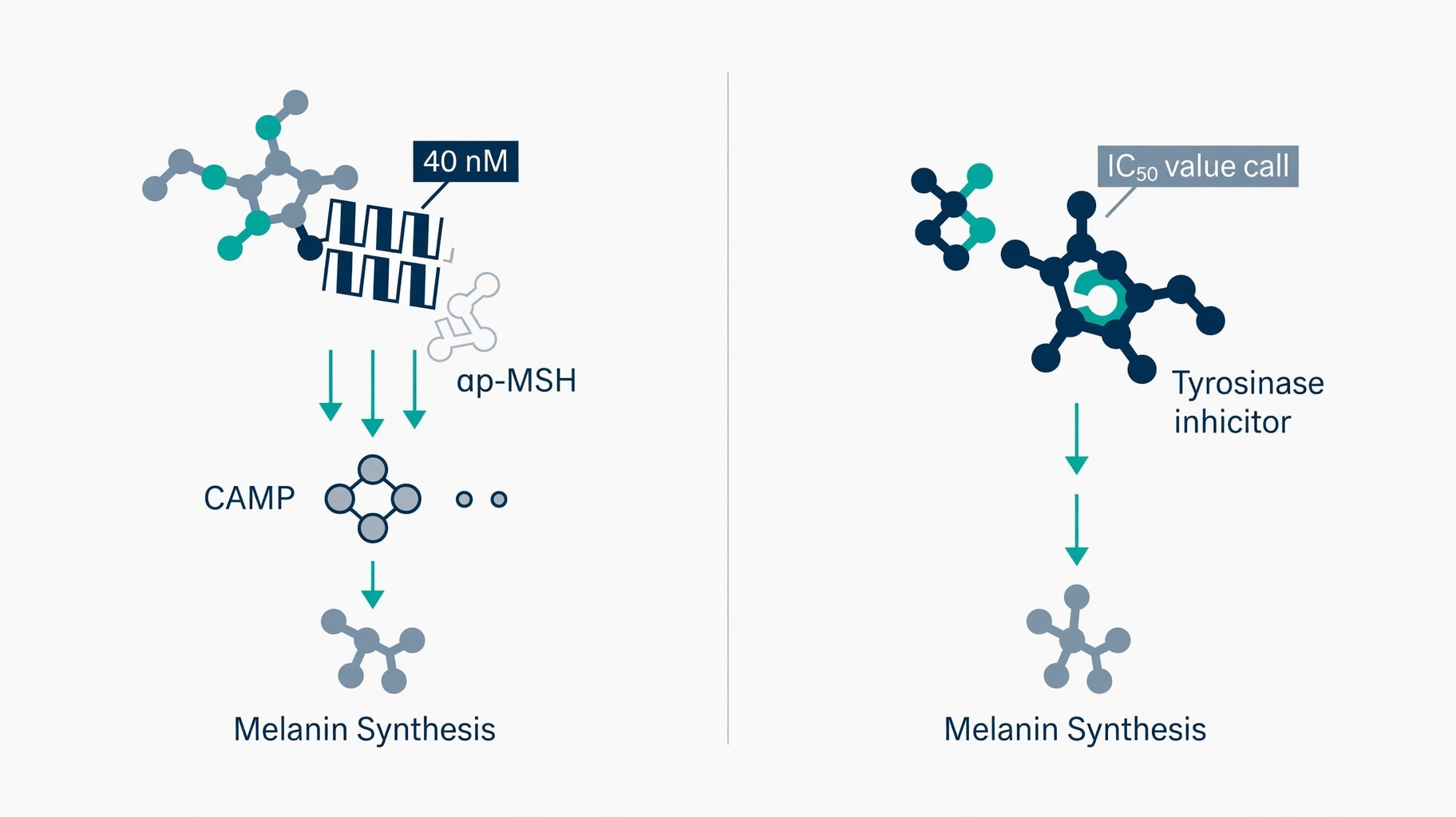
Figure 1: Nonapeptide-1 competitive antagonism at MC1R and inhibition of alpha-MSH-induced melanogenesis in B16 cell models.
MC1R Binding Kinetics and Signal Transduction
Nonapeptide-1 is a synthetic nine-amino-acid peptide designed specifically to mimic the binding domain of alpha-MSH while functioning as an antagonist. It does not activate the receptor. It blocks it. The compound competes directly with endogenous alpha-MSH for occupancy at the MC1R binding pocket on the melanocyte surface. When alpha-MSH binds to MC1R in normal physiology, it triggers a conformational change that activates G-proteins and stimulates adenylyl cyclase.
This enzyme converts ATP to cyclic AMP, the second messenger that drives the entire melanogenic program. Nonapeptide-1 prevents this activation step entirely.
The downstream consequences of this blockade are measurable in cell culture. Research summaries indicate that the peptide reduces the expression of microphthalmia-associated transcription factor, TRP1, and TRP2 proteins, according to coverage by Parlemag. MITF is the master transcriptional regulator of melanogenesis. Without sufficient MITF, the genes encoding tyrosinase and its related proteins are not transcribed efficiently. This creates a multi-point suppression of the pigment pathway. The cell receives no signal to upregulate melanin synthesis machinery.
Tyrosinase activity decreases as a secondary consequence of receptor antagonism, not because the enzyme itself is poisoned or inhibited directly.
This mechanism preserves melanocyte viability. Direct tyrosinase inhibitors can be cytotoxic at high concentrations or cause paradoxical ochronosis with chronic use. Nonapeptide-1 modulates the signal rather than damaging the effector. Technical documentation from PeptideInsight notes that melanocytes remain healthy and functional during treatment, retaining their capacity to resume normal pigment production when the antagonist is removed. This reversible modulation is a key differentiator from irreversible enzymatic inhibitors or cytotoxic agents like hydroquinone.
The safety profile in vitro reflects physiological regulation rather than cellular toxicity.
The specificity of binding matters for off-target effects. MC1R belongs to a family of melanocortin receptors with diverse physiological roles. Nonapeptide-1 demonstrates approximately ten-fold greater selectivity for MC1R compared to other melanocortin receptor subtypes, according to Cenexa Labs. This selectivity reduces the likelihood of interfering with other melanocortin-mediated processes. The D-Trp5 and Phe6 residues have been identified as essential for antagonistic properties in structure-activity studies referenced by Cloudcore Peptides. Altering these residues diminishes receptor affinity.
The molecule is not a generic peptide. It is a precision tool engineered for a single target.
B16 Melanoma Cell Models vs. Human Clinical Data
The primary efficacy data for Nonapeptide-1 derives from B16 murine melanoma cells. These are transformed cancer cell lines, not normal human melanocytes. They are the industry standard for initial melanogenesis screening because they produce pigment robustly and respond predictably to alpha-MSH stimulation. Studies using B16 cells show that Nonapeptide-1 reduces melanin synthesis in a dose-dependent manner without cytotoxicity, as reported by Cenexa Labs.
Supplier literature from NBInno cites an approximate 33% reduction in melanin production under specific assay conditions.
These numbers are reproducible in the lab. They are not direct predictions of human performance.
B16 melanoma cells have altered metabolism and signaling compared to primary human melanocytes. They proliferate rapidly and may express receptors at different densities. Results in this model system confirm biological activity. They do not confirm clinical efficacy. The gap between cell culture and human skin is substantial. Topical penetration, formulation stability, and individual genetic variation in MC1R expression all influence real-world outcomes. None of these variables are captured in a petri dish.
Researchers must treat B16 data as proof of mechanism, not proof of product performance.
Some supplier materials reference improvements in Melasma Area and Severity Index scores and melanin index measurements (Cloudcorepeptides). These references suggest human testing has occurred. However, critical details are absent from the public discovery record. Sample sizes, study designs, control groups, and publication status remain unverified in the available technical sheets.
Without access to full clinical study reports or peer-reviewed publications, these MASI score references cannot be treated as definitive evidence.
They are preliminary indicators that warrant further investigation, not regulatory-grade substantiation.
The distinction between preliminary and validated evidence carries commercial consequences. Cosmetic claims in the United States and European Union require adequate substantiation. Citing in vitro binding constants or B16 cell data to support "skin brightening" or "hyperpigmentation correction" claims may not satisfy regulatory expectations if human data is absent or unpublished. Formulators should verify the evidentiary basis for any efficacy claims before incorporating Nonapeptide-1 into finished products. The molecular mechanism is sound.
The clinical translation requires documentation that currently sits outside the publicly accessible record.
Upstream Antagonism vs. Downstream Enzyme Inhibition
Nonapeptide-1 occupies a distinct position in the formulation landscape of pigment-modulating agents. Most established depigmenting ingredients work downstream. Kojic acid, arbutin, and vitamin C inhibit tyrosinase activity directly. They block the enzymatic conversion of tyrosine to melanin precursors after the melanocyte has already received the signal to produce pigment. Niacinamide works even later in the pathway. It inhibits melanosome transfer from melanocytes to surrounding keratinocytes without affecting melanin synthesis itself. These are all valid targets.
They are also fundamentally different from receptor-level antagonism.
Upstream intervention offers theoretical advantages. Blocking the signal before it reaches the transcriptional machinery prevents the entire melanogenic program from activating. The cell never upregulates tyrosinase, TRP1, or TRP2 in the first place. This may reduce the compensatory feedback loops that sometimes limit the efficacy of direct enzyme inhibitors. When tyrosinase is inhibited directly, the cell may respond by producing more enzyme or increasing precursor availability. Receptor antagonism removes the stimulus entirely.
The cell simply does not receive the instruction to make pigment. This represents a more fundamental interruption of the melanogenic cascade.
Comparative data remains limited. Head-to-head studies pitting Nonapeptide-1 against hydroquinone, tranexamic acid, or niacinamide in human subjects are not present in the supplied discovery records. Technical summaries from PeptideInsight characterize the evidence level for Nonapeptide-1 as preliminary, while noting moderate-to-strong randomized controlled trial support for tranexamic acid in melasma and niacinamide for general hyperpigmentation. This asymmetry matters for formulators making evidence-based ingredient selections. Nonapeptide-1 offers a novel mechanism with strong molecular validation.
Established alternatives offer decades of human clinical data.
The choice depends on whether the formulation strategy prioritizes mechanistic novelty or clinical certainty.
Post-inflammatory hyperpigmentation presents a specific opportunity for upstream antagonism. Inflammatory mediators can stimulate alpha-MSH release and MC1R activation in darker skin phototypes. Targeting this pathway directly may address the root signaling trigger for PIH rather than its downstream enzymatic expression. Analysis from Boldpurity highlights the relevance of the alpha-MSH/MC1R axis for Fitzpatrick III-V skin types where PIH is prevalent and persistent. The mechanistic rationale is compelling. Clinical validation in these specific populations remains pending.
Regulatory affairs specialists should note that Nonapeptide-1's receptor-level mechanism may influence classification decisions in certain jurisdictions. Ingredients that modulate physiological signaling pathways can attract scrutiny regarding drug versus cosmetic status. The distinction often hinges on intended use claims and the depth of pharmacological evidence. Maintaining precise language around "pigment modulation" and "receptor binding" rather than "melasma treatment" or "skin lightening" helps preserve cosmetic positioning. The science supports upstream antagonism.
The regulatory framework demands careful articulation of that science within appropriate boundaries.
Pending verification of human clinical study designs and sample sizes referenced in supplier materials, Nonapeptide-1 remains a technically validated molecular tool awaiting comprehensive translational evidence. Formulation scientists have sufficient binding kinetics and B16 cell data to justify inclusion in research and development pipelines. Commercial claims should be calibrated to the current evidentiary baseline until independent human trials enter the published record.
Further Clinical & Regulatory Context
For deeper analysis and cross-referenced evidence, see: - Related Clinical & Pharmacological Analysis: Oligopeptide-68 Suppresses MITF Transcription to Treat Melasma Safely - Related Clinical & Pharmacological Analysis: Decapeptide-12 Kinetics Define Regulatory Safety Margin Over Hydroquinone