
Neuropeptide Y and Stress Resilience: Separating Clinical Evidence from Wellness Claims
Clinical trials investigating intranasal Neuropeptide Y for post-traumatic stress disorder focus exclusively on safety parameters and stress-resilience biomarkers, not direct cortisol suppression or over-the-counter anxiety relief. The distinction matters because the biological mechanism of neuropeptide Y stress resilience operates through specific limbic circuits rather than systemic endocrine blockade. Social media content creators often present the peptide as a biohack for adrenal fatigue or cortisol control, but these claims diverge significantly from the regulatory and scientific record.
Peer-reviewed literature establishes Neuropeptide Y as a modulator of stress resilience via distinct Y1 and Y2 receptor pathways, according to a translational update published in PMC (PMC8375392). Preclinical data demonstrates that Y1 activation in the amygdala produces anxiolytic effects and buffers hypothalamic-pituitary-adrenal axis dysregulation, while Y2 receptors function primarily as inhibitory autoreceptors. Human data links higher baseline Neuropeptide Y expression to greater stress resilience, yet significant translational gaps persist between rodent intranasal efficacy and validated human therapeutic protocols. No FDA-approved Neuropeptide Y product currently exists for stress, anxiety, or cortisol management. Consumers encountering this compound through wellness influencers or direct-to-consumer peptide vendors are engaging with a research chemical that lacks established clinical dosing, safety profiles, or therapeutic indications for mental health.
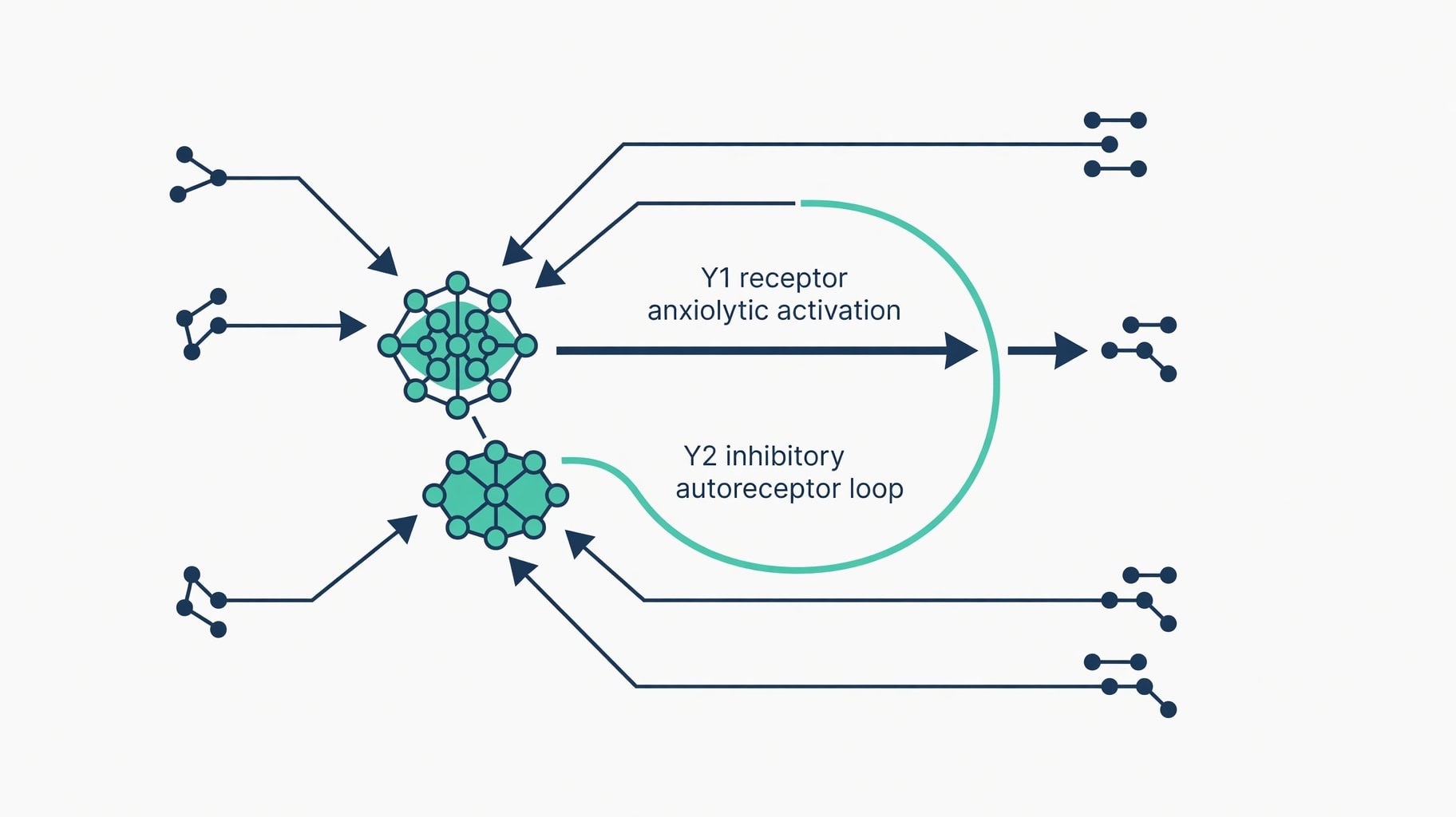
Figure 1: Neuropeptide Y receptor pathways in stress resilience and HPA axis modulation.
Y1 Versus Y2 Receptors and Opposing Stress Signals
The biological activity of Neuropeptide Y depends entirely on which receptor subtype it engages, a nuance frequently lost in consumer educational materials that treat the peptide as a monolithic stress antagonist. Research indicates that anxiolytic effects are mediated primarily through Y1 receptors, particularly within the basolateral amygdala, as detailed in Loti Labs’ research resources (Loti Labs). Activation of Y1 receptors in this region reduces fear-potentiated startle responses and anxiety-like behavior in rodent models. The effect is localized and circuit-specific, requiring precise engagement with limbic structures that regulate emotional processing. This specificity stands in contrast to marketing narratives that suggest systemic administration produces uniform calming effects throughout the body.
Y2 receptors perform a fundamentally different function that complicates any simple supplementation logic. They operate as presynaptic autoreceptors that modulate Neuropeptide Y release itself rather than transmitting anxiolytic signals downstream. In many contexts, Y2 receptor activation is actually anxiogenic, producing anxiety-promoting effects that directly oppose the Y1 pathway. This dichotomy explains why systemic administration of Neuropeptide Y does not guarantee a calming effect and may, under certain conditions, exacerbate the very symptoms users seek to alleviate. The net behavioral outcome depends on the relative density and sensitivity of Y1 versus Y2 receptors in specific brain regions at the moment of exposure, variables that cannot be measured or controlled outside of laboratory settings.
Genetic association studies suggest that individuals with higher baseline Neuropeptide Y expression often display greater stress resilience, reinforcing the protective role of endogenous Y1-mediated signaling. However, these observations describe natural biological variation rather than the effects of exogenous supplementation. The receptors involved are G-protein-coupled and densely expressed in neuroanatomical substrates including the amygdala, hypothalamus, and prefrontal cortex. Targeting these pathways therapeutically requires precise spatial and temporal control that current consumer products cannot provide. The complexity extends to Y5 receptors, which may also enhance stress resilience and emotional regulation. Emerging evidence attributes Neuropeptide Y a role in stress resilience through multiple overlapping systems, according to a review indexed in PubMed (PubMed 26441327). Yet the Y1 pathway remains the primary target for anxiolytic research, and understanding this receptor-level nuance is essential for evaluating any claim about the peptide’s psychological effects in human populations.
Wellness content circulating in bilingual health communities often omits this receptor-level complexity, presenting Neuropeptide Y as a singular adaptogen rather than a pleiotropic signaling molecule with opposing functional outputs. This framing ignores decades of neuropharmacological research demonstrating that Y1 and Y2 receptors mediate distinct, sometimes contradictory, physiological responses. The absence of selective receptor agonists in the consumer market means that exogenous Neuropeptide Y activates all available receptor subtypes simultaneously, producing unpredictable net effects that depend on individual neuroanatomy and baseline stress state. Researchers working with these compounds in controlled settings use selective agonists and antagonists to isolate specific pathways, a methodological precision unavailable to individual consumers.
HPA Axis Assays and Cortisol Misconceptions
Wellness narratives frequently position Neuropeptide Y as a direct cortisol reducer, but scientific assays tell a more complicated story that contradicts this simplified mechanism. Human acute stress studies show that Neuropeptide Y release is positively associated with cortisol and norepinephrine release during stress exposure, according to replication research published in PubMed (PubMed 12114005). The peptide rises alongside stress hormones rather than suppressing them in the acute phase. Greater levels of Neuropeptide Y release correlate with less psychological distress despite elevated cortisol, suggesting a buffering role that is independent of hormonal suppression. This finding directly challenges marketing claims that the peptide functions as a cortisol blocker or adrenal suppressant.
This distinction between buffering and blocking is critical for understanding the translational gap between preclinical models and human applications. Preclinical intranasal Neuropeptide Y administration can alter stress-triggered dysregulation of the hypothalamic-pituitary-adrenal axis and central noradrenergic activity in rats, as reported in psychoneuroendocrinology literature (PubMed 23376740). Yet other studies demonstrate that repeated administration directly into the basolateral amygdala produces selective stress-resilient behavioral responses without affecting hypothalamic-pituitary-adrenal axis activity or stress-induced hyperthermia. The resilience effect appears separable from endocrine modulation, indicating that psychological benefits may occur through neural circuits independent of systemic hormone levels. Consumer protocols often conflate correlation with causation, assuming that observing higher Neuropeptide Y levels in resilient individuals means that administering the peptide will replicate that resilience.
The hypothalamic-pituitary-adrenal axis operates as a three-tier feedback loop involving corticotropin-releasing hormone, adrenocorticotropic hormone, and cortisol. Restoring axis function requires addressing receptor sensitivity and feedback integrity rather than simply introducing exogenous peptides. Research-grade compounds are explicitly labeled for laboratory use only and lack licensing for clinical adrenal or cortisol management in any jurisdiction. The gap between verified neurobiology and marketing claims also appears in discussions of intranasal delivery. While intranasal administration bypasses the blood-brain barrier in animal models, human pharmacokinetics remain poorly characterized. Comparisons to intranasal oxytocin pharmacology reveal similar challenges in translating rodent dosing to human applications. Both peptides face bioavailability questions that social media protocols routinely ignore, and both lack validated human dosing regimens for mental health indications.
Consumer-facing content in both English and Spanish wellness ecosystems frequently borrows terminology from endocrinology without adhering to its methodological standards. Terms like "adrenal support," "cortisol balance," and "HPA axis restoration" appear in product descriptions and influencer testimonials without reference to the assays that define these states in clinical research. Hypothalamic-pituitary-adrenal axis function is measured through dynamic stimulation tests, salivary cortisol awakening responses, and dexamethasone suppression assays, none of which are referenced in consumer marketing. The absence of biochemical verification means that claimed benefits rest entirely on subjective reporting rather than objective physiological change. This evidentiary gap is particularly significant given that placebo effects in stress and anxiety interventions are well-documented and substantial.
Biomarker Data and the Translational Gap to Human Therapy
Human clinical data for Neuropeptide Y remains confined to early-phase safety and biomarker trials, with no Phase III efficacy data existing for post-traumatic stress disorder or generalized anxiety. Cerebrospinal fluid studies have reported Neuropeptide Y dysregulation in PTSD patients, and genetic studies link polymorphisms to stress coping capacity, according to translational reviews (PMC8375392). These findings establish the peptide as a biomarker of interest but do not validate it as a treatment. A systematic review and meta-analysis found that Neuropeptide Y levels may be altered in patients with major depressive disorder, PTSD, and chronic stress, per PubMed-indexed literature (PubMed 32048334). Alteration does not equal deficiency, and some patients show elevated levels as a compensatory response while others show depletion. The directionality varies across studies and populations, complicating any simple supplementation logic.
Clinical trials registered under NCT00748956 and NCT01533519 were designed to assess safety and dose escalation, not to prove therapeutic benefit for consumer use. These studies represent necessary preliminary steps in drug development but do not constitute evidence of efficacy. The translational gap is widest in the space between preclinical intranasal studies and commercial sprays. Single intranasal Neuropeptide Y infusion attenuated development of PTSD-like symptoms in rats exposed to traumatic stress, according to experimental findings (ScienceDirect). The timing was precise, administered before or shortly after stress exposure in controlled laboratory conditions. Consumer products lack this temporal specificity and are typically used chronically or reactively without the controlled exposure paradigms that defined preclinical success.
Supplier disclaimers consistently state that all peptides are supplied for research and laboratory use only, and none are licensed for clinical stress or anxiety management. This regulatory reality stands in direct tension with influencer protocols that prescribe specific dosing schedules for mental health outcomes. The absence of FDA approval means that purity, concentration, and bioavailability of commercial products are unverified. Researchers working with these compounds operate under institutional oversight and animal welfare regulations that do not apply to individual consumers. Progress depends on rigorous clinical trials that respect the complexity of Y1 and Y2 receptor signaling rather than premature commercialization.
The circulation of unverified Neuropeptide Y protocols across bilingual wellness communities reflects broader patterns in how health information moves between clinical research and consumer markets. Scientific findings are extracted from their methodological context, simplified for accessibility, and repurposed for commercial engagement. This process is not unique to Neuropeptide Y but is particularly consequential for compounds that act on central nervous system pathways regulating emotion and stress. The gap between what communities say and what evidence proves remains substantial, and bridging it requires sustained attention to receptor kinetics, assay validation, and clinical trial design rather than anecdotal testimonial. Until dose-escalation safety trials are completed and pharmacokinetic parameters for intranasal delivery are established in human subjects, Neuropeptide Y remains a research tool rather than a validated wellness intervention.
Further Clinical & Regulatory Context
For deeper analysis and cross-referenced evidence, see: - Related Clinical & Pharmacological Analysis: Nootropic Peptide Stacking Safety Depends on Washout Kinetics, Not Vendor Protocols - Related Clinical & Pharmacological Analysis: Neuropeptide CNS Therapeutics: Blood-Brain Barrier Kinetics and Clinical Biomarkers - Related Clinical & Pharmacological Analysis: Cholecystokinin Satiety Signaling Depends on Vagal Afferents, Not Willpower