
Cholecystokinin Satiety Signaling Depends on Vagal Afferents, Not Willpower
Intravenous infusion of cholecystokinin-8 (CCK-8) at physiological plasma levels significantly increases satiety and reduces meal size in human subjects, an effect blocked specifically by CCK-A receptor antagonists but unaffected by CCK-B antagonists. This pharmacological precision identifies the cholecystokinin CCK satiety mechanism as a hardwired neuro-gastrointestinal reflex originating in the gut, rather than a psychological state or central anxiety response. While wellness marketing often frames appetite suppression as a cognitive achievement or a vague benefit of "gut health," clinical records demonstrate that meal termination relies on a specific peripheral signaling pathway connecting intestinal I-cells to the brainstem via the vagus nerve.
This verified physiological reflex operates independently of conscious willpower or central nervous system modulation. Human infusion trials confirm that satiety occurs without significant psychological distress when plasma concentrations remain within physiological ranges, distinguishing true satiation from the nausea or panic associated with supraphysiological doses. The mechanism depends entirely on functional CCK-A receptors located on vagal afferent fibers, rendering oral supplements ineffective due to rapid enzymatic degradation in the gastrointestinal tract. Current ClinicalTrials.gov listings for auricular vagus stimulation continue to investigate methods for modulating this specific afferent activity in obesity, reinforcing that therapeutic targets must engage the vagal reflex arc directly rather than relying on systemic or cognitive interventions.
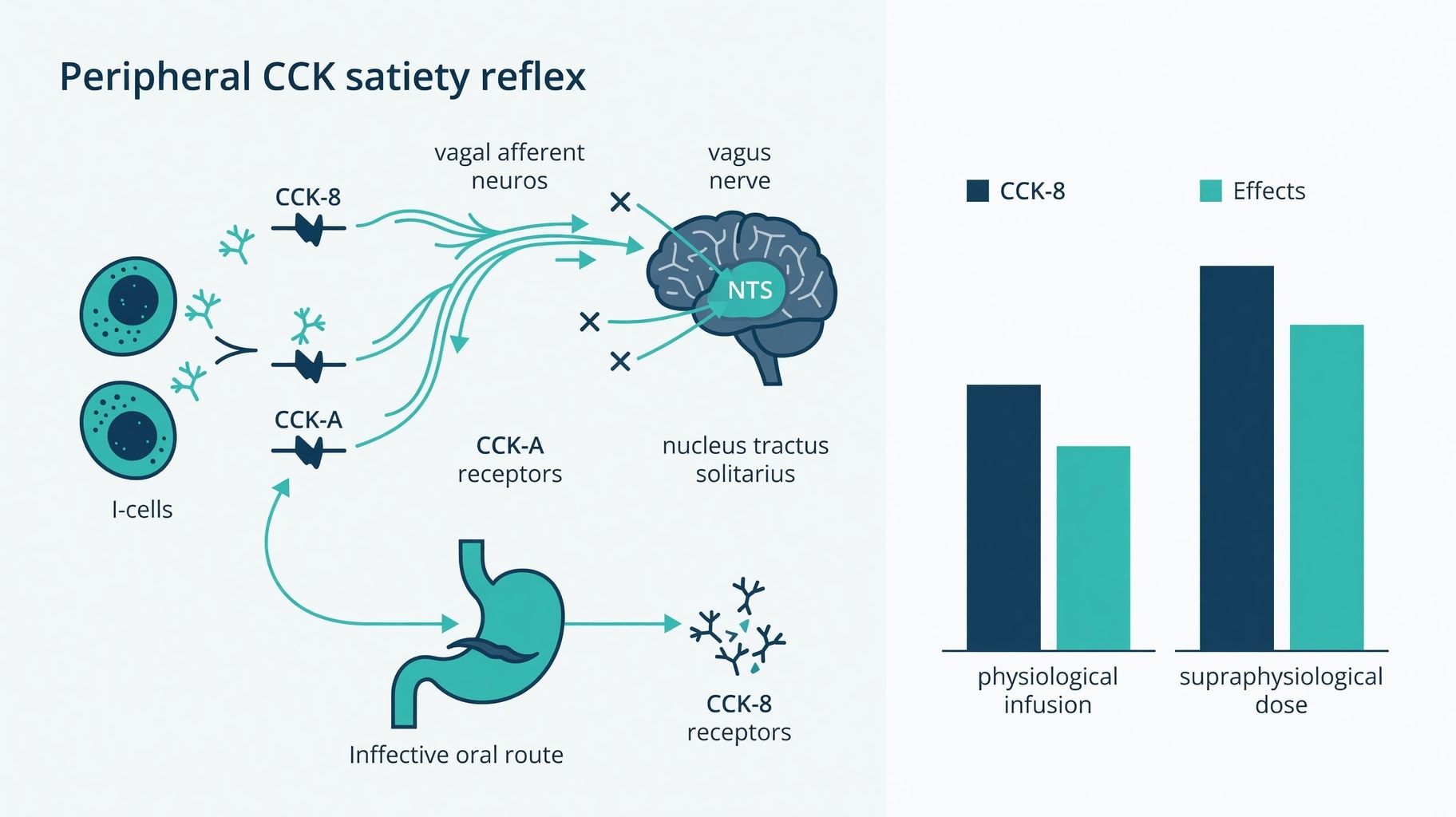
Figure 1: Peripheral vagal CCK-A receptor pathway mediating satiety independent of central willpower or oral bioavailability.
The Vagal Afferent Reflex Arc
Cholecystokinin does not signal satiety by crossing the blood-brain barrier to act on hypothalamic feeding centers. It functions as a peripheral ligand that activates CCK-A receptors on vagal afferent nerve fibers innervating the stomach and duodenum. Electrophysiological recordings show that CCK exposure increases vagal afferent firing rates in a dose-dependent manner, as detailed in the American Journal of Physiology. This neural transmission relays meal-size information directly to the nucleus of the solitary tract (NTS) in the dorsal hindbrain, which integrates the signal to inhibit further food intake through a defined reflex loop.
Mechanosensory integration amplifies this chemical signal. Gastric preload studies demonstrate that combining nutrient volume with CCK administration suppresses feeding more effectively than either stimulus alone, indicating that CCK sensitizes mechanoreceptive vagal fibers to gastric distension. This synergy explains why protein and fat, which potently stimulate endogenous CCK release, produce more robust satiety than isocaloric amounts of simple carbohydrates. The peptide acts as a gain control for gastric stretch receptors, translating physical stomach volume into a neurochemical stop signal that operates below the threshold of conscious decision-making.
At the cellular level, CCK binding initiates intracellular cascades that depolarize vagal afferent neurons. Research on cultured vagal afferents indicates that CCK increases cytosolic calcium concentrations and activates transient receptor potential (TRP) channels to generate action potentials. Without functional TRP channels and intact vagal afferents, the satiety signal cannot be transmitted. This molecular requirement distinguishes physiological satiety from generalized wellness protocols; unlike KPV peptide mechanisms targeting NF-kB inhibition for mucosal inflammation, CCK’s function is strictly tied to vagal mechanosensory integration and cannot be substituted by anti-inflammatory or cytoprotective agents.
The structural biology of CCK receptors further enforces this specificity. Receptors recognize specific post-translational modifications, particularly tyrosine sulfation patterns, with high selectivity. Evolutionary analyses reveal that ligand recognition principles are conserved but divergent enough to prevent cross-talk under normal conditions. This molecular precision means endogenous CCK-8 released during a meal targets vagal CCK-A receptors with high fidelity, while therapeutic agents or dietary components lacking correct sulfation motifs fail to engage this specific satiety pathway even if they interact with other CCK-related systems.
Receptor Specificity Separates Satiety from Anxiety
Confusion between CCK-induced satiety and CCK-induced anxiety persists in both clinical literature and consumer discourse due to the existence of two distinct receptor subtypes. The satiety effect is mediated exclusively by low-affinity CCK-A receptors on peripheral vagal afferents, while CCK-B receptors located in the central nervous system mediate anxiogenic responses. Systematic reviews of human satiation trials confirm that while anxiety may accompany CCK infusions at high doses, it is not necessary for appetite suppression; CCK-B selective antagonists do not block the reduction in food intake (Academia).
This receptor dichotomy defines the safety profile of CCK-related interventions. Nausea and anxiety reported in early studies typically resulted from supraphysiological doses that spilled over to activate CCK-B receptors or overstimulated vagal afferents beyond normal ranges. At true physiological plasma levels achieved through careful titration, satiety occurs without psychological distress. This validates the cholecystokinin CCK satiety mechanism as a distinct biological endpoint separable from central aversive states, contradicting marketing narratives that conflate "fullness" with central nervous system sedation or mood alteration.
Differentiation also matters when evaluating research on related gut-brain axis conditions. Clinical data on BPC 157 for inflammatory bowel disease explores mucosal healing pathways that operate independently of the CCK-A/vagal satiety reflex. While patients with gastrointestinal disorders frequently experience altered appetite, attributing these changes solely to CCK dysregulation ignores the complex cytokine and neural remodeling characteristic of inflammatory disease. Maintaining strict receptor-level definitions prevents the overgeneralization of satiety science to conditions where it is not the primary driver.
Emerging research on umami peptides demonstrates that taste receptor activation can stimulate endogenous CCK secretion, linking sensory perception to vagal satiety signaling through the T1R1-T1R3 receptor complex. Similarly, PYY and GLP-1 co-expression on vagal sensory neurons suggests physiological satiety is a composite signal integrating multiple nutrient-sensing pathways. Isolating CCK from this network in experimental or commercial contexts fails to capture the redundancy of natural meal termination, yet the specific contribution of CCK-A/vagal signaling remains the only component verified by antagonist blockade in human feeding studies.
Physiological Dosing and Evidence Boundaries
The gap between verified infusion science and consumer wellness claims centers on bioavailability and route of administration. All definitive human data supporting the cholecystokinin CCK satiety mechanism derives from intravenous infusion or endogenous postprandial release. CCK is a peptide hormone susceptible to rapid enzymatic degradation in the gastrointestinal tract and does not survive oral ingestion in biologically active form. Pancreapedia molecular profiles note that exogenous CCK administration requires parenteral routes to achieve plasma concentrations necessary for receptor engagement, highlighting the pharmacokinetic implausibility of oral appetite suppressants marketed as CCK mimetics.
Even when administered correctly via infusion, CCK functions as a short-term satiation signal rather than a long-term weight loss drug. Trials consistently show reductions in meal size during active infusion, but compensatory mechanisms often normalize total daily caloric intake once the signal ceases. No approved pharmaceutical agent currently leverages pure CCK-A agonism for chronic obesity management, as the peptide’s half-life and rapid tolerance development limit utility compared to longer-acting analogs like GLP-1 receptor agonists. These newer agents exploit similar vagal pathways with more favorable pharmacokinetics, effectively bypassing the limitations that prevented CCK itself from becoming a standalone therapeutic.
Regulatory filings for diagnostic sincalide (synthetic CCK-8) reinforce these boundaries. FDA labeling for Kinevac and similar products attributes adverse effects like abdominal cramping and nausea to vagal stimulation, confirming the potency of the peripheral reflex while restricting approved indications to gallbladder contraction and pancreatic secretion testing. The absence of an approved indication for appetite suppression reflects not a lack of efficacy in acute meal termination, but the inability of current formulations to sustain the precise physiological signaling required for chronic weight management without triggering off-target effects.
Ongoing research continues to map the constraints of this system. Investigators are currently testing whether non-invasive vagal stimulation can replicate the afferent signaling normally triggered by CCK, potentially bypassing the need for peptide administration entirely. Until such technologies demonstrate efficacy in controlled trials, the cholecystokinin CCK satiety mechanism remains a precisely defined physiological phenomenon accessible only through endogenous release or parenteral infusion, distinct from the oral supplements and cognitive strategies prevalent in the consumer wellness marketplace.
Related reporting explores bpc 157 science and pharmacology.
Further Clinical & Regulatory Context
For deeper analysis and cross-referenced evidence, see: - Related Clinical & Pharmacological Analysis: Orexin Signaling Diverges Between Insomnia Antagonists and Narcolepsy Agonists - Related Clinical & Pharmacological Analysis: Endorphins vs. Enkephalins: Biochemistry and Pain Modulation Explained