
Recent comprehensive mapping of human whole-brain neuropeptide receptors confirms their extensive regulatory roles in cognition and physiology, yet simultaneously highlights that biological distribution does not equate to therapeutic accessibility without proven blood-brain barrier transport mechanisms. While neuropeptides central nervous system signaling is fundamental to human neurobiology, the translation of these endogenous molecules into exogenous therapeutics remains strictly limited by pharmacokinetic realities rather than theoretical potential.
A 2026 study published in Nature Neuroscience demonstrates that despite the functional diversity of these signaling molecules, their therapeutic validity for consumers rests entirely on verified transport kinetics and measurable biomarker data, distinguishing established pharmacology from unverified wellness marketing prevalent in bilingual health communities.
The efficacy of any neuropeptide therapeutic for central nervous system disorders is gated by metabolic stability, receptor specificity, and the ability to traverse the endothelial interface. Current research is shifting toward biomarker-directed delivery paradigms rather than systemic administration, as detailed in recent pharmacokinetic reviews on ScienceDirect. Marketing narratives often conflate endogenous function with exogenous benefit, assuming that injecting or ingesting a peptide replicates its natural physiological role.
Verified clinical progress, however, requires demonstrating specific blood-brain barrier penetration and quantifiable neurological readouts. Without this evidence, claims regarding cognitive enhancement or sleep regulation remain speculative, regardless of the compound's biological importance in native brain tissue.
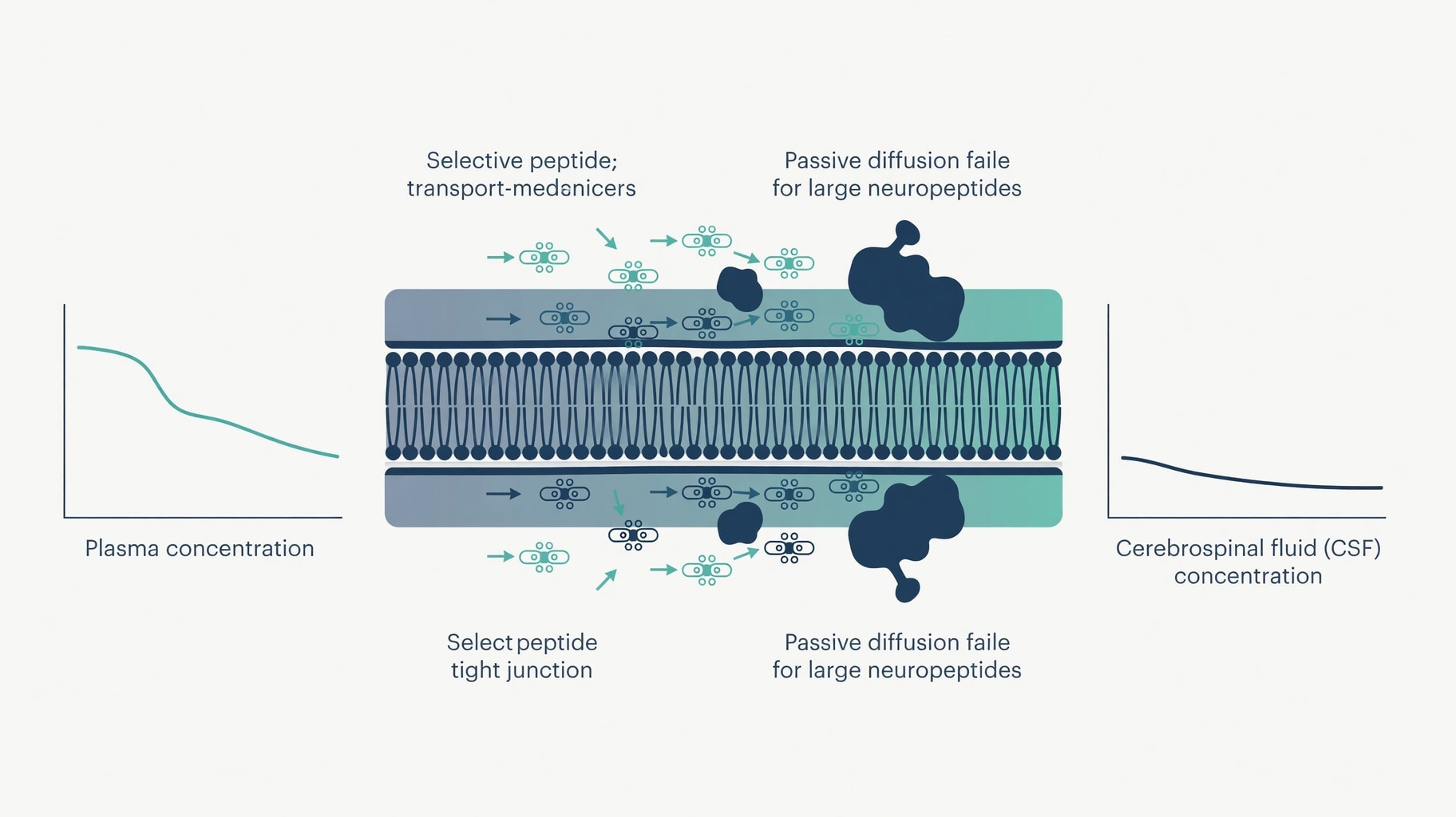
Figure 1: Blood-brain barrier transport kinetics and clinical biomarker pathways for neuropeptide CNS therapeutics.
Blood-Brain Barrier Transport Kinetics
The blood-brain barrier is a highly selective biological interface that regulates molecular traffic between the bloodstream and the brain, maintaining a safe homeostatic environment for neuronal function. According to a 2026 review in Nature Reviews Molecular Cell Biology, this barrier is a unique specialization of central nervous system capillary endothelial cells controlled by complex cellular interactions and signaling pathways.
For decades, researchers have known that most neuropeptides do not traverse this barrier via specific transport systems.
Foundational studies dating back to the early 1980s established that peptides such as insulin, enkephalins, and thyrotropin-releasing hormone lack dedicated influx mechanisms, necessitating the development of lipid-soluble derivatives or alternative delivery strategies to achieve central bioavailability.
This kinetic constraint explains why oral supplementation with neurotransmitter precursors often fails to produce central effects. Standard GABA, for example, crosses the blood-brain barrier poorly, limiting its ability to reach central nervous system targets despite its popularity as a sleep aid. Reporting by Superpower notes that there is no clean serum biomarker for oral GABA’s central efficacy, and that magnesium glycinate carries a better-characterized mechanism for modulating sleep spindles through GABA-A agonist-like properties.
The distinction is critical.
A molecule’s presence in the body does not guarantee its arrival in the brain following peripheral administration.
Peptide-based delivery systems are currently under investigation to overcome these limitations. A 2026 review in ACS Chemical Neuroscience highlights that peptide vectors can transport diverse therapeutic cargoes across biological barriers, but significant challenges remain regarding clinical application and optimization. Researchers at Northwestern Medicine have identified molecular design principles for supramolecular therapeutics that could improve barrier penetration, providing a roadmap for treating conditions like stroke and Alzheimer’s disease.
According to Northwestern’s News Center, these findings offer a path forward, but they also show that crossing the barrier is an engineered achievement, not a default property of neuropeptides.
Transport kinetics vary significantly between peptide classes. Quantitative characterization of neuromedin peptides (NMU, NMN, NMB, and NT) has revealed distinct permeability profiles, challenging the assumption that all neuropeptides behave identically at the endothelial interface. Research published in PubMed demonstrates that while these peptides are produced both peripherally and centrally, their passage across the blood-brain barrier must be empirically measured rather than assumed. This granular pharmacokinetic data is the baseline requirement for any legitimate therapeutic claim.
Compounds lacking such characterization cannot be presumed to engage central targets, regardless of their structural similarity to endogenous ligands.
Clinical Biomarker Validation Standards
Therapeutic validation requires more than theoretical receptor binding; it demands measurable changes in clinical biomarkers that correlate with functional outcomes. The discipline is moving past proof-of-concept research toward clinically actionable paradigms anchored on pharmacokinetic accuracy and safety examination. As outlined in current delivery research, bio-modulation of the blood-brain barrier can augment delivery of neuroprotective agents, but success is defined by imaging and biomarker readouts that verify both delivery and safety.
This standard separates pharmaceutical development from consumer wellness trends, where subjective reports often substitute for objective measurement.
Specific neuropeptide candidates illustrate the gap between biological plausibility and clinical evidence. Semax, an ACTH-derived neuropeptide analogue, has been studied extensively in preclinical models for its potential neuroprotective and cognitive effects. SourcePeptides’ 2026 research guide details that the Pro-Gly-Pro extension in Semax confers resistance to enzymatic degradation and that intranasal delivery has been examined in rodent models for olfactory pathway uptake. However, this remains preclinical research material.
No registered human clinical trials currently validate Semax for cognitive enhancement or neurological treatment in the United States. Conflating rodent olfactory uptake data with human therapeutic efficacy misrepresents the state of the evidence.
Oxytocin, neuropeptide Y, and neurotensin have accumulated both clinical and preclinical data supporting their potential utility as central receptor agonists. A PubMed review on CNS peptide therapeutics notes that successful approaches to improve stability and delivery have been developed, yet penetration of the blood-brain barrier remains the major challenge unique to this therapeutic class.
Registered clinical trials, such as NCT03119961 and NCT03739905, are investigating blood-brain barrier opening protocols specifically for Alzheimer’s disease, using focused ultrasound to facilitate antibody delivery.
These studies employ rigorous biomarker endpoints and imaging validation. They represent the current standard for CNS peptide investigation, contrasting sharply with direct-to-consumer marketing that bypasses these verification steps.
The gut-brain axis offers an alternative pathway for modulation, but it does not circumvent the need for evidence. A 2025 review in Molecular Biomedicine describes the microbiota-gut-brain axis as a bidirectional network involving immune, neural, endocrine, and metabolic pathways. Dysregulation of this axis plays roles in neurodegenerative diseases, and microbial metabolites can modulate barrier integrity. Yet the existence of a communication pathway does not validate specific commercial interventions.
Claims that oral peptides can reliably engage central targets via vagal or humoral routes require the same level of pharmacokinetic proof as direct CNS delivery. Pathway plausibility is not therapeutic proof.
For bilingual communities navigating health information across English and Spanish media ecosystems, the distinction between endogenous biology and exogenous therapy is particularly vital. Wellness marketing often leverages the scientific legitimacy of neuropeptide biology to sell products that lack the pharmacokinetic properties necessary for central activity. Evaluating these claims requires checking for specific evidence: registered clinical trial identifiers, peer-reviewed human pharmacokinetic data, and validated biomarker endpoints.
Neurological biomarker validation standards provide a framework for distinguishing compounds that have demonstrated central engagement from those that rely solely on structural homology to endogenous molecules.
The commercial availability of a neuropeptide does not indicate regulatory approval or clinical validation. Many compounds sold for research or wellness purposes exist in a regulatory gray zone, marketed with references to preclinical literature that does not support human use. The scientific community continues to investigate blood-brain barrier transport mechanisms and novel delivery vectors, but progress is incremental and rigorously controlled.
Until specific compounds demonstrate reproducible central bioavailability and functional biomarker changes in human trials, their therapeutic status remains unverified.
Current evidence establishes that neuropeptide receptors are widely distributed and functionally significant in the human brain. It simultaneously establishes that accessing these receptors therapeutically is a formidable engineering challenge. Future developments will depend on supramolecular design, targeted ultrasound, and intranasal formulations validated through human pharmacokinetic studies.
Until those validations are complete and published, the gap between neuropeptide biology and neuropeptide therapeutics remains defined by the selective permeability of the blood-brain barrier and the absence of clinical biomarker confirmation for most commercially available compounds. Researchers and consumers alike must evaluate claims against these physical and evidentiary constraints, recognizing that biological importance does not translate automatically to therapeutic utility.
Further Clinical & Regulatory Context
For deeper analysis and cross-referenced evidence, see: - Related Clinical & Pharmacological Analysis: Intranasal Oxytocin Pharmacology: Neural Shifts Without Behavioral Gains - Related Clinical & Pharmacological Analysis: Endorphins vs. Enkephalins: Biochemistry and Pain Modulation Explained