
Pharmacological safety standards define a mandatory five-half-life washout period to ensure greater than 97% compound clearance before introducing new peptides, a baseline requirement for nootropic peptide stacking safety that vendor protocols frequently omit. This clearance threshold prevents cumulative receptor downregulation and overlapping occupancy that can render cognitive enhancement protocols ineffective or neurologically disruptive. While online communities promote concurrent use of compounds like Semax and Dihexa for synergistic effects, clinical records indicate that safety relies on mechanistic separation rather than additive dosing.
The distinction is biochemical, not theoretical. as reported by Real Peptides, short-acting peptides like GHRP-2 have half-lives of only 20 to 30 minutes, allowing same-day transitions, whereas longer-acting compounds require weeks of abstinence to avoid pharmacokinetic interference. Without adhering to these clearance windows, users risk saturating metabolic pathways and desensitizing target receptors.
Commercial vendors and biohacking forums often present stacking as a linear path to enhanced cognition, yet this framing ignores established clinical pharmacology. The U.S. Food and Drug Administration emphasizes in its guidance on peptide drug products that safety assessments must account for metabolite activity and delivery-route bioavailability. These factors are largely absent from consumer literature but remain central to avoiding adverse interactions. For bilingual wellness researchers and community members navigating English and Spanish marketing claims, understanding these kinetic constraints is the only verified method to distinguish theoretical synergy from biological risk.
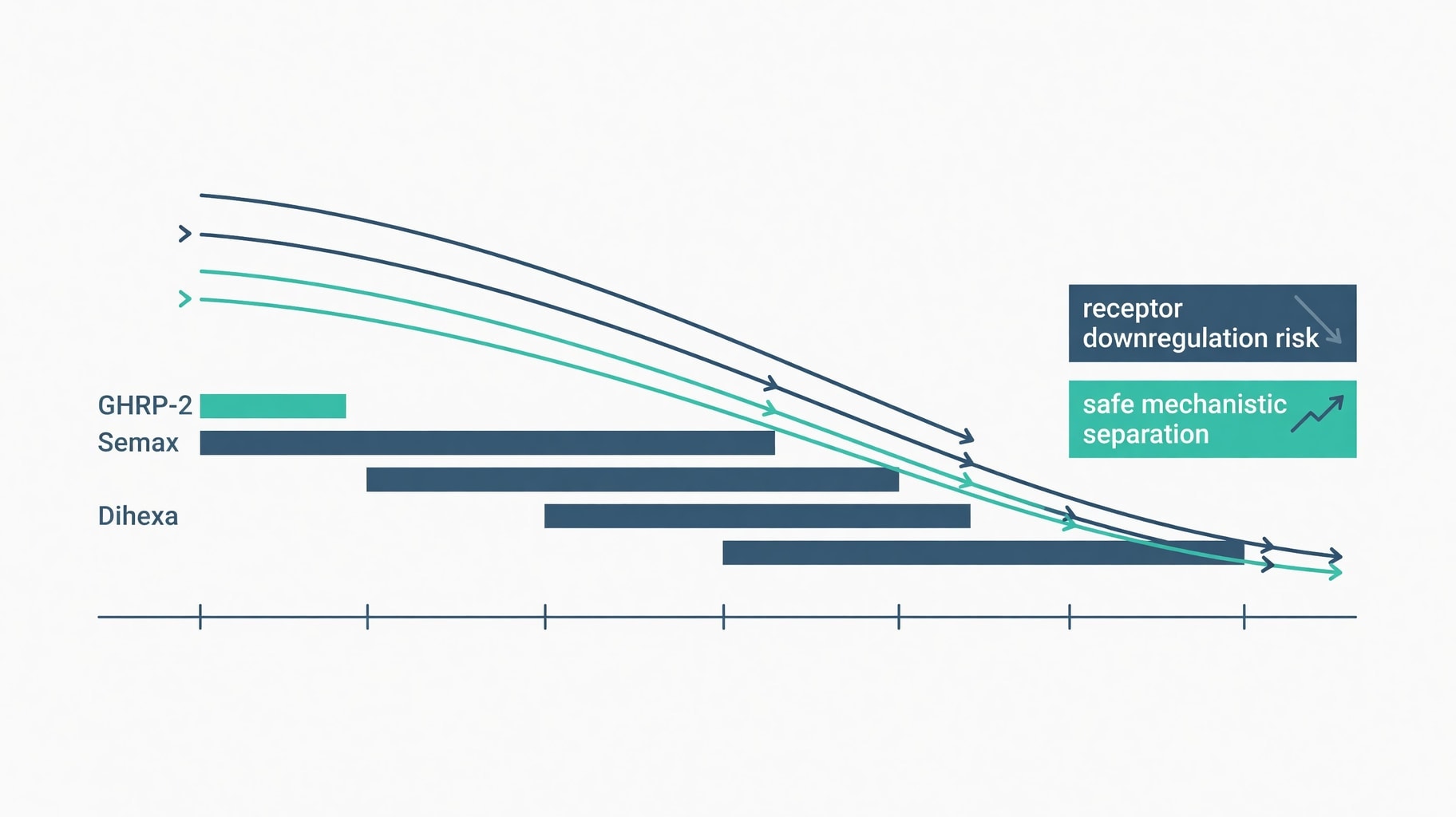
Figure 1: Pharmacokinetic washout timeline demonstrating five half-life clearance threshold required for safe nootropic peptide stacking.
Receptor Pathway Specificity and Desensitization Risk
Safety in cognitive enhancement protocols is determined by non-interference at the receptor level. Stacking agents that share downstream signaling cascades creates a high probability of downregulation, where chronic stimulation reduces receptor density or sensitivity. This biological feedback loop contradicts the "more is better" logic prevalent in vendor marketing.
Semax and Selank represent the most widely discussed combination in nootropic circles. Their theoretical safety profile rests on distinct mechanisms of action. Semax primarily drives BDNF-mediated neuroplasticity through TrkB receptors, while Selank modulates GABAergic anxiety interference and supports memory consolidation through allosteric regulation. Research reviewed by Peptide Pick notes that these mechanisms are complementary rather than overlapping, which forms the basis for their concurrent use in literature.
However, complementarity does not equal unlimited safety. The same source indicates that researchers typically cycle this stack using two-to-four-week on-periods followed by equal or longer off-periods. The rationale is explicit: BDNF receptor sensitivity may downregulate with chronic stimulation. Continuous administration without cycling risks diminishing returns as TrkB receptors adapt to elevated ligand levels.
Dihexa introduces significantly higher uncertainty into stacking equations. This compound activates the HGF/c-Met pathway and has shown extraordinary potency in synaptogenesis assays. According to Peptide Pick, Dihexa is roughly 10 million times more potent than BDNF in driving synaptogenesis in specific assay conditions. While striking, this potency demands caution when combined with other neurotrophic agents. HGF has roles in cell proliferation beyond neurotrophic signaling, and concurrent use with BDNF-elevating compounds could theoretically create unpredictable downstream effects.
Russian clinical literature on Semax and Selank provides some reassurance regarding short-term interactions. As noted in comparative analyses of Semax vs Selank, these compounds operate on distinct receptor systems, and available studies do not report concerning acute interactions. Yet this literature is predominantly short-term. Long-term stacking risks involving receptor desensitization kinetics remain inferred from preclinical models rather than validated in human stacking studies.
For those evaluating cognitive stacks, the critical safety metric is pathway independence. Combining two TrkB agonists, or two c-Met activators, violates basic pharmacological principles. Even when pathways differ, the temporal spacing of doses must account for receptor recovery cycles. Vendor guides rarely specify these intervals with biochemical precision, leaving users to extrapolate from single-compound data.
Metabolic Competition and Delivery Route Constraints
Receptor specificity addresses only half of the safety equation. Metabolic interference and delivery route saturation present equally significant risks that are frequently overlooked in stacking guides. Peptides are enzymatically labile, and introducing multiple compounds simultaneously can overwhelm degradation pathways or compete for absorption.
Enzymatic degradation is the primary constraint for systemically administered peptides. Research published in PubMed highlights that major efforts are invested in improving peptide stability against enzymatic degradation pathways to maximize therapeutic impact. When multiple peptides are present in circulation, they may compete for the same proteolytic enzymes, potentially extending the half-life of one or both compounds beyond predicted values. This creates an accumulation risk that standard dosing schedules do not account for.
Hepatic metabolism adds another layer of complexity for orally active compounds. Dihexa undergoes CYP3A4 metabolism. Real Peptides explicitly warns against stacking Dihexa with other CYP3A4 substrates unless dosing is staggered by six to eight hours. This constraint is absolute, not optional. Combining Dihexa with other CYP3A4-metabolized substances without staggering risks saturating hepatic clearance capacity, leading to elevated plasma concentrations and increased side effect probability.
Delivery route interference is particularly relevant for intranasal administration, a common method for Semax and Selank. Pure Tested Peptides explains that Selank's anxiolytic and nootropic effects depend entirely on CNS bioavailability, as systemic injection exposes the peptide to rapid enzymatic degradation in plasma. Intranasal delivery bypasses first-pass metabolism but introduces physical constraints. The nasal mucosa has limited absorptive capacity, and administering multiple intranasal peptides in close succession risks saturating transport mechanisms or causing mucosal irritation that reduces overall bioavailability.
Mixing peptides in a single vial for multi-day storage compounds these risks. PepPal's stacking guide warns that this practice risks degradation, aggregation, and potency loss. Each peptide has distinct stability requirements, and combining them in solution creates an environment where chemical interactions can accelerate breakdown. Safe stacking requires separate preparation and administration, even when compounds are theoretically compatible.
Noopept presents a unique case due to its active metabolite. Pharmacokinetic studies indexed in PubMed identify cycloprolylglycine as an active metabolite with its own biological activity. Stacking Noopept with other peptides requires accounting for this metabolite's kinetics, not just the parent compound. Vendor guides rarely address metabolite activity, yet FDA guidance identifies it as a necessary safety consideration.
Evidence Gaps Between Vendor Protocols and Clinical Standards
The most significant safety risk in nootropic peptide stacking is the gap between vendor recommendations and clinical evidence. No direct clinical trials exist validating the safety of specific nootropic peptide stacks. All current stacking safety claims are extrapolated from single-compound pharmacokinetics and regulatory guidance documents.
Clinical trial registries reflect this evidence void. Searches for studies on Semax, Selank, or Dihexa combinations yield minimal results relevant to stacking safety. A registered trial on nootropic cognitive effects (ClinicalTrials.gov) and another on nootropic interventions focus on single compounds or non-peptide formulations. The absence of stacking-specific trials means that every concurrent use protocol is an uncontrolled experiment.
Regulatory frameworks treat this uncertainty as a safety signal. FDA guidance on metabolite safety testing requires characterization of metabolite activity for peptide drugs. Nonclinical safety assessment frameworks for peptides (PubMed) emphasize immunogenicity, impurity profiling, and species-specific toxicology. These requirements exist because peptides are complex biologics with unpredictable behavior in combination. Consumer stacking guides rarely reference these assessment standards, creating a false impression of established safety.
The commercial incentives driving stacking content further widen the evidence gap. Vendors benefit from promoting multi-compound regimens that increase per-customer revenue. This economic reality does not invalidate all stacking protocols, but it necessitates skepticism. When a vendor recommends a stack without citing specific pharmacokinetic data, receptor cycling parameters, or metabolic constraints, the recommendation should be treated as marketing rather than guidance.
For bilingual communities navigating cross-border wellness markets, this evidence gap is compounded by language barriers. Spanish-language marketing often mirrors English claims without independent verification. Safety information that appears authoritative may be translated vendor copy rather than regulatory or clinical documentation. Evaluating stacking safety requires accessing primary pharmacological sources, not relying on translated commercial content.
The pending question for nootropic peptide stacking safety is whether mechanistic complementarity can overcome the absence of combination-specific clinical data. Until direct trials are conducted, safety depends entirely on adherence to pharmacokinetic first principles: mandatory washout periods, receptor pathway independence, metabolic staggering, and delivery route separation. These constraints are non-negotiable in clinical pharmacology, regardless of their absence in consumer-facing stacking guides.