
Manufacturer-sponsored in vitro assays report that exposing human dermal fibroblasts to Tripeptide-29 at a 3% concentration for 48 hours increased type I collagen synthesis by approximately 400% compared to untreated baselines, as quantified by ELISA and Northern blotting of COL1A1 mRNA transcripts.
Despite these specific preclinical metrics, Tripeptide-29 remains a synthetic mimic of the Gly-Pro-Hyp motif without the randomized controlled trial data required to substantiate drug claims for stretch mark repair or wound healing under U.S. law.
This evidentiary gap defines its current regulatory status: the peptide qualifies as a cosmetic ingredient capable of supporting general structure-function claims but lacks the human safety and efficacy data necessary for therapeutic indications. Formulators incorporating this ingredient must handle a compliance landscape where cell culture data supports labeling for skin conditioning but triggers misbranding enforcement if applied to striae distensae treatment.
The commercial application of Tripeptide-29 hinges on this distinction between biological plausibility and regulatory admissibility. While the peptide’s small molecular size theoretically enhances skin penetration relative to intact proteins, no ex vivo human skin permeation studies currently exist in the public record to validate this delivery mechanism. Consequently, claims regarding dermal matrix density or scar revision remain extrapolations from isolated fibroblast assays rather than confirmed clinical outcomes. The U.S.
Food and Drug Administration maintains that adequate substantiation for drug claims requires well-controlled human investigations, a standard that manufacturer-sponsored petri dish experiments cannot satisfy. This regulatory reality confines Tripeptide-29 to the cosmetic category regardless of its biochemical potency in isolated systems.
Synthetic Biomimetic Versus Endogenous Signaling
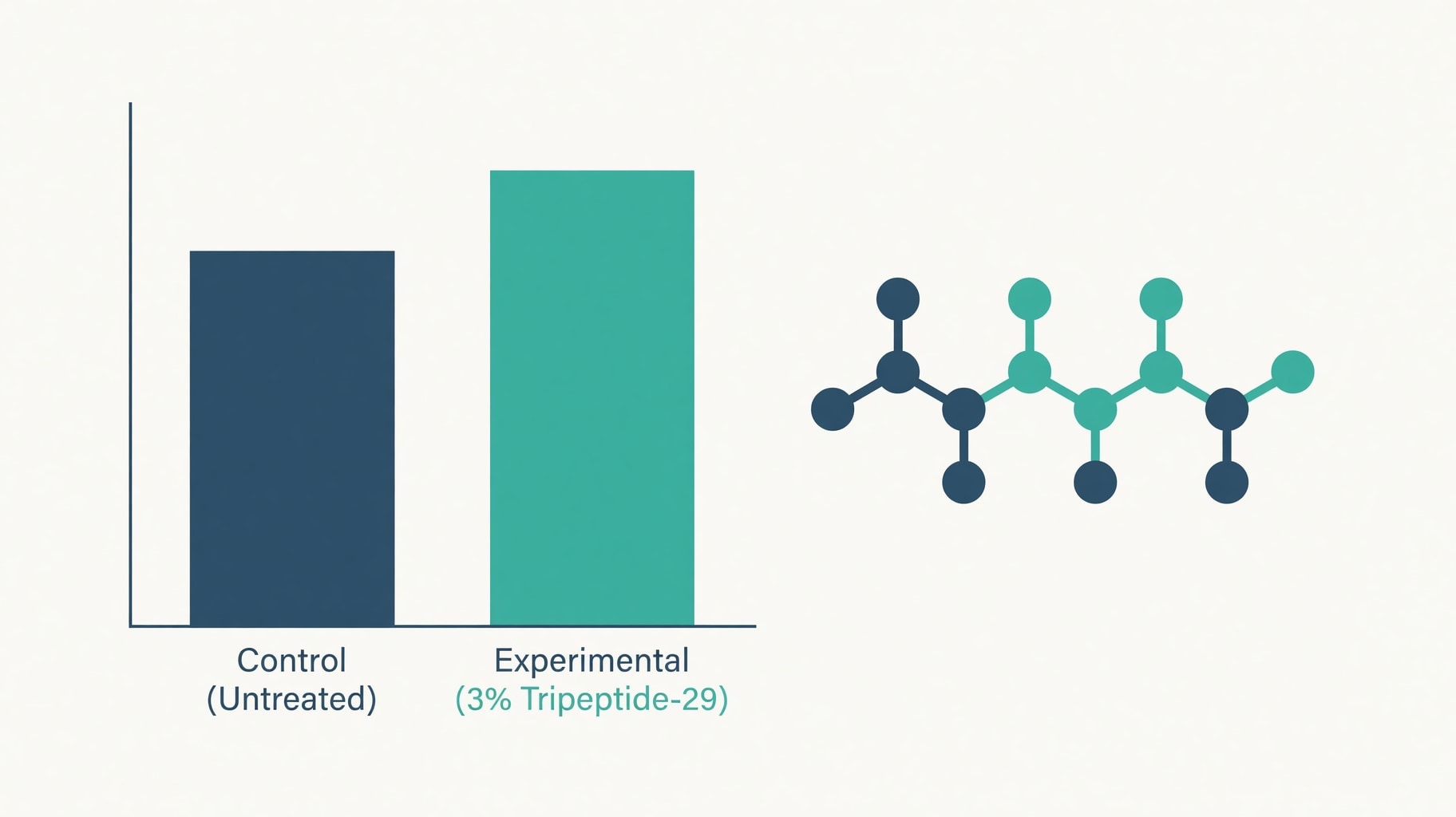
Figure 1: In vitro data summary showing 400% increase in type I collagen synthesis in human dermal fibroblasts exposed to 3% Tripeptide-29.
Tripeptide-29 is chemically defined as a synthetic biomimetic of the glycine-proline-hydroxyproline (Gly-Pro-Hyp) repeating unit found in endogenous collagen. This precise sequence is significant because Gly-Pro-Hyp constitutes the fundamental structural triplet responsible for collagen’s triple-helix stability. However, synthetic replication of this motif does not automatically confer identical biological activity to naturally derived fragments.
Reporting by Africa Science News characterizes Tripeptide-29 specifically as a defined minimal peptide trigger used in research to dissect receptor-mediated pathways, such as TGF-β/Smad or MAPK activation, rather than as a validated therapeutic agent. Researchers utilize this synthetic sequence to map fibroblast activation mechanisms in controlled environments, separating signaling effects from the complex metabolic processing of dietary proteins.
This synthetic origin contrasts sharply with the biology of oral collagen hydrolysates. When ingested, enzymatic digestion generates a diverse pool of di- and tripeptides, including Pro-Hyp and Gly-Pro-Hyp, which enter systemic circulation and act as signaling molecules. Research published in Springer Nature confirms that these endogenous fragments stimulate fibroblast proliferation and hyaluronic acid synthesis through mechanisms distinct from direct substrate provision.
The bioavailability of these oral peptides is well-documented, with plasma kinetics showing peak concentrations within one to two hours of ingestion. Detailed analysis of collagen peptides bioavailability maps the divergence between digestive absorption and topical application, highlighting that systemic availability does not predict transdermal efficacy for synthetic analogs.
Topical Tripeptide-29 operates under a fundamentally different set of physicochemical constraints. Without a lipid carrier or penetration enhancer, the hydrophilic nature of the unmodified Gly-Pro-Hyp sequence may limit its transit through the stratum corneum. Industry summaries from suppliers like CorePeptides posit that the small molecular size contributes to high bioavailability, yet this assertion lacks independent verification via Franz diffusion cell testing or confocal Raman spectroscopy on human tissue.
This stands in contrast to established signal peptides like palmitoyl tripeptide-5, where advanced delivery systems such as reverse micellar nanospheres have been explicitly engineered and tested to overcome penetration barriers. The absence of comparable delivery validation for Tripeptide-29 leaves its dermal bioavailability as a theoretical proposition rather than a measured parameter.
The biological plausibility of Tripeptide-29’s claimed efficacy rests heavily on matrix metalloproteinase (MMP) regulation. Supplier data suggests the peptide may reduce MMP activity, thereby preserving extracellular matrix integrity alongside its purported synthesis-boosting effects. This dual mechanism mirrors the activity of better-characterized compounds. For instance, palmitoyl-RGD tripeptide has demonstrated concurrent upregulation of type I procollagen and suppression of MMP-1 expression in cultured fibroblasts, according to coverage in Superpower’s evidence review.
GHK-Cu similarly modulates thousands of genes related to tissue remodeling and antioxidant defense, though human clinical data remains limited to small open-label studies. Regulatory professionals must weigh these mechanistic parallels against the absence of Tripeptide-29-specific clinical endpoints, as shared pathways do not guarantee equivalent therapeutic outcomes in living tissue.
Regulatory Boundaries and Enforcement Precedents
The U.S. Food and Drug Administration distinguishes strictly between cosmetics and drugs based on intended use and claim substantiation. A cosmetic may claim to improve the appearance of skin or support normal structure and function, but any assertion of treating, curing, or preventing a disease condition—including the repair of stretch marks or acceleration of wound healing—triggers drug classification.
Because Tripeptide-29 lacks the substantial clinical evidence required for a New Drug Application, marketing it with therapeutic language invites regulatory action.
The 400% in vitro metric, while scientifically interesting, does not constitute adequate substantiation for drug claims under federal law. The FDA evaluates the totality of evidence, and isolated cell culture data cannot bridge the gap to human therapeutic efficacy for structural skin disorders.
The absence of Tripeptide-29 from clinical trial registries further complicates the regulatory picture. A search of ClinicalTrials.gov and PubMed yields no completed randomized controlled trials specifically evaluating topical Tripeptide-29 for striae distensae or dermal density. This evidentiary void is notable given the extensive clinical literature supporting other peptide classes and oral collagen supplements.
Reviews in Frontiers in Nutrition highlight that while oral collagen peptides have demonstrated improvements in skin hydration and elasticity in human trials, robust RCT evidence for topical applications generally remains limited even for established compounds. For Tripeptide-29 specifically, the gap is absolute. Formulators cannot rely on extrapolation from oral studies or structurally similar peptides to satisfy U.S. drug approval requirements.
This regulatory constraint has tangible enforcement consequences for companies that overstep the cosmetic-drug boundary. The FDA has previously issued warning letters to firms marketing peptide-containing topical products with claims of increasing collagen production for wound healing or scar reduction, citing the lack of adequate and well-controlled studies. These enforcement actions establish a precedent that in vitro collagen synthesis data does not immunize manufacturers against misbranding citations when product labeling implies therapeutic efficacy.
Companies formulating with Tripeptide-29 must therefore calibrate their marketing language to the weakest link in the evidence chain. Claims must be restricted to general skin conditioning and appearance improvement, avoiding any reference to physiological repair processes that would reclassify the product as an unapproved new drug.
Manufacturers targeting global distribution face additional complexity due to divergent international standards. While U.S. regulations demand human clinical data for therapeutic claims, other jurisdictions may evaluate functional ingredients under different evidentiary frameworks. However, for the U.S. market specifically, the compliance requirement remains fixed. Product development teams must maintain bifurcated labeling strategies and evidence files, ensuring that U.S. marketing materials do not inadvertently import claims validated only in foreign regulatory contexts.
The decision to use Tripeptide-29 ultimately hinges on whether a synthetic biomimetic with manufacturer-sponsored in vitro data aligns with a brand’s risk tolerance and target market regulatory requirements.
Formulators currently integrating Tripeptide-29 into topical regimens operate within a defined compliance perimeter. Marketing teams may reference in vitro collagen synthesis data to support general anti-aging or skin-conditioning claims, provided they avoid therapeutic terminology and include appropriate disclaimers. Any suggestion of stretch mark repair, scar reduction, or wound healing exceeds current evidentiary support and carries significant compliance risk based on established FDA enforcement patterns.
The next definitive step for this ingredient would be the publication of independent, peer-reviewed clinical trials demonstrating topical delivery and measurable dermal remodeling in human subjects. Until such data emerges, Tripeptide-29 remains a research-grade biomimetic with cosmetic utility but unproven therapeutic status under U.S. federal law.
Related reporting explores peptides for joint and tendon healing, and bpc 157 science and pharmacology.
Further Clinical & Regulatory Context
For deeper analysis and cross-referenced evidence, see: - Related Clinical & Pharmacological Analysis: Palmitoyl Tripeptide-1 Lip Claims Face Scrutiny Amid Clinical Gaps - Related Clinical & Pharmacological Analysis: Palmitoyl Tetrapeptide-7: IL-6 Suppression Data Defines Cosmetic Boundaries - Related Clinical & Pharmacological Analysis: VGVAPG Signaling Mechanics: ERC Binding Kinetics and Fibroblast Chemotaxis