
In vitro studies document that the GQPR tetrapeptide fragment of immunoglobulin G, utilized commercially as palmitoyl tetrapeptide-7, suppresses UV-induced interleukin-6 production by up to 86% in human keratinocyte assays. This quantified reduction establishes a specific mechanistic benchmark for cosmetic ingredient safety files rather than validated therapeutic efficacy. The data defines the compound’s current regulatory status as a skin-conditioning agent, distinct from systemic anti-inflammatory drugs.
According to Peptides Clarity, the suppression of UV-induced interleukin production occurs in controlled cell models at concentrations consistent with cosmetic evaluation protocols. For regulatory affairs professionals, the distinction between this verified in vitro IL-6 suppression and broader anti-photoaging marketing claims determines labeling compliance and import admissibility across Pacific supply chains. Identical assay data supports divergent product categories based entirely on intended use and structural modification.
Manufacturers in U.S. and Taiwanese markets rely on this specific dataset to justify anti-aging positioning without triggering drug classification. As enforcement scrutiny tightens on peptide claims, the precise boundary between cell-culture modulation and clinical treatment has become the central compliance friction point. Formulators must now distinguish verified assay results from unapproved therapeutic promises to maintain market access.
The commercial stakes are significant because the regulatory classification of this molecule hinges not on its chemistry, which is static, but on the claims attached to it, which are variable. A shipment containing palmitoyl tetrapeptide-7 enters U.S. commerce as a cosmetic ingredient when labeled for soothing or conditioning. That same chemical entity becomes an unapproved new drug if the accompanying literature promises to treat inflammation or arrest photoaging.
This distinction is not semantic; it dictates whether a product sits on a shelf or in a customs hold.
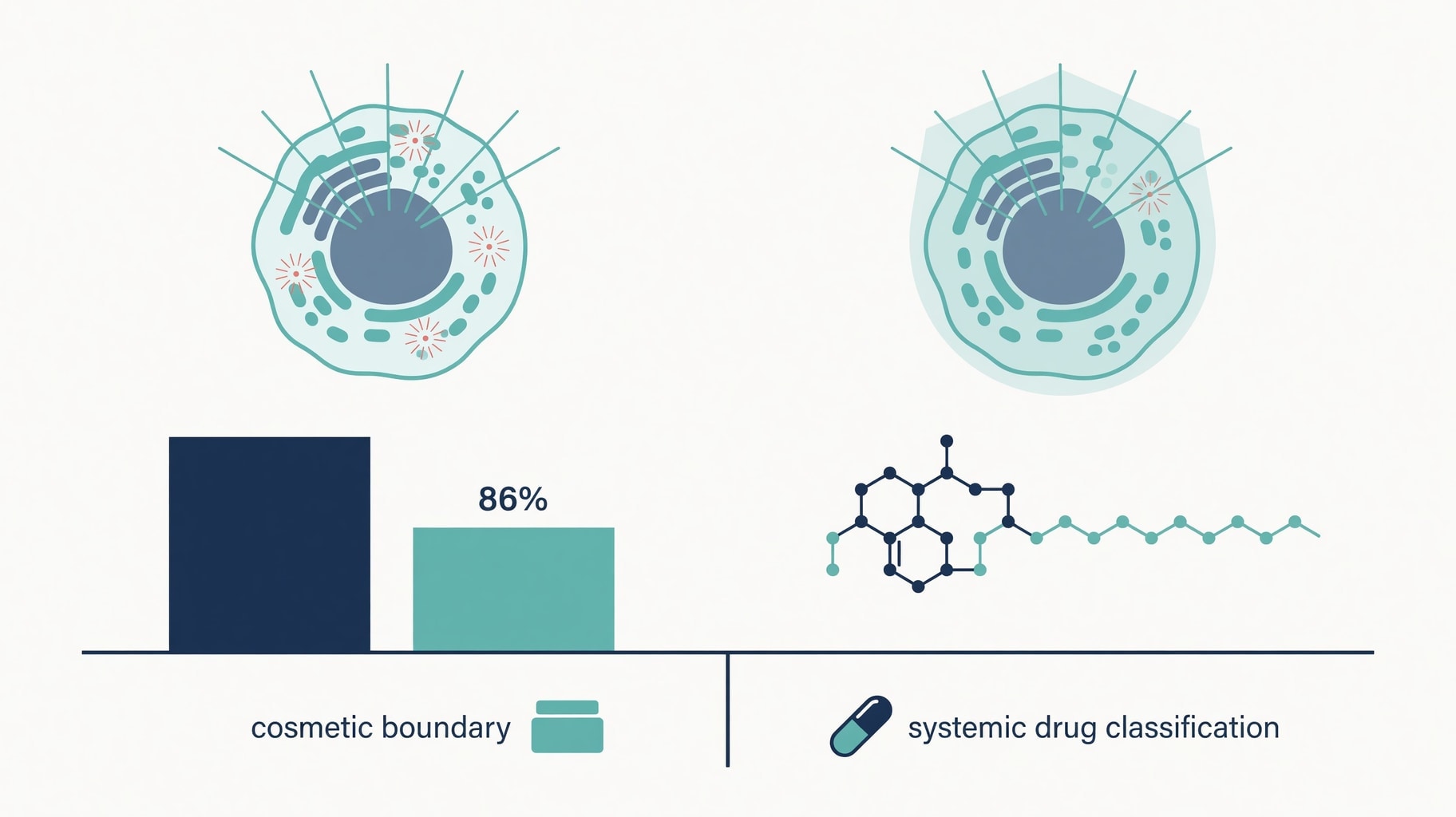
Figure 1: In vitro IL-6 suppression by palmitoyl tetrapeptide-7 in UV-exposed human keratinocytes.
Quantified Cytokine Modulation in Cell Models
The biological rationale for palmitoyl tetrapeptide-7 rests on its origin as a synthetic lipopeptide mimic of the GQPR sequence found in the heavy chain of immunoglobulin G. This structural lineage directs the molecule’s interaction with inflammatory pathways in epithelial tissues. Cell-based studies document suppression of UV-induced IL-6 release in keratinocyte assays (Tcspeptides). The peptide also modulates inflammatory mediator output in fibroblast models.
These findings support a soothing, matrix-protective positioning that differs fundamentally from acute pharmacological intervention. The mechanism extends beyond simple cytokine blockade to include modulation of IL-1β-induced inflammatory cascades in dermal cell assays at concentrations used in standard cosmetic evaluation protocols. This activity supports positioning for UV-post-conditioning and chronic inflammatory skin maintenance, provided such claims remain tethered to the documented cell model parameters.
Quantitative variance in the literature requires careful interpretation by compliance teams drafting substantiation dossiers. While some assays demonstrate suppression rates approaching 86% under high-stress UV irradiation, other models report more moderate reductions. Reporting by Peptide Journal indicates that palmitoyl tetrapeptide-7 reduces IL-6 secretion by up to 40% in UV-exposed cell models. Crucially, this suppression occurs in both resting and inflamed states, suggesting the peptide modulates baseline inflammatory tone rather than simply blocking acute responses.
Such baseline modulation is the defining characteristic of a cosmetic conditioning agent, whereas acute blockade of a cytokine storm is a pharmaceutical mechanism. Suppliers often conflate these distinct data points in marketing materials, presenting the 86% suppression figure alongside the 40% baseline modulation figure without distinguishing the assay conditions. Regulatory reviewers in both U.S. and Taiwanese jurisdictions scrutinize this discrepancy.
Claims that imply consistent high-efficacy suppression in living human tissue based solely on stressed keratinocyte cultures risk misbranding enforcement.
The scientific record supports specific, context-dependent modulation. It does not support broad anti-inflammatory drug claims.
The absence of human clinical trials validating palmitoyl tetrapeptide-7 as a standalone treatment for inflammatory dermatoses remains the primary regulatory constraint. No such data currently exists in the public record to bridge the gap between petri dish and patient. This evidentiary void means that all consumer-facing claims must be carefully constructed to reflect the limitations of the available science. A claim of "soothing" aligns with the observed reduction in inflammatory mediators in cell culture.
A claim of "treating redness" implies a clinical outcome that has not been proven in humans for this isolated ingredient. This gap is not merely a scientific issue; it is a legal one. In cross-border trade, the burden of proof rests on the importer to demonstrate that claims are substantiated.
When the only substantiation is in vitro, the claims must be explicitly framed as such or restricted to structural benefits that do not imply physiological treatment.
Downstream Matrix Protection and Clinical Attribution Limits
The suppression of pro-inflammatory cytokines serves a secondary function in photoaging defense that directly impacts regulatory categorization. IL-6 and related mediators act as upstream triggers for matrix metalloproteinase (MMP) expression. These enzymes degrade collagen and elastin in the extracellular matrix. By reducing the inflammatory signal, palmitoyl tetrapeptide-7 indirectly limits MMP upregulation. Analysis from Peptidings confirms that the peptide reduces MMP upregulation that accelerates extracellular matrix breakdown in aging and UV-damaged skin models.
This pathway is well-established in senescence biology, where senescence-associated secretory phenotype factors, including IL-6, directly induce MMP-1 expression in dermal fibroblasts. Palmitoyl tetrapeptide-7 targets this specific node. It functions as a matrikine-like signal that interrupts the inflammatory cascade before enzymatic degradation begins. This distinguishes it from direct MMP inhibitors, which are often regulated as pharmaceuticals because they target an enzyme active site rather than modulating a cellular signal.
The distinction between indirect cytokine modulation and direct enzyme inhibition matters profoundly for product classification. U.S. Food and Drug Administration guidance and Taiwan Food and Drug Administration regulations both hinge on this nuance. Products claiming to "inhibit MMPs" or "stop collagen breakdown" risk being deemed unapproved new drugs because they describe a pharmacological mechanism. Products claiming to "soothe skin" or "condition skin appearance" by leveraging the same underlying IL-6 data typically remain within cosmetic bounds.
Formulators must align their technical files with this regulatory logic. Safety assessments should reference the downstream MMP effects as secondary consequences of cytokine modulation. They should not present MMP inhibition as the primary mode of action. This semantic precision protects import eligibility. Cross-border shipments of raw materials and finished goods face increasing document checks. Customs officials compare label claims against ingredient function definitions.
Misalignment between the claimed benefit and the accepted cosmetic function of palmitoyl tetrapeptide-7 causes delays and refusals.
Human efficacy data for this ingredient presents a significant attribution challenge that further complicates regulatory compliance. Most published clinical trials involve combination products rather than isolated palmitoyl tetrapeptide-7. The most prominent example is Matrixyl 3000, a proprietary complex combining palmitoyl tetrapeptide-7 with palmitoyl tripeptide-1. Manufacturer testing indicates that applying 3% Matrixyl 3000 twice daily for two months resulted in a 39.4% reduction in deep wrinkle surface area, according to coverage by Peptide Journal.
The combination also reduces production of IL-6 and IL-8 in clinical settings. Regulatory bodies do not automatically extend combination data to individual ingredients. A formulator using generic palmitoyl tetrapeptide-7 cannot legally cite Matrixyl 3000 clinical results to substantiate claims. The synergistic effect of the tripeptide component remains unquantified for the tetrapeptide alone. This evidentiary gap forces reliance on the in vitro IL-6 suppression data for standalone substantiation.
The clinical wrinkle reduction figures serve only as contextual background for the category, not as proof for specific formulations.
This limitation shapes regulatory classification differently for proprietary complexes versus generic peptide sourcing. Proprietary complexes carry their own substantiation packages that include human clinical trials on the specific blend. Generic ingredients carry only the baseline scientific literature. When sourcing palmitoyl tetrapeptide-7 for cost optimization or formulation flexibility, companies assume the burden of independent substantiation. They cannot piggyback on the clinical legacy of branded complexes.
This economic reality drives much of the compliance friction in the peptide supply chain.
The U.S.-Taiwan peptide regulatory frameworks handle this evidence gap with varying strictness. U.S. regulations emphasize the totality of evidence available to the consumer. If a generic product implies parity with a clinically tested complex without supporting data, it may be deemed misleading. Taiwanese regulations often require more explicit pre-market documentation linking specific claims to specific ingredient data. In both jurisdictions, the absence of standalone human trials for palmitoyl tetrapeptide-7 necessitates conservative claim language.
"Supports skin resilience" is defensible based on cell models. "Clinically proven to reduce wrinkles" is not defensible without proprietary human data.
Raw material suppliers must provide technical dossiers that clearly delineate in vitro data from clinical extrapolation to facilitate compliant trade. Certificates of Analysis and Safety Data Sheets must use exact INCI nomenclature. Variations in naming conventions between U.S. and Taiwanese databases create friction at ports of entry. A shipment declared as "Rigin" may face scrutiny if the receiving jurisdiction expects "Palmitoyl Tetrapeptide-7." Standardization is not merely administrative. It is a prerequisite for uninterrupted supply.
Manufacturers evaluating this ingredient for anti-inflammatory positioning must conduct internal risk assessments. The 86% IL-6 suppression figure is a powerful scientific fact. It is also a regulatory liability if misapplied. Marketing teams often seek to leverage this number for consumer education. Regulatory teams must ensure such education does not cross into drug promotion. The solution lies in precise contextualization. All references to cytokine suppression must be explicitly tied to cell models.
All references to skin benefits must be tied to cosmetic conditioning. The commercial viability of palmitoyl tetrapeptide-7 depends on this disciplined communication. The ingredient occupies a narrow corridor between inert moisturizer and active pharmaceutical. Its value proposition is biological activity within cosmetic safety margins. Straying outside those margins invites enforcement action. Staying within them requires rigorous adherence to the specific limitations of the available evidence.
Further Clinical & Regulatory Context
For deeper analysis and cross-referenced evidence, see: - Related Clinical & Pharmacological Analysis: Matrixyl Collagen Claims: Separating In Vitro Assays From Topical Evidence