
Pinealon’s DNA-Binding Claim: Separating Khavinson Institute Models from Clinical Proof
Bilingual wellness vendors currently market the tripeptide Pinealon (Glu-Asp-Arg) as a proven cognitive enhancer and circadian regulator, yet the entire evidentiary basis for these claims derives from preclinical models at a single Russian institute. The St. Petersburg Institute of Bioregulation and Gerontology asserts that this compound bypasses cell-surface receptors to penetrate neuronal nuclei and bind specific DNA promoter sequences, but this mechanism remains unverified by independent Western replication or human clinical trials. While online communities in English and Spanish discuss subjective memory improvements, the verified record consists exclusively of rodent hypoxia assays and cell culture studies demonstrating reduced oxidative stress in vitro. Pinealon remains an investigational Research Use Only (RUO) substance with no FDA approval and no registered clinical trials as of April 2026, making the Pinealon EDR peptide mechanism a theoretical framework rather than an established therapeutic pathway.
The commercial ecosystem has effectively decoupled from this evidentiary timeline. Vendors frequently apply the term "bioregulator" to EDR, a classification recognized in Eastern European pharmacology but holding no regulatory weight under FDA or EMA guidelines. For consumers evaluating these products, the primary challenge involves distinguishing the sequence-verified chemistry from functional claims that exist only in preclinical literature. All published research originates from the Khavinson group with no independent replication, meaning the compound lacks the double-blind, placebo-controlled validation required for human use claims Pinealon (EDR): Complete Research Guide.
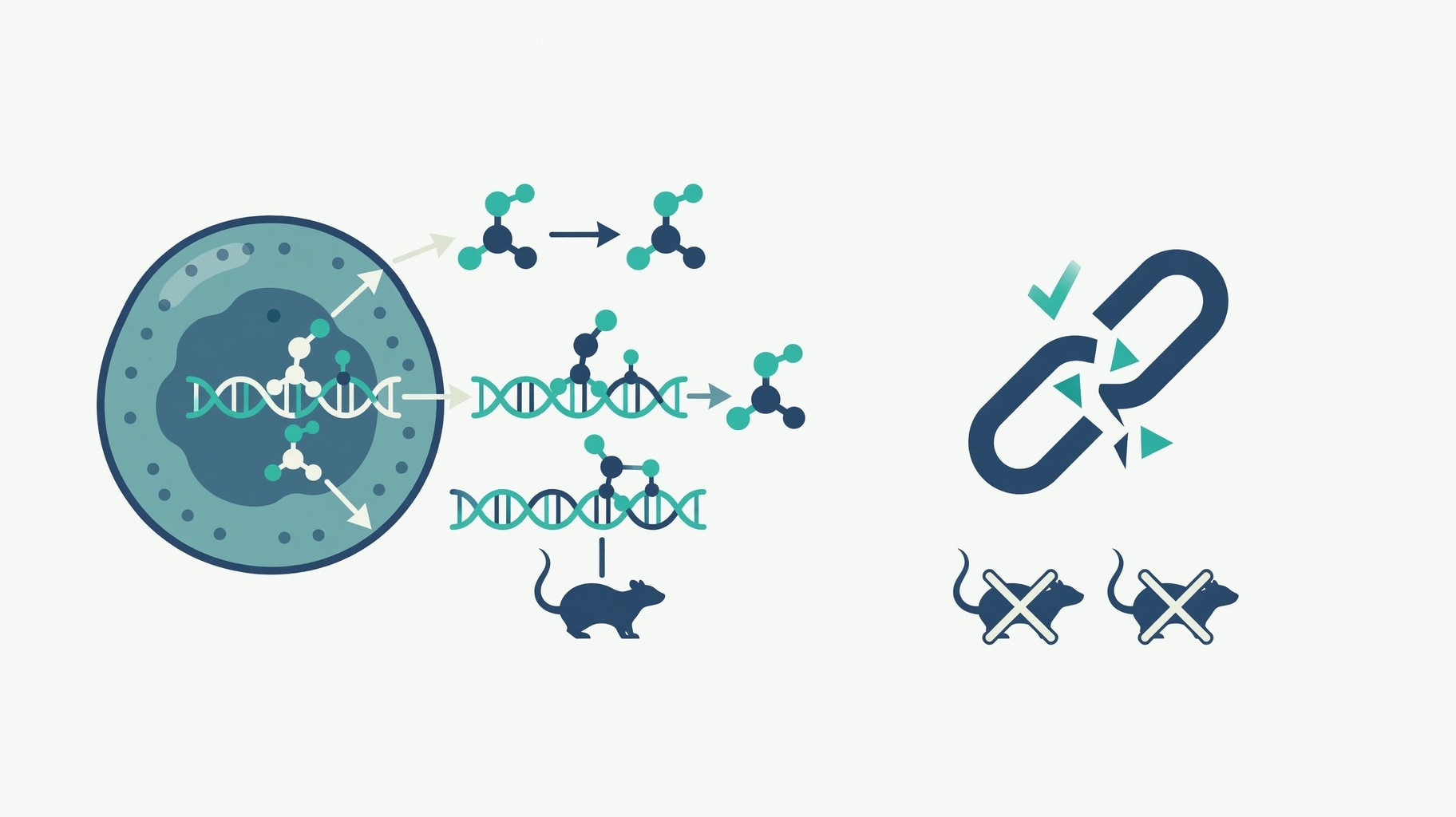
Figure 1: Theoretical EDR tripeptide mechanism from Khavinson Institute models contrasted with absence of independent clinical validation.
Nuclear Binding Models Versus Tissue Origin Misconceptions
Vladimir Khavinson’s research group advances the hypothesis that the EDR tripeptide crosses cellular and nuclear membranes without active transport due to its small molecular weight of approximately 390 Da. Once inside the nucleus, molecular modeling indicates the peptide binds physically to complementary DNA sequences in the major groove of the double helix. This interaction differs fundamentally from conventional peptide pharmacology, which relies on ligand-receptor binding at the cell membrane to trigger intracellular signaling cascades. The proposed binding involves the positively charged arginine residue interacting with the anionic DNA backbone, while glutamic acid and aspartic acid residues facilitate sequence-specific contacts. This physical interaction is hypothesized to facilitate chromatin remodeling, unwinding tightly packed heterochromatin into transcriptionally active euchromatin to enable gene expression (Peptidedeck).
Despite the name "Pinealon," the peptide was not isolated from pineal gland tissue. The tripeptide sequence Glu-Asp-Arg was originally identified within Cortexin, a polypeptide extract derived from bovine cerebral cortex. The nomenclature reflects the peptide’s proposed target effects on pineal and cortical neurons rather than its biological origin. Spanish-language vendors labeling this product as "extracto de pineal" misrepresent the source material. The compound is synthetic, manufactured to replicate the sequence found in cortical preparations, and its primary research focus is neuronal survival rather than pineal physiology. This distinction matters for consumers who may conflate Pinealon with Epitalon and other Khavinson peptides, as structural similarity does not indicate pharmacological equivalence.
Marketing materials in bilingual wellness communities often present this nuclear binding hypothesis as established fact, omitting the "proposed" qualifier that permeates the primary literature. The functional consequence of DNA binding is theorized to be a shift in cellular protein synthesis toward protective patterns rather than immediate neurotransmitter release. This epigenetic mechanism distinguishes Pinealon from acute nootropics or stimulant compounds. The effect is described as gradual and regulatory, aiming to restore functional homeostasis in stressed neurons. However, almost all supporting evidence comes from rodent and cell studies with little independent Western replication, leaving the translation of these molecular events to human cognition entirely unproven (Medsbase).
Preclinical Signals in Oxidative Stress and Hypoxia Models
The theoretical DNA-binding model correlates with observable outcomes in specific laboratory settings. In rat cerebellar granule cells, neutrophils, and PC12 cells exposed to oxidative stress, Pinealon limited the accumulation of reactive oxygen species. A 2011 study published in Rejuvenation Research by Khavinson and colleagues reported that EDR treatment suppressed free radical levels and altered the activation kinetics of the ERK 1/2 signaling pathway, delaying activation from 2.5 to 20 minutes. This delay is mechanically significant because premature ERK activation under stress conditions often triggers apoptotic cell death. Peer-reviewed data from this single research stream shows Pinealon suppresses free radical levels, modulates the MAPK/ERK signaling pathway, and alters the expression of apoptosis regulators and antioxidant enzymes Pinealon (EDR) Profile.
Rodent models of hypoxia provide the most frequently cited efficacy data. Research utilizing carotid artery occlusion in rats demonstrated that Pinealon pretreatment modulated caspase-3 activity, a key marker of programmed cell death, following ischemic challenge. Follow-up work from the same group extended these findings to hypothermia and hyperhomocysteinemia paradigms. In a mouse hippocampal neuron model of Alzheimer’s amyloid toxicity, EDR at 200 ng/mL restored mushroom dendritic spines by 71%, returning structural parameters toward baseline levels. These assays suggest that the peptide’s gene-regulatory claims translate to measurable neuroprotection in controlled biological systems. Community forums in both English and Spanish frequently reference these specific metrics to justify human use, yet the leap from rodent hypoxia survival to improved memory recall in healthy adults lacks support in the available record.
The preclinical data specifically addresses neuronal survival under pathological insult. There is no equivalent dataset demonstrating that EDR improves cognitive performance in non-pathological human subjects. Vendors often promote Pinealon as an effective oral supplement due to its low molecular weight, theorizing that small peptides can survive gastrointestinal transit better than larger proteins. No pharmacokinetic studies confirm systemic exposure or nuclear penetration following oral administration in humans. The proposed bioavailability is theoretical, extrapolated from molecular size rather than measured plasma concentrations. Injectable protocols remain the primary route in published Russian clinical reports, yet even these studies do not meet international standards for safety or efficacy verification. The distinction between neuroprotection in damaged tissue and enhancement in healthy tissue remains absolute in the current literature.
Regulatory Gaps and Compound Differentiation
The absence of independent replication constitutes the most critical limitation in evaluating Pinealon. Almost all mechanistic and efficacy data originates from the Khavinson Institute or associated Russian laboratories. No Western academic or pharmaceutical institution has published confirming studies on the EDR-DNA binding hypothesis or its downstream neuroprotective effects. As of April 2026, there are no entries on ClinicalTrials.gov for Pinealon or EDR peptide in the context of cognitive enhancement or neuroprotection. The compound lacks FDA approval for any human indication and is legally sold only as a Research Use Only chemical in the United States. Bilingual marketing frequently ignores these regulatory gaps in peptide wellness, presenting investigational compounds as established supplements.
Consumer marketing also frequently conflates Pinealon (EDR) with Epitalon (AEDG). While both peptides emerged from the same research program and share a design logic, they are distinct molecules with different targets. Epitalon is a tetrapeptide (Ala-Glu-Asp-Gly) studied primarily for telomerase activation, circadian rhythm regulation, and melatonin synthesis. Pinealon is a tripeptide (Glu-Asp-Arg) focused on neuronal oxidative stress and apoptosis. Research on Epitalon focuses mainly on the biology of the pineal gland and circadian rhythm, while Pinealon targets neuronal survival and hypoxia response. Structural similarity should therefore not be interpreted as pharmacological equivalence. Vendors calling Pinealon "the pineal peptide" have not adhered to the source material, creating confusion for consumers attempting to distinguish between circadian support and neuroprotection (Semaxpolska).
The commercial availability of this compound continues to outpace verified scientific consensus. Marketing materials present the Khavinson hypothesis as settled science, creating dissonance between consumer expectation and regulatory reality. The molecular modeling is sophisticated, and the preclinical signals in oxidative stress models are consistent within their specific experimental parameters. Without independent verification, Pinealon remains an open scientific question. Researchers continue to explore the broader class of short bioregulatory peptides, but the gap between the St. Petersburg Institute’s publications and global clinical acceptance defines the current landscape. As of April 2026, no ClinicalTrials.gov entry exists for Pinealon in human cognitive or neuroprotective applications, leaving the compound strictly within the domain of unverified preclinical research.
Further Clinical & Regulatory Context
For deeper analysis and cross-referenced evidence, see: - Related Clinical & Pharmacological Analysis: Semax and Selank: Translating Russian Clinical Data for English-Speaking Wellness Markets - Related Clinical & Pharmacological Analysis: Cortexin Clinical Trials Exist Only for Tissue Extracts, Not Synthetic Analogs