
The exact mechanism that prohibits 503B outsourcing facilities from compounding thymosin alpha-1 is absence from the 503B bulks list. That absence triggers the statutory bar in section 503B(a)(2) of the Federal Food, Drug, and Cosmetic Act. The provision permits an outsourcing facility to compound using a bulk drug substance only if the substance appears on the 503B bulks list or the finished drug appears on the FDA shortage list. Thymosin alpha-1 meets neither condition.
The 2024 PCAC Vote
The FDA Pharmacy Compounding Advisory Committee voted in 2024 against placing thymosin alpha-1 on Category 1 of the bulk substances list. The vote explains why the substance was not listed. It is not the statutory mechanism itself.
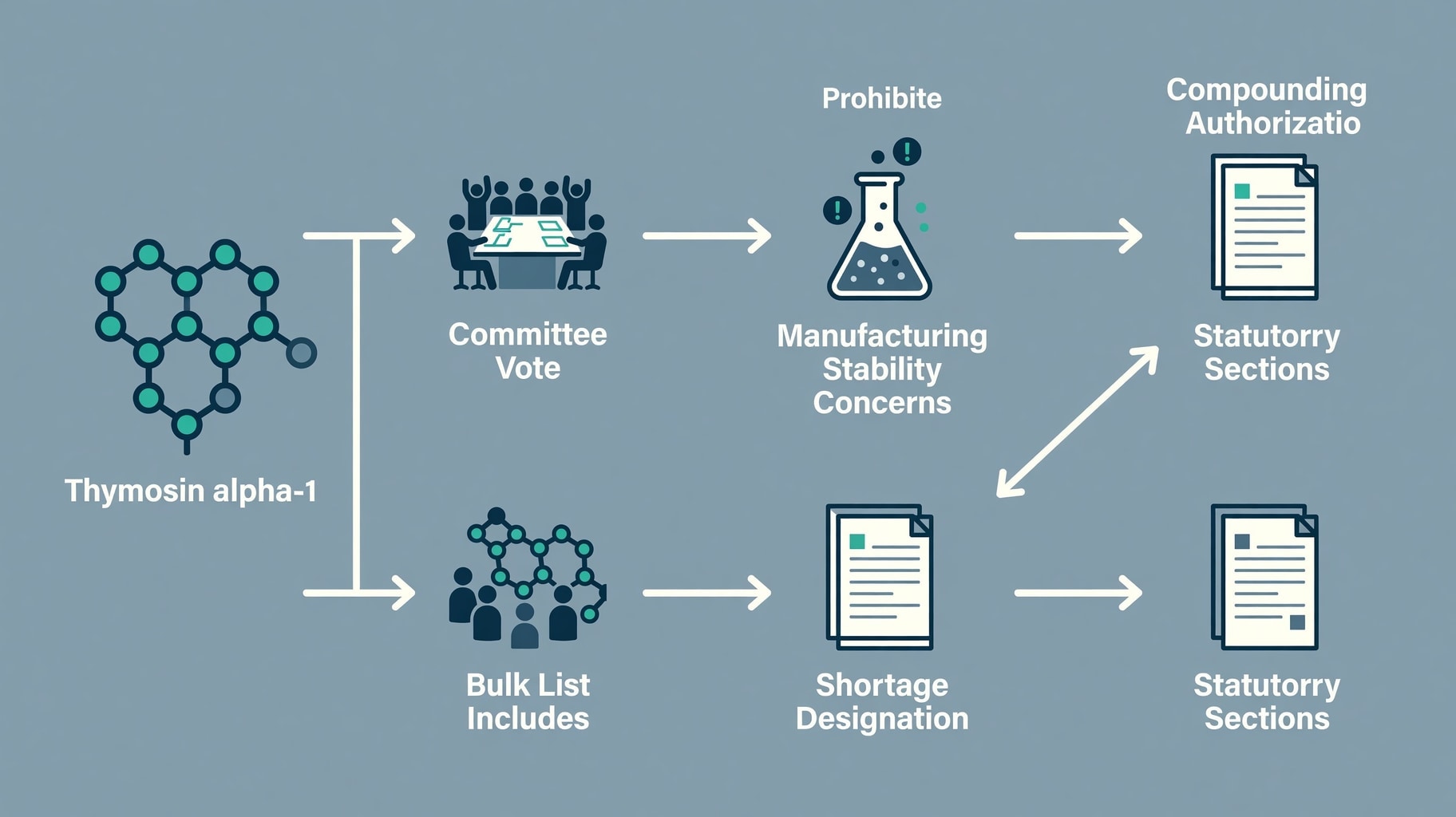
Figure 1: FDA 503B bulk substances list decision pathway and 2024 PCAC vote outcome for thymosin alpha-1.
The FDA brief identified manufacturing stability and batch-to-batch quality variation as the basis for the majority vote Men's Health. The committee accepted that rationale. The substance remained outside the statutory authorization for 503B compounding.
Thymosin alpha-1 is an N-terminal acetylated 28-amino-acid peptide with a molecular weight of 3108.28 g/mol FDA. The docket attachment lists clinical uses including hepatitis B and C, HIV/AIDS, non-small cell lung cancer, hepatocellular carcinoma, malignant melanoma, and chronic inflammatory conditions FDA. The same document names SciClone Pharmaceuticals as the manufacturer of Zadaxin, the branded formulation.
The Statutory Prohibition
Section 503B(a)(2) states that an outsourcing facility may not compound a drug using a bulk drug substance unless the substance appears on the list established under section 503B(a)(2)(A)(i) or the drug appears on the FDA shortage list under section 506E. Thymosin alpha-1 does not appear on the 503B bulks list. No supplied record places it on the shortage list.
A 503B outsourcing facility that compounds thymosin alpha-1 from bulk active pharmaceutical ingredient operates outside statutory authorization. The FDA bulk substances nomination page tracks thymosin alpha-1 among substances nominated for use in compounding FDA. The PCAC meeting record documents the December 2024 presentation of thymosin alpha-1 free base and thymosin alpha-1 acetate FDA.
Neither record confirms placement on Category 2. The FDA defines Category 2 as bulk drug substances nominated for use in compounding that may present significant safety risks FDA. The verified administrative fact is narrower. The committee declined to add the substance to Category 1.
Cross-Border Regulatory Divergence
The U.S. position diverges from the Pacific market status of the same active pharmaceutical ingredient. Zadaxin holds approval in more than 35 countries for chronic hepatitis B and other immunosuppressive conditions Superpower. SciClone Pharmaceuticals manufactures the API. The same molecule that Pacific regulators classify as a standard therapeutic lacks any FDA-approved drug application in the United States.
The FDA docket attachment confirms Zadaxin dosing for hepatitis B and C runs three months or longer, with a subcutaneous dosage of 1.5 mg every third day FDA. Safety in pediatrics has not been established. The document reports use in over 3,000 patients and over 70 clinical studies FDA.
A 2001 meta-analysis by Chan and colleagues in Alimentary Pharmacology and Therapeutics found that thymosin alpha-1 was associated with suppression of viral replication in chronic hepatitis B. Full response often emerged approximately 12 months after therapy cessation Superpower.
Commercial Formulation Response
The Precision Peptide Company announced U.S. testing of a transdermal thymosin alpha-1 patch StockTitan. The company described three technical functions: stabilization of the peptide formulation, permeation through the skin, and sustained release over time StockTitan. The company stated the product could be among the first commercially available thymosin alpha-1 transdermal patches. That statement is a corporate claim. It is not an agency finding.
Evidence Boundary
The supplied records do not support claims about thymosin alpha-1 bodybuilding benefits, muscle growth, or athletic performance. No evidence in the FDA docket attachment addresses those uses. The peptide's documented clinical role is immunomodulation. It activates toll-like receptor signaling on dendritic cells, drives Th1 polarization, and modulates cytokine production Superpower.
Thymosin beta-4 operates through actin sequestration with no structural or functional overlap with thymosin alpha-1 Superpower. The tb 500 science and mechanisms guide covers the beta peptide separately. The committee vote does not bind future FDA action. The agency retains authority to revise the bulk substances list through subsequent rulemaking. The current administrative record places thymosin alpha-1 outside lawful 503B compounding absent statutory exceptions.
The FDA approach to peptide compounding continues to shift, as covered in reporting on how the fda splits peptide path.
The glow peptide protocol and glow stack peptides target skin and tissue outcomes. The klow blend peptide review covers chronic inflammation pathways distinct from the TLR9-driven Th1 polarization documented for thymosin alpha-1. The supplied records do not cover 503A pharmacy compounding rules, enforcement discretion policies, or pre-litigation notices for this peptide.