
Retatrutide Triple Agonism: TRIUMPH Phase 3 Architecture and Energy Expenditure Data
Retatrutide achieved a mean weight reduction of 30.3% at 104 weeks in the Phase 3 TRIUMPH-1 trial, a finding Eli Lilly announced via PR Newswire that validates a therapeutic mechanism extending beyond appetite suppression to include active energy expenditure. This registrational dataset distinguishes the molecule from existing dual agonists by engaging the glucagon receptor to drive hepatic fatty acid oxidation alongside GLP-1 and GIP modulation. The retatrutide triple agonist triumph trials represent the first large-scale clinical test of whether adding glucagon receptor agonism can deliver superior metabolic outcomes without introducing prohibitive cardiovascular risk. While the magnitude of weight loss is unprecedented in pharmacotherapy, the clinical utility of this agent depends entirely on whether the energy expenditure mechanism translates into sustainable metabolic health or merely accelerates weight loss at the cost of tolerability.
The 30.3% figure aligns with Phase 2 dose-response data published in the New England Journal of Medicine, where the 12 mg dose yielded 24.2% weight loss over 48 weeks in a smaller cohort. Unlike tirzepatide or semaglutide, retatrutide’s pharmacology relies on balanced activation of three distinct hormonal axes rather than potentiating one or two. If the broader TRIUMPH program confirms these findings across diverse comorbidities, retatrutide could redefine the upper limit of pharmacological weight management. Significant uncertainty remains regarding long-term chronotropic safety and whether liver fat reductions seen in early studies will translate into approved indications for metabolic dysfunction-associated steatotic liver disease. Regulatory bodies in both North America and Europe are likely to scrutinize the safety-efficacy trade-off more intensely for a triple agonist than for previous incretin classes, given the historical cardiovascular liabilities associated with unopposed glucagon signaling.
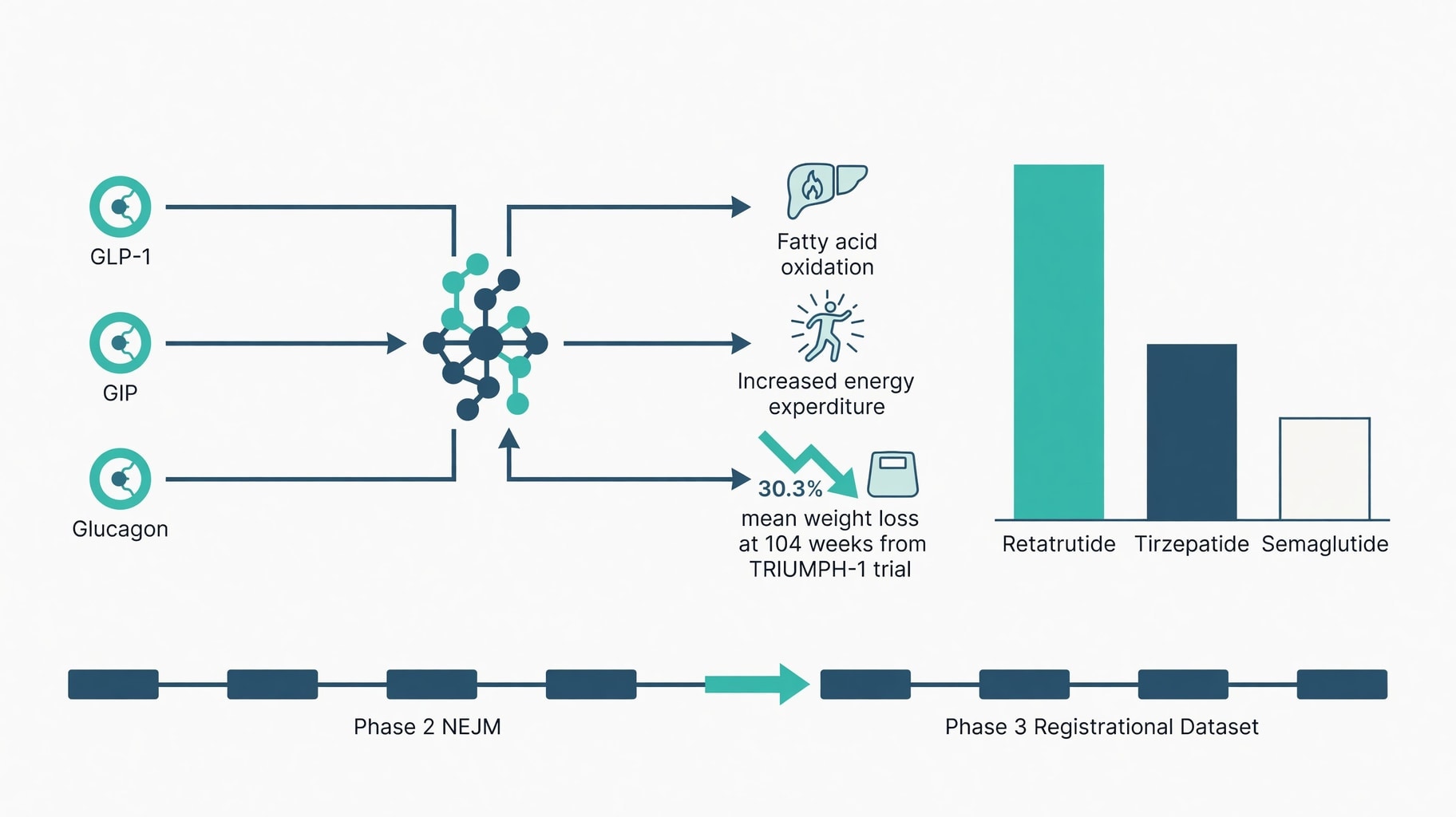
Figure 1: Retatrutide triple-agonist pathways and TRIUMPH-1 weight loss outcomes at 104 weeks versus Phase 2 benchmarks.
Triple Receptor Binding and Energy Expenditure Mechanism
Retatrutide binds to GLP-1, GIP, and glucagon receptors, a profile characterized in preclinical Cell Metabolism literature as LY3437943. While GLP-1 and GIP agonism primarily modulate insulin secretion, satiety, and gastric emptying, glucagon receptor activation introduces a catabolic component that fundamentally alters the energy balance equation. As explained in Pharmacy Times coverage of the TRIUMPH-1 results, this third mechanism increases energy expenditure and promotes hepatic fatty acid oxidation. The metabolic buffering capacity of GLP-1 and GIP permits glucagon agonism to function without inducing hyperglycemia. In isolation, glucagon receptor agonists have historically failed due to excessive glucose production and cardiovascular toxicity. Retatrutide’s molecular design balances these opposing forces, allowing the thermogenic benefits of glucagon to manifest while its glycemic liabilities are neutralized by concurrent incretin stimulation.
The distinction becomes clinically apparent when comparing retatrutide to tirzepatide’s dual-agonist pharmacology. Tirzepatide amplifies insulinotropic effects and appetite suppression but lacks direct glucagon-mediated thermogenesis, driving weight loss primarily through caloric deficit via reduced intake. Retatrutide targets the liver directly to reduce lipogenesis and enhance lipid disposal independent of caloric intake. Preclinical models and Phase 2 biomarker data support this pathway, yet direct calorimetry data from Phase 3 remains unpublished. Researchers must therefore treat energy expenditure as a hypothesized driver of the 30.3% weight loss, not yet a confirmed independent variable in the registrational dataset. The absence of direct human metabolic chamber data in the public domain means the precise contribution of thermogenesis versus anorexia to total weight loss remains an inference derived from biomarker surrogates and preclinical extrapolation.
Binding kinetics are critical to this safety-efficacy balance. The molecule’s balanced affinity prevents the unopposed glucagon activity that historically caused cardiovascular toxicity in earlier monotherapy attempts. The GLP-1 component buffers glucagon’s glycemic liability by stimulating glucose-dependent insulin release. Understanding this interplay is essential for clinicians evaluating multi-receptor incretin peptides against single or dual targets. The efficacy ceiling appears higher with triple agonism, but so does the physiological complexity. European and North American agencies may require different levels of mechanistic proof before accepting energy expenditure as a valid therapeutic endpoint rather than a safety signal. Until direct metabolic data are published, the mechanism remains a compelling biological hypothesis supported by, but not definitively proven by, the available clinical weight loss outcomes.
TRIUMPH Phase 3 Trial Architecture and Indications
The TRIUMPH program comprises four major Phase 3 trials enrolling more than 5,800 participants, according to PubMed-indexed protocol descriptions. This architectural breadth is necessary to satisfy regulatory requirements for obesity, type 2 diabetes, cardiovascular outcomes, and osteoarthritis. TRIUMPH-1 serves as the anchor, focusing on adults with obesity or overweight plus weight-related comorbidities. The 104-week duration allows investigators to assess weight maintenance and safety beyond the 68-week endpoints common in earlier incretin trials. This extended timeline is particularly relevant for evaluating whether the glucagon-mediated energy expenditure leads to adaptive resistance or sustained metabolic benefit over two years of continuous therapy.
TRIUMPH-2 targets type 2 diabetes specifically. This 80-week, randomized, double-blind, placebo-controlled study evaluates glycemic control alongside weight loss. Eli Lilly announced positive topline results for both TRIUMPH-2 and TRIUMPH-3 in July 2026, as detailed in the company’s press release. TRIUMPH-3 enrolls participants with severe obesity (Class 2 or 3) and established cardiovascular disease. Demonstrating safety in patients with existing cardiac pathology is the primary hurdle for any glucagon-containing therapeutic, and TRIUMPH-3 is designed specifically to address this concern. The inclusion of this high-risk cohort reflects a proactive regulatory strategy, acknowledging that the very mechanism driving efficacy also carries historical safety baggage that must be definitively resolved in a cardiovascular outcomes trial.
TRIUMPH-4 explores knee osteoarthritis, a comorbidity where weight loss directly correlates with functional improvement. Topline data showed 28.7% weight loss and marked pain reduction, reporting by Patient Care Online indicates. This indication expands the potential label beyond pure metabolic markers to include functional outcomes, potentially broadening reimbursement eligibility. The broader competitive environment continues to evolve rapidly as oral formulations advance. Retatrutide’s defense lies in the depth of its efficacy and the breadth of its validated indications. The TRIUMPH architecture is thus not merely a regulatory requirement but a strategic necessity to establish clinical dominance before oral alternatives mature. The complexity of managing four concurrent Phase 3 trials with distinct endpoints introduces operational risk, and the staggered release of topline data means the complete safety-efficacy profile will emerge piecemeal rather than as a unified dataset.
Cardiovascular Safety and Regulatory Submission Timeline
Glucagon and GLP-1 can both exert positive chronotropic and inotropic effects on the heart. In the Phase 2 NEJM trial, heart rate increased in a dose-dependent manner, peaking at 24 weeks before declining at later timepoints. These increases were similar to those reported for GLP-1 receptor agonists alone, according to the published Phase 2 data. The long-term implications of sustained triple receptor activation in patients with cardiovascular disease remain unproven until TRIUMPH-3 results undergo peer review. The transient nature of the heart rate elevation in Phase 2 is reassuring but not definitive, as adaptive desensitization in a 48-week trial may not predict cardiovascular outcomes over years of therapy in a higher-risk Phase 3 population.
Regulatory scrutiny is intense on both sides of the Atlantic. The FDA and EMA require robust exclusion of arrhythmic liabilities for any new incretin class, but their thresholds for acceptable cardiovascular risk in obesity treatment differ. The TRIUMPH protocols include extensive cardiovascular monitoring to address this. Any signal of increased major adverse cardiovascular events would likely halt development, regardless of weight loss efficacy. Current topline announcements claim cardiovascular risk factors were reduced, but granular data on specific arrhythmic events or heart failure hospitalizations are pending publication. Clinicians should interpret the 30.3% weight loss in TRIUMPH-1 as conditional on this safety profile holding up in high-risk subgroups. Transatlantic regulatory divergence may ultimately manifest in labeling differences, with European authorities potentially requiring more restrictive cardiovascular monitoring protocols than their North American counterparts.
Liver health offers a potential differentiator that could justify the added safety risk. A Phase 2a trial in MASH demonstrated significant reductions in liver fat, as indexed in PubMed. This effect is attributed to glucagon-mediated hepatic fatty acid oxidation and reductions in LDL cholesterol of approximately 20%, possibly via PCSK9 degradation mechanisms distinct from weight-loss-driven lipid improvements. Phase 2a relied on surrogate imaging endpoints, and histological resolution of steatohepatitis has not been confirmed in Phase 3. Eli Lilly plans to submit a Biologics License Application in Q1 2027, contingent on completing the comprehensive Chemistry, Manufacturing, and Controls data package. Seven additional Phase 3 readouts covering sleep apnea, chronic low back pain, and cardiometabolic outcomes are expected throughout 2026.
Related reporting explores ascletis doses first patient in 4,600-person oral glp-1 phase 3 program.
Further Clinical & Regulatory Context
For deeper analysis and cross-referenced evidence, see: - Related Clinical & Pharmacological Analysis: DACRA Pharmacology Separates Preclinical Weight Loss From Calcitonin Receptor Risks