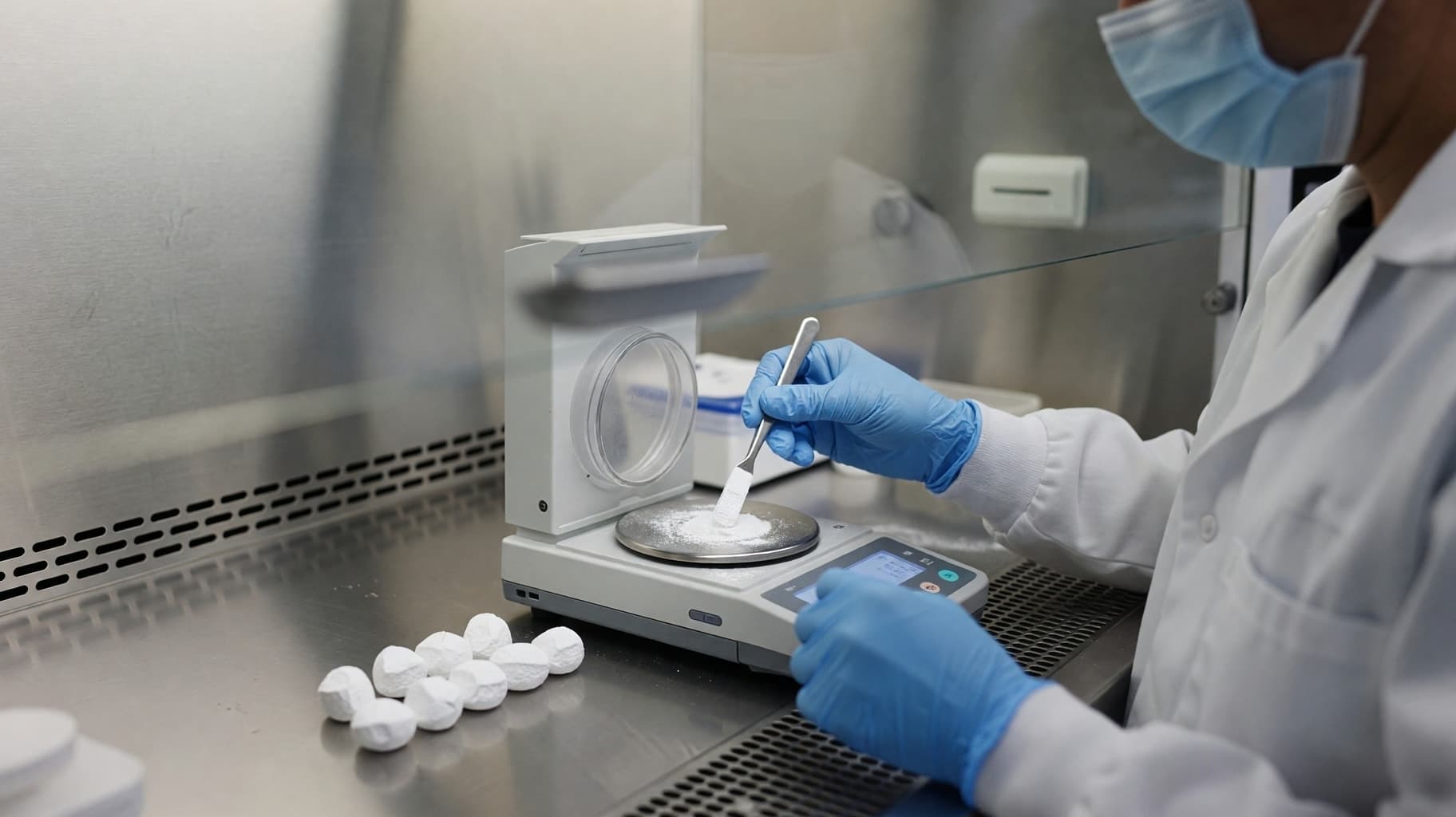
The U.S. Food and Drug Administration maintains no approved New Drug Application for sermorelin tablets, oral formulations, or sublingual dosage forms. The branded injectable product Geref received approval in 1997 for diagnosing and treating growth hormone deficiency in children, but that product was later withdrawn from the market. No FDA-approved version of sermorelin currently exists in any formulation (Testing.com).
Sermorelin is a synthetic 29-amino-acid analog of growth hormone-releasing hormone. It binds GHRH receptors on somatotroph cells in the anterior pituitary to trigger pulsatile growth hormone secretion. Injectable sermorelin has documented pharmacokinetics in agency records. Oral tablet forms marketed by telehealth platforms lack this validation.
Formulation Categories and Evidence Boundaries
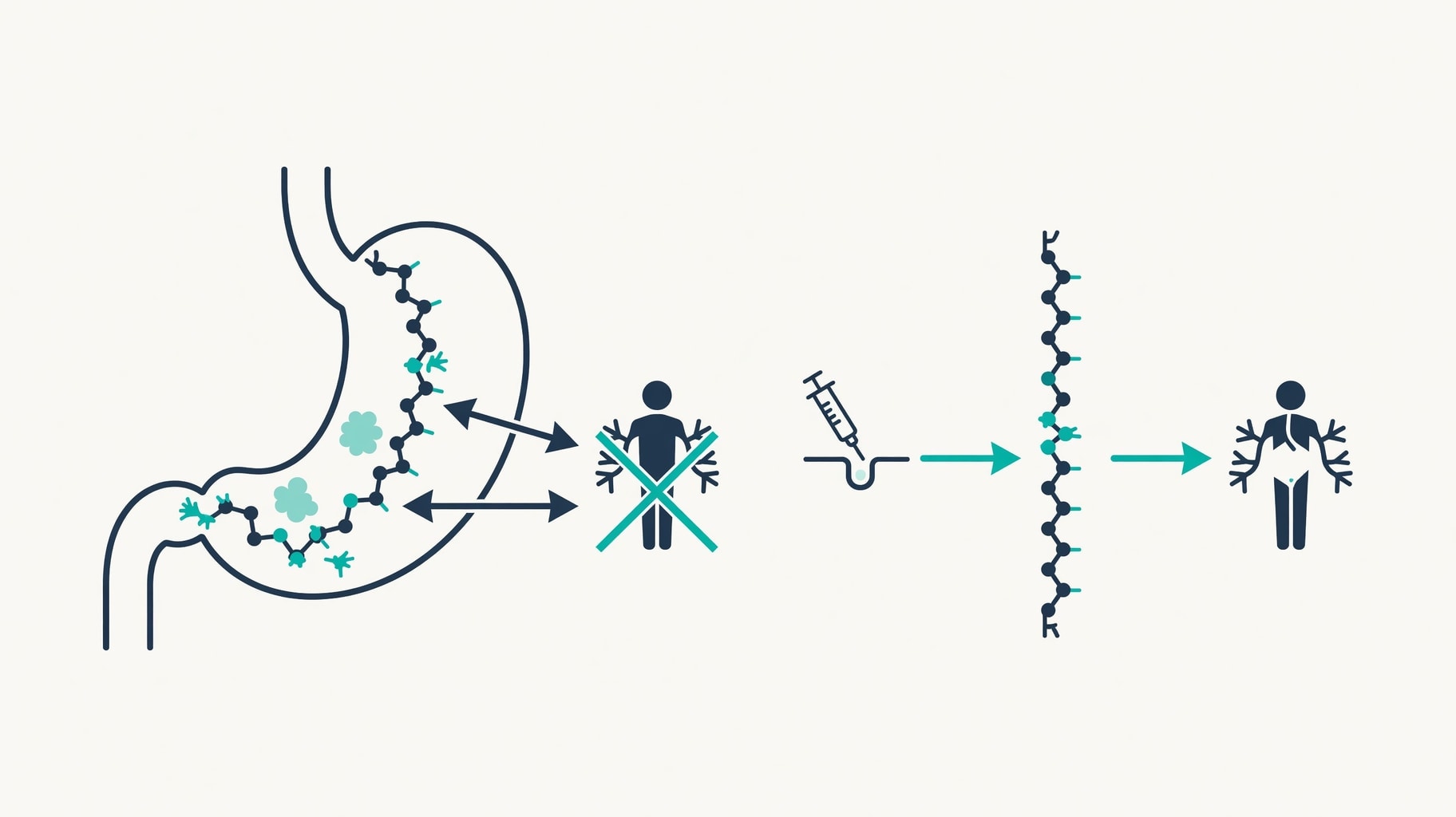
Figure 1: Oral sermorelin undergoes rapid gastric degradation, preventing meaningful systemic bioavailability compared to injectable forms.
Commercial sermorelin tablets fall into distinct formulation categories that vendors often describe interchangeably. Sublingual tablets dissolve under the tongue to theoretically facilitate mucosal absorption. Troches act as lozenge-like preparations designed to sit against the cheek or under the tongue.
No published human study demonstrates that any oral form of sermorelin matches the bioavailability of an injection. Sublingual sermorelin specifically lacks dedicated human pharmacokinetic data (Policy Lab).
Compounding pharmacies prepare these products under state licensure rather than federal drug approval. CFS Pharmacy states it compounds sermorelin into sublingual tablets, solutions, or troches because the standard presentation is injectable (CFS Pharmacy). These statements describe manufacturing capability. They do not constitute clinical efficacy data.
Statutory Framework for Compounded Oral Peptides
Compounded sermorelin tablets exist through Section 503A of the Federal Food, Drug, and Cosmetic Act. This provision permits licensed pharmacies to compound drug products for individually identified patients pursuant to a valid prescription. Pharmacies operating under this statute are exempt from submitting preparations for FDA premarket approval.
The statutory threshold for 503A compounding does not require a pharmacy to demonstrate bioavailability for each compounded dosage form. A pharmacy may prepare a tablet containing the active pharmaceutical ingredient and dispense it under enforcement discretion. Compliance relies on state board rules and federal compounding standards rather than therapeutic equivalence reviews.
This framework creates a regulatory asymmetry between form and function. The active ingredient has established pharmacology in injectable form. The oral dosage form lacks any New Drug Application. No agency has reviewed a bioavailability study for compounded oral sermorelin because no sponsor has submitted one.
Gastric Degradation Versus Mucosal Absorption
A 29-amino-acid peptide cannot survive the gastrointestinal tract intact. Analysis of oral sermorelin indicates that gastric acid and enzymes destroy the compound before it can signal the pituitary gland (Perfect B).
Peptide drugs generally require complex encapsulation technology to survive gastric pH. Sermorelin’s chemical structure does not support this technology at the scale used in compounded tablets. Swallowed formulations face near-total degradation.
Sublingual administration offers a theoretical bypass of first-pass metabolism. The oral mucosa contains capillary networks capable of absorbing small molecules directly into systemic circulation. Absorption of a 29-amino-acid GHRH analog through buccal or sublingual mucosa remains undemonstrated in published human studies.
Troches are generally expected to absorb better than swallowed tablets due to this mucosal pathway. Human data on sermorelin specifically remains absent (Policy Lab). Theoretical absorption models do not replace pharmacokinetic validation.
Clinical Evidence Gap and Commercial Listings
No published human pharmacokinetic study validates oral, sublingual, or intranasal sermorelin delivery. Oral preparations marketed for energy, body composition, and recovery fall outside the evidence base for injectable sermorelin.
The Mayo Clinic sermorelin drug profile covers the injection route exclusively. It contains no oral administration guidance because no FDA-approved oral product exists to document (Mayo Clinic).
Vendors price oral sermorelin tablets between $126 and $158 per month. GoodGirlRx lists a one-month plan at $158 compounded by licensed U.S. pharmacies (GoodGirlRx). Eden lists compounded sermorelin ODT starting at $126 for the first month (Eden). Commercial pricing reflects service fees rather than therapeutic equivalence.
Comparisons and Adjacent Peptide Pathways
Readers evaluating sermorelin tablets against other secretagogues must review evidence for each compound separately. The regulatory and pharmacokinetic questions for cjc 1295 vs sermorelin differ materially from those for sermorelin and ipamorelin combinations. Similarly, cjc 1295 and ipamorelin carry distinct approval and bioavailability profiles.
The comparison of ghrh vs ghrp peptides explains how receptor pathways differ across growth hormone releasing peptides. The epitalon peptide science guide covers a separate compound with its own distinct evidence base. These distinctions matter for prescribers navigating unapproved formulations.
Discontinuation and Safety Signals
Discontinuation data for oral sermorelin does not exist because no trials have measured it. Injectable sermorelin stimulates pulsatile GH release through endogenous feedback loops. Somatostatin remains active as a regulatory brake on GH levels. When exogenous GHRH stimulation stops via injection, the pituitary returns to baseline signaling.
For oral products, discontinuation is secondary to absorption. If the peptide does not reach systemic circulation in bioactive form, there is no active treatment to cease.
Sermorelin side effects cancer concerns arise from the mechanism of action. GHRH analogs stimulate GH secretion and downstream IGF-1 production. No clinical trial establishes that sermorelin causes cancer in humans at therapeutic doses. Adult anti-aging use falls outside the original pediatric approval (Testing.com). Patients using unapproved dosage forms accept an evidence gap that includes unknown long-term safety signals.
Oral sermorelin tablets represent a regulatory category rather than a clinical standard. They are compounded preparations dispensed under statutory provisions that do not require proof of absorption. Peptide chemistry suggests swallowed forms fail. Sublingual forms remain unproven in human studies. Prescribers and patients must measure the gap between commercial availability and the published record.