
NeoCell applies the trademarked designation Bio-Peptides to its enzymatically hydrolyzed collagen lines. The manufacturer attributes the name to an advanced enzymatic processing method that yields smaller peptide chains with lower molecular weight than non-enzymatically treated gelatin Collagen Bio-Peptides Protein - Unflavored. That manufacturing claim appears on the Supplement Facts panels and product listings for both single-source and multi-source formulations.
The supplied commercial records document the designation as a brand identifier applied to specific enzymatic processing inputs. The available records consist entirely of commercial product listings, retail labeling, and trade reviews, offering a detailed picture of how the trademark is used in the dietary supplement marketplace.
Trademarked Designation and Manufacturing Claims
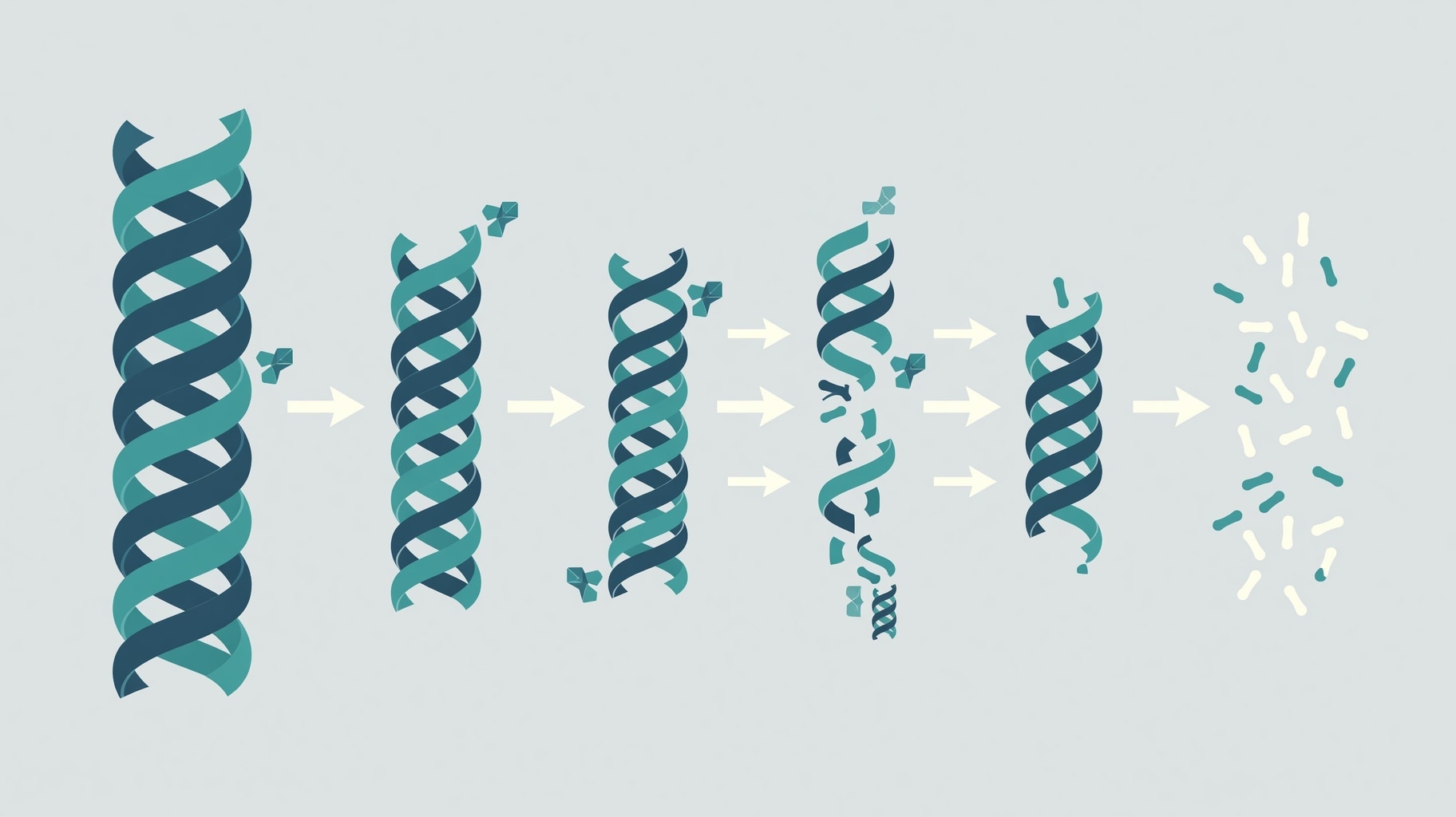
Figure 1: Enzymatic hydrolysis pathway converting collagen into low-molecular-weight bio-peptides.
NeoCell defines Bio-Peptides as small chains of amino acids formed by an advanced manufacturing process in which larger collagen is enzymatically simplified, or broken down, into smaller, highly absorbable peptides (Neocell). The company compares this enzymatic treatment to non-enzymatically treated gelatin to highlight the differences in molecular weight and expected absorption rates (Neocell).
The trademark applies across multiple product configurations within the NeoCell catalog. The Grassfed Collagen Bio-Peptides listing documents a single-source bovine product delivering 20 grams of collagen and 18 grams of protein per scoop, designed to replenish collagen depletion that naturally occurs with age (Neocell).
The Multi Collagen Advanced Bio-Peptides listing documents a multi-source formulation combining ten distinct types of collagen, specifically types 1, 2, 3, 4, 5, 7, 8, 10, 12, and 22, into a single unflavored powder (Neocell). The designation primarily identifies an enzymatic processing claim rather than an entirely new substance.
The supplied records contain no trademark registration certificate or pharmacopeial classification assigning Bio-Peptides a distinct chemical status beyond standard hydrolyzed collagen peptides.
Supply Chain Inputs and Composition
The single-source bovine product relies on grass-fed, pasture-raised bovine collagen sourced with rigorous quality testing. Retail labeling at Swanson Vitamins documents the Supplement Facts panel for the Collagen Bio-Peptides Protein variant, noting 20 grams of Bio-Peptides Superior Absorption Collagen per serving, yielding 18 grams of protein and 70 calories Collagen Bio-Peptides Protein - Unflavored.
The stated amino acid profile includes significant amounts of glycine (20.9 g), hydroxyproline (10.5 g), proline (10.9 g), and leucine, which are carefully selected to support active lifestyles Collagen Bio-Peptides Protein - Unflavored. Tryptophan is notably absent from the stated composition, as is typical for collagen peptides (Neocell).
The multi-source variant expands the documented supply chain considerably. The Multi Collagen Advanced Bio-Peptides product page specifies bovine, fish, chicken, and eggshell membrane collagen as the four distinct input sources, creating a broad-spectrum amino acid profile (Neocell). The manufacturer adds 75 mg of hyaluronic acid and vitamin C to the formulation to support endogenous collagen synthesis and cellular hydration (Neocell).
A caplet version of the multi-source product delivers 6,000 mg of collagen per serving from the same four animal inputs, offering a 60-day supply in a 360-caplet bottle for consumers who prefer tablets over mixing powders (Neocell).
Labeling Framework and Market Positioning
A third-party trade review by Consumer Health Digest describes the Bio-Peptides line as positioned around proprietary enzymatic processing meant to improve absorption compared to standard gelatin, noting that the brand is reasonably formulated and established (Consumerhealthdigest).
The company has manufactured collagen and nutritional supplements since 1998, describing itself as a leading beauty supplement brand based on recent retail sales data (Consumerhealthdigest). Independent reviewers have also recognized the brand's standing; the NeoCell Super Collagen Peptides are considered a best-selling collagen powder rich in types I and III (Treelinereview).
The trademarked designation governs the commercial labeling of these specific enzymatic processing claims. The supplied records do not contain agency guidance documents, enforcement actions, or administrative stays naming the Bio-Peptides trademark. The products circulate through U.S. retail supply chains under labeling standards applicable to dietary supplements.
A trade publication covering the natural products sector noted parent company Nutranext announced NeoCell Collagen Bio-Peptides Protein Powder as a top-selling product on TikTok, reflecting its significant traction in digital commerce channels Harley Sutton, Owner, Thanks! Naturals. The retail availability proceeds without an agency premarket approval pathway specific to this trademarked designation, as dietary supplements generally do not require such clearance before reaching consumers.
Nomenclature and Cross-Category Distinctions
The term Bio-Peptides functions as a trademarked manufacturing descriptor rather than a novel scientific classification. The enzymatically hydrolyzed collagen sold under the trademark remains hydrolyzed collagen. The trademark adds no new chemical entity to the specification sheet documented by retailers. Procurement personnel verifying the identity of "collagen bio peptides protein" in a commercial listing should recognize the substance as hydrolyzed collagen from specified animal sources, processed enzymatically to reduce molecular size.
The "10 types" language on NeoCell packaging refers to collagen variants naturally present in the source tissues, such as skin, scales, and cartilage, rather than synthetically engineered variants (Neocell). The enzymatic treatment reduces molecular weight to enhance bioavailability (Neocell). It does not create collagen types absent from the source material.
Readers evaluating the difference between the trademarked label and the general ingredient category can review the distinction between hydrolyzed collagen vs collagen peptides.
Oral consumption of enzymatically hydrolyzed collagen occupies a separate regulatory category from topical formulations. Topical applications rely on different mechanisms and distinct peptide structures to influence skin physiology. Professionals comparing the two delivery routes can review the evidence on collagen peptide bioavailability. Readers evaluating topical alternatives can review the regulatory and labeling specifications for skin care products with Matrixyl 3000.
This page is scheduled for evidence review within 180 days.