
Manufacturers listing hydrolyzed collagen or collagen peptides on U.S. commercial labels submit both designations under the same dietary supplement regulatory framework. No statutory distinction separates the two terms. Hydrolyzed collagen and collagen peptides describe one manufactured product: native collagen protein subjected to enzymatic hydrolysis to yield shorter peptide chains.
This equivalence dictates label compliance. Manufacturers routing collagen products from Pacific biotech supply chains into U.S. commerce encounter a nomenclature divergence that carries no regulatory consequence. The terminology reflects branding conventions rather than a distinct statutory threshold or manufacturing standard under FDA oversight.
Statutory Equivalence Under FDA Oversight
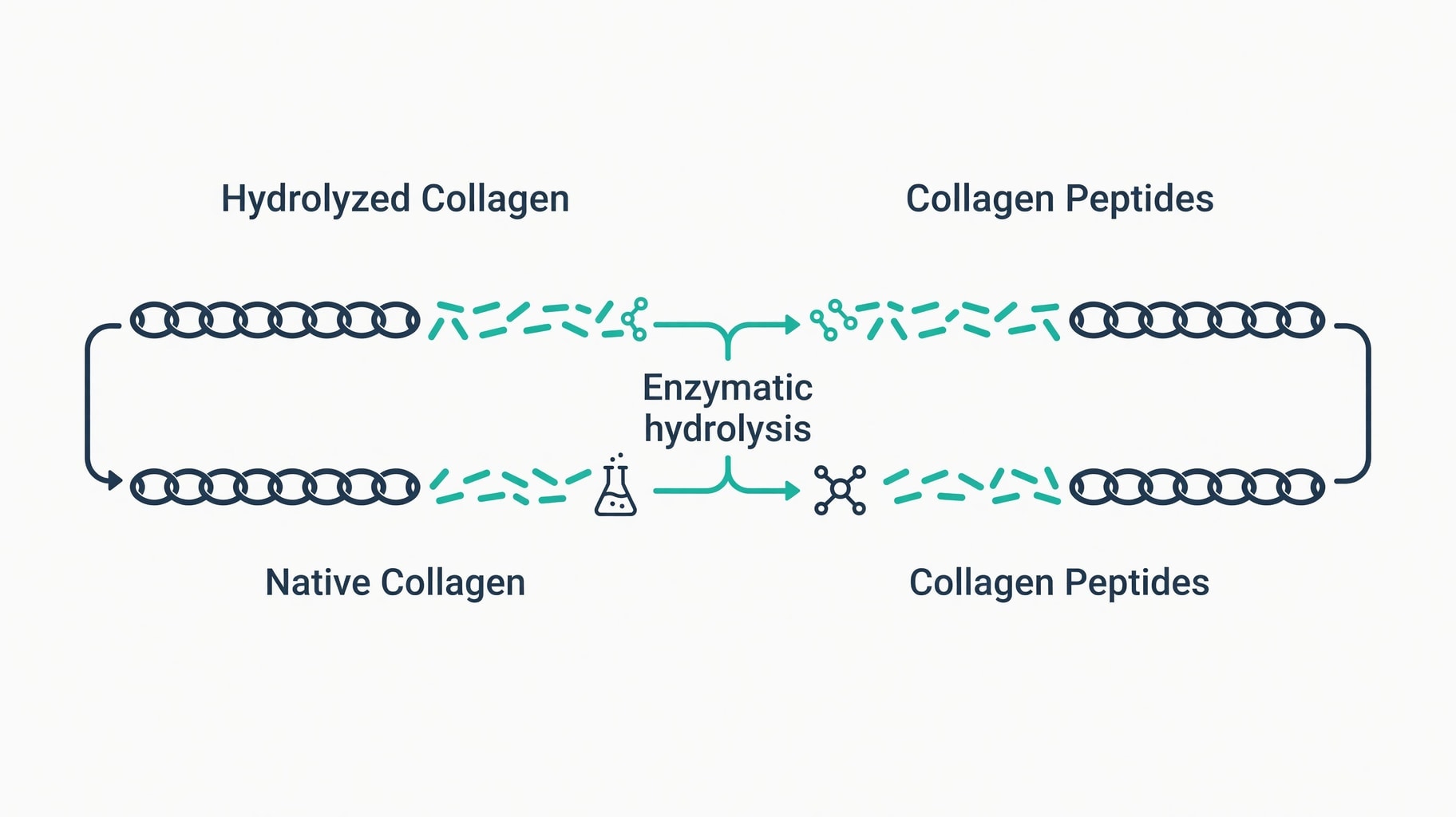
Figure 1: Visual breakdown showing hydrolyzed collagen and collagen peptides as chemically and regulatorily identical under FDA dietary supplement rules.
Dietary supplement manufacturers use both terms without triggering separate compliance obligations. The Arthritis Foundation states that hydrolyzed collagen is "also called collagen peptides or collagen hydrolysate" and notes it is often sold as a powder that dissolves in liquids.
The term "hydrolyzed" describes the manufacturing process. The term "peptides" describes the chemical output. Naked Nutrition confirms that the two terms "are used interchangeably because they do in fact refer to the same product." The company attributes naming differences to "a preference with branding and product labeling" rather than a chemical distinction.
For regulatory affairs professionals reviewing cross-border submissions, one ingredient file covers both label variants. A dietary supplement notification or facility registration does not require a separate designation for hydrolyzed collagen versus collagen peptides.
The Enzymatic Hydrolysis Process
Hydrolysis is the manufacturing step that converts intact collagen into the form sold as either hydrolyzed collagen or collagen peptides. The process uses water and specific enzymes to cleave the triple-helix structure of native collagen into smaller peptide chains.
Peptan, a collagen ingredient manufacturer, states the equivalence directly: "There is no difference. The terms collagen peptides and hydrolyzed collagen are synonymous and used interchangeably for the same product." The company clarifies that "collagen peptides" names the end product while "hydrolyzed collagen" names the method of production.
Fully Healthy describes the process with specificity: hydrolyzed collagen is "collagen broken down into smaller peptides through enzymatic hydrolysis, not water alone." This distinction controls manufacturing documentation. Enzymatic hydrolysis produces a predictable peptide profile. Water processing alone does not achieve the same molecular weight reduction.
Amino Acid Retention and Chemical Identity
The hydrolysis process does not destroy the amino acid composition of the source collagen. CB Supplements states that collagen peptides "keep all the original 19 amino acids after going through hydrolysis" and that amino acids "are not damaged or degraded during hydrolysis."
The primary amino acids retained are glycine, proline, and hydroxyproline. Momentous confirms there is "no meaningful difference in amino acid composition between a product labeled 'hydrolyzed collagen' and one labeled 'collagen peptides,' assuming they come from the same source."
This chemical identity establishes regulatory equivalence. A certificate of analysis listing glycine, proline, and hydroxyproline content applies equally to a product labeled as hydrolyzed collagen or collagen peptides. The ingredient profile remains unchanged by the naming convention.
Source Material and Labeling Conventions
Source selection alters the ingredient profile without altering regulatory status. Bovine collagen comes from cattle hides and bones. Marine collagen comes from fish scales and skin. Both sources produce hydrolyzed collagen after enzymatic processing.
PureHealth Research notes that marine collagen "is often valued for its smaller peptide size and use in skin-focused products." This is a sourcing consideration. A product labeled "marine collagen peptides" and one labeled "hydrolyzed bovine collagen" are both hydrolyzed collagen products under the same statutory framework. The source disclosure controls allergen labeling and consumer preference. It does not control the basic regulatory classification.
The Arthritis Foundation confirms that hydrolyzed collagen "can come from a variety of animal sources, including hides, hooves, bones and scales from cows, pigs or fish." Undenatured collagen is almost always derived from chicken breastbone cartilage. It has not undergone hydrolysis. That distinction is statutory: undenatured collagen is a different ingredient with different processing claims.
Evidence Boundary
This page addresses nomenclature and regulatory classification. It does not evaluate clinical efficacy, bioavailability data, or dermatological outcomes. The Consensus evidence aggregator notes that studies on hydrolyzed collagen and collagen peptides report varied results on skin moisture, elasticity, and wrinkle reduction. Those findings belong to a separate analysis of clinical evidence.
For readers comparing delivery routes, our guide to collagen peptide bioavailability separates oral hydrolysates from topical formulations. The comparison of skin care products with Matrixyl 3000 addresses a specific cosmetic ingredient system.
The operational conclusion for manufacturers and importers: choose a naming convention and apply it consistently across labels, certificates of analysis, and facility documentation. The FDA treats hydrolyzed collagen and collagen peptides as the same dietary ingredient. The choice between the two terms carries no statutory weight.