
The question "how long does it take for peptides to work" has no single statutory answer. The Food and Drug Administration classifies bulk peptide active pharmaceutical ingredients outside the 503B outsourcing framework, which means compounds like BPC-157 and TB-500 circulate without FDA-reviewed efficacy timelines. Any onset window attached to those compounds originates in vendor literature, not in agency records.
The timelines that do exist in commercial materials represent marketing claims rather than clinical endpoints. That distinction carries direct regulatory consequence for clinics and distributors.
Why Vendor Timelines Have No Statutory Basis
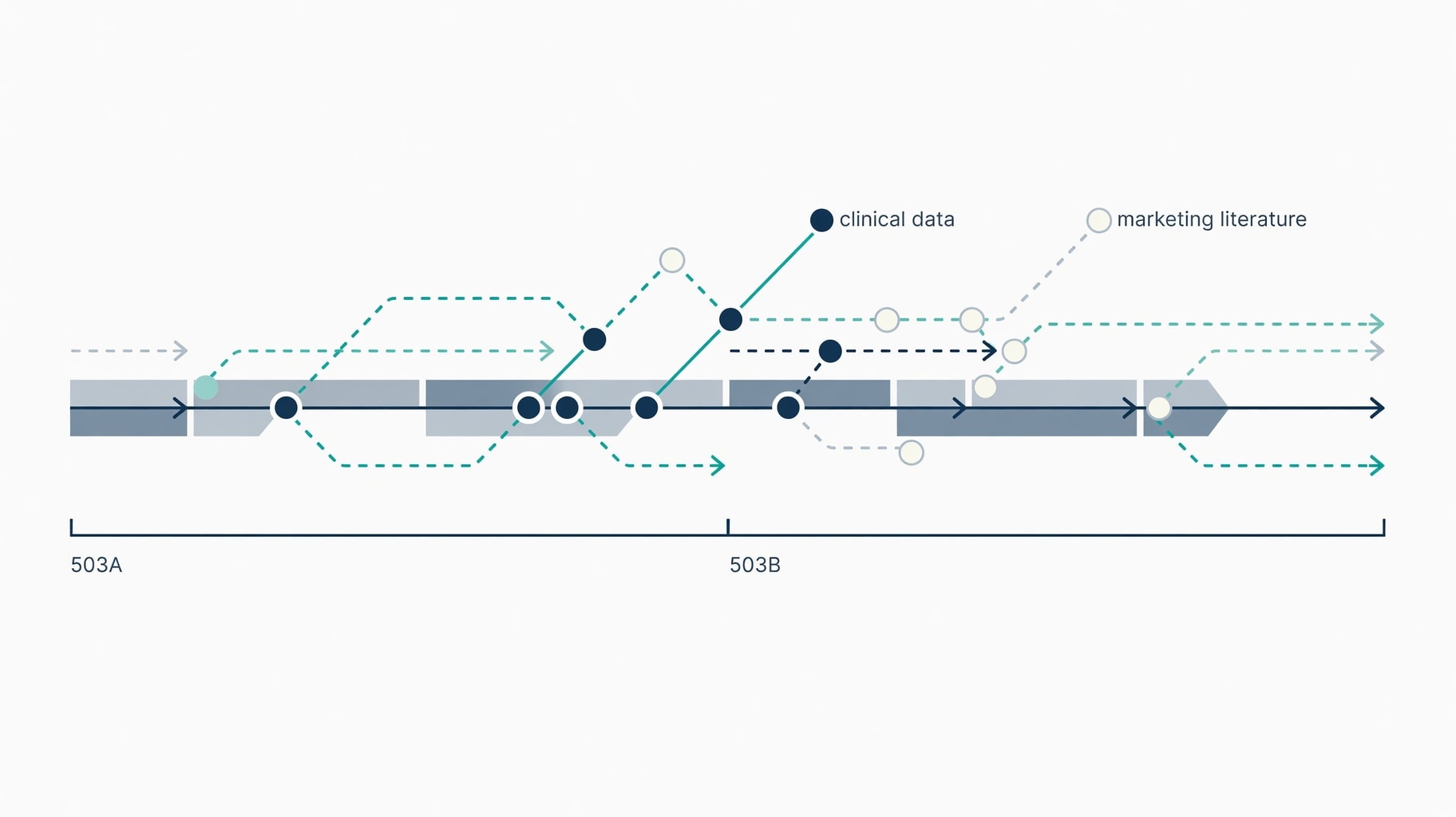
Figure 1: Regulatory versus vendor sources for peptide onset timelines.
Compounding facilities distributing unapproved peptides operate without the clinical trial infrastructure required to establish efficacy timelines. Those figures do not derive from FDA-reviewed data.
Rochester TRT publishes similar category-based tables, claiming CJC-1295 and TB-500 produce initial effects in two to four weeks and full benefits by six months (Rochester TRT). None of these sources identify a trial registry, an agency filing, or a peer-reviewed endpoint supporting the specific windows.
The World Anti-Doping Agency banned BPC-157 in 2022 because the compound "hasn't been properly studied for safety risks," according to a dermatology practice guide (Natura Dermatology). A compound lacking adequate safety data cannot simultaneously possess validated efficacy timelines. The two claims occupy different regulatory planes.
Approved Drugs Versus Bulk Active Pharmaceutical Ingredients
FDA-approved peptide drugs carry the opposite evidentiary status. Tirzepatide, a GLP-1 receptor agonist approved for type 2 diabetes and weight management, has published clinical trial data showing appetite suppression within the first weeks of titration. The Skin Company notes that "published data on GLP-1 peptides backs this up: appetite changes are often the earliest thing patients notice, sometimes within the first one to two weeks" (The Skin Company).
That contrast is the statutory boundary. Approved drugs earn their timelines through phase trials. Bulk active pharmaceutical ingredients sold for research or compounded under enforcement discretion earn no such designation. A peptide deck guide lists GLP-1 weight loss milestones at months two and six, attributing them to "clinical trial averages" and "tirzepatide trials" (Peptide Deck). Those citations refer to approved medications, not to the unapproved compounds sold alongside them.
Tesamorelin illustrates the boundary in practice. The FDA approved it for HIV-related visceral adiposity reduction after a 404-patient CT trial showed visceral fat reduction of 10.9 percent at six months (Perfect B). That figure has evidentiary standing. The same compound marketed off-label for general body composition carries no equivalent agency-reviewed timeline.
Enforcement Discretion and Distributor Liability
Clinics publishing onset claims for unapproved peptides assume liability the agency has not waived. Priority You MD states that patients can "expect to start enjoying the benefits of peptide therapy within 21 days" (Priority You MD). These statements create a factual record that FDA enforcement actions can cite when evaluating whether a facility exceeded compounding boundaries.
The statutory threshold matters because enforcement discretion is conditional. A facility compounding bulk peptide substances under 503A or 503B rules may face scrutiny when marketing materials attribute clinical efficacy to compounds lacking approved indications. The vendor timeline becomes evidence of intended therapeutic use, which narrows the discretion the agency extends to traditional compounding.
For cross-border supply chains, the same deficit applies. A U.S. or Pacific distributor importing bulk peptide active pharmaceutical ingredients cannot import an efficacy timeline. The timeline exists only in the downstream clinic's promotional copy. When that copy circulates, the supply constraint becomes a legal exposure rather than a logistical one.
What the Existing Evidence Actually Shows
Laboratory and animal studies provide some basis for understanding peptide onset in research contexts. Peptides Lab UK describes BPC-157 research models showing "initial measurable effects on inflammatory markers" within three to five days, with structural healing measurable at three to six weeks (Peptides Lab UK). Those are research observations, not clinical endpoints in humans.
The pharmacokinetic picture complicates vendor timelines further. Unmodified peptides clear from circulation in minutes to hours, yet their downstream cellular effects can persist for weeks (Perfect B). A short half-life does not predict a short therapeutic window, and a long perceived benefit does not establish an approved duration.
Readers evaluating the wolverine stack peptide combination should apply the same scrutiny. Stacking unapproved compounds multiplies the evidence deficit. No stacking protocol in the vendor literature carries FDA-reviewed dosing or efficacy data. The same caution extends to glp 1 peptides, where approved medications like semaglutide and tirzepatide sit beside unapproved research compounds sharing the class name but not the regulatory status.
For those considering a pt 141 peptide nasal spray, the route of administration adds another variable. Oral and intranasal peptide delivery faces absorption barriers that subcutaneous injection avoids. Vendor timelines rarely specify route, dose, or subject population, which strips the numbers of any interpretive value.
Research suppliers and lab rats peptides protocols face a parallel gap. Laboratory observation windows do not transfer to human therapeutic claims. A researcher measuring inflammatory markers in animal models cannot repurpose that endpoint as a clinical onset window for a medspa patient.
What to Conclude
The direct answer to the search query is that no single timeline exists. Approved peptide drugs have documented onsets tied to specific trials. Unapproved bulk compounds have vendor assertions. The two categories are not interchangeable.
Any facility or distributor publishing a specific onset window for BPC-157, TB-500, CJC-1295, or similar compounds is publishing a claim without statutory review. The KLOW peptide stack market operates under the same constraint. Readers evaluating such claims should ask which trial produced the number and which agency reviewed it. When neither answer exists, the timeline is a marketing statement, not a clinical fact.