
BPC-157 demonstrates regenerative activity in preclinical musculoskeletal and gastrointestinal models but lacks the human safety and efficacy data required for FDA approval or confirmed 503A compounding eligibility. A systematic review identified only one retrospective human study among 36 total investigations, while the FDA Pharmacy Compounding Advisory Committee has evaluated the substance strictly against statutory bulk drug criteria rather than general wellness claims.
Biological activity in rodent models does not satisfy the evidentiary threshold for legal compounding. The peptide remains investigational. No final agency order currently authorizes its inclusion on the 503A bulk drug substances list.
Musculoskeletal Evidence Hierarchy
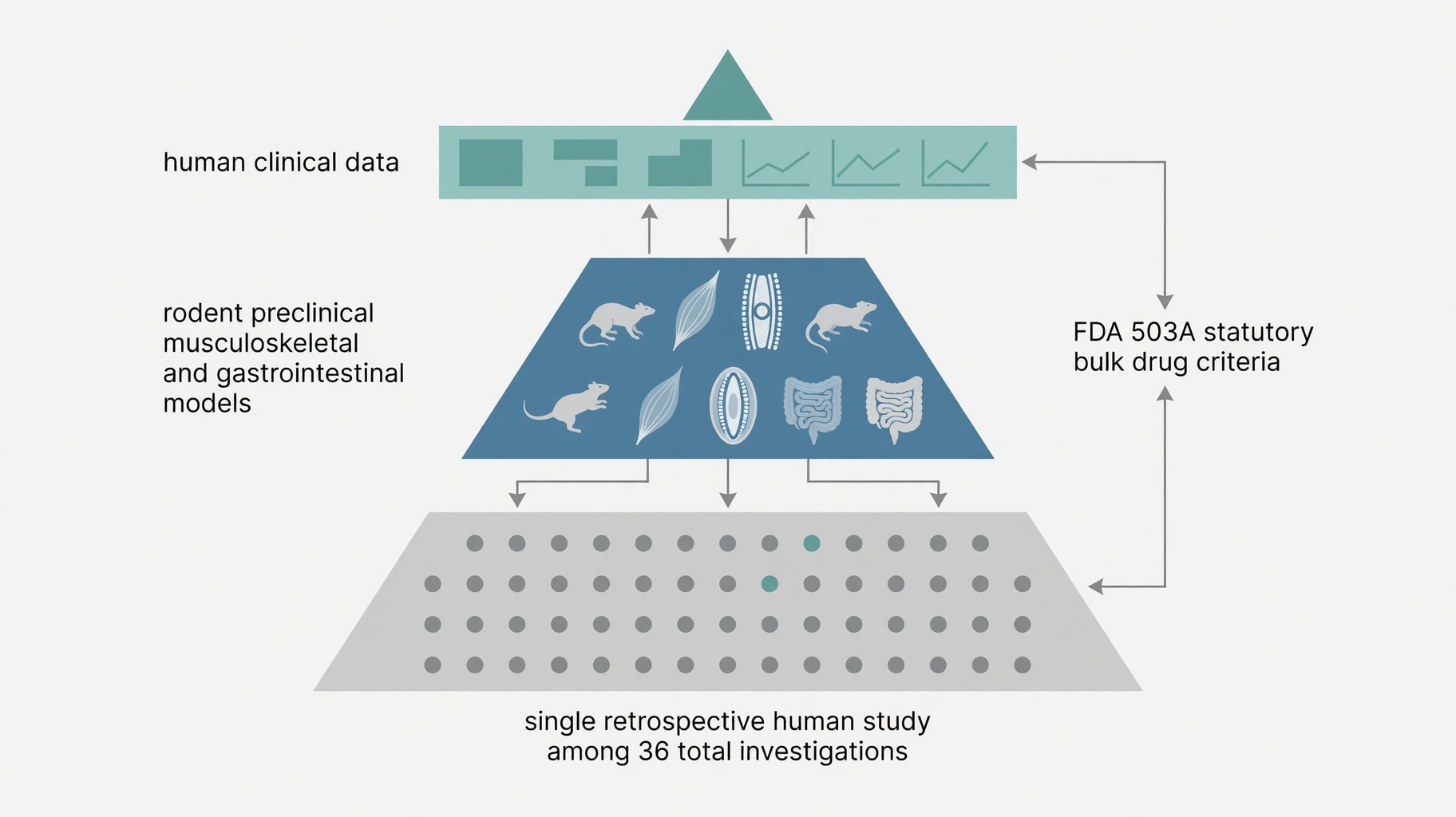
Figure 1: Evidence hierarchy reviewed by FDA for BPC-157 compounding eligibility.
The FDA Pharmacy Compounding Advisory Committee reviewed BPC-157 nomination materials against Section 503A statutory standards. Agency briefing documents indicate the evaluation focused on specific clinical need rather than broad therapeutic potential. Committee members examined the peptide within a narrow scope of designated indications. Broader consumer claims regarding muscle recovery or tendon repair remained outside the panel’s formal regulatory charge.
The FDA's interim policy on peptide compounding distinguishes between substances with established clinical data and those relying primarily on preclinical findings.
A systematic review in HSS Journal cataloged 36 studies relevant to orthopaedic sports medicine. Thirty-five were preclinical investigations using rat, rabbit, or cell culture models. Preclinical data demonstrated improved structural and biomechanical outcomes following tendon transection, ligament injury, and muscle crush damage. Only one retrospective human study was identified. That study involved 12 patients receiving intraarticular knee injections for chronic pain. Seven subjects reported symptom relief exceeding six months.
A PubMed confirmed BPC-157 activates VEGFR2 and the Akt-eNOS axis to promote angiogenesis. This mechanism supports fibroblast proliferation in tendon and myotendinous tissue in animal models. The review noted only three pilot human studies exist across all indications. Authors classified the compound as investigational. Widespread availability through non-regulated channels currently outpaces verified safety data. No controlled human trial has confirmed a musculoskeletal benefit at a defined dose.
FDA staff assessments for 503A listing require evidence exceeding level IV and V studies.
Gastrointestinal Indications and Clinical Data
BPC-157 was originally isolated from human gastric juice. Preclinical work demonstrates cytoprotective effects on intestinal mucosa in rodent models of NSAID-induced damage. The peptide modulates macrophage polarization from a pro-inflammatory M1 phenotype toward a reparative M2 state. This mechanism reduces fibrosis in animal tissue.
Regulatory evaluation has centered on ulcerative colitis as a specific gastrointestinal indication. No human efficacy data currently supports the use of oral capsules or nasal sprays for general gut repair. The distinction between mechanistic plausibility and validated clinical outcome defines the current regulatory status. Patients and providers reviewing bpc 157 inflammatory bowel disease data will encounter this evidentiary gap. Marketing materials frequently conflate gastric origin with proven therapeutic effect.
Agency records do not support this equivalence for compounding purposes.
Salt Forms and Pharmaceutical Standards
BPC-157 circulates in commerce as both an acetate salt and an arginate salt. The arginate form was developed to enhance stability in gastric pH environments. This characteristic is relevant for oral formulation development. Industry-submitted stability data characterizes these differences. However, regulatory admissibility depends on more than chemical stability.
The active pharmaceutical ingredient must meet identity, strength, quality, and purity specifications before any licensed facility may compound it. Preclinical safety programs in mice, rats, rabbits, and dogs reported no serious toxicity in single-dose and repeat-dose experiments. No clinical safety data in humans exists to satisfy statutory requirements. The pharmacological profile of BPC-157 salts details available characterization data. Manufacturing compliance remains distinct from therapeutic authorization.
Combination Products and Statutory Exclusions
Direct-to-consumer markets frequently pair BPC-157 with TB-500. Users assign BPC-157 a local repair role and TB-500 a systemic cell-migration function. The TB-500 and BPC-157 stack reference documents this common market pairing. No controlled human trials have evaluated this combination. The PCAC nomination process assesses single bulk drug substances. A combination product does not inherit regulatory status from individual component reviews.
Compounding a combination formulation requires independent statutory justification under Section 503A or 503B. No such justification for a BPC-157/TB-500 blend has been submitted or evaluated by the committee. Enforcement actions against unapproved combination products remain a documented regulatory risk. Providers prescribing such stacks operate outside established compounding safeguards.
Pending Agency Determination
No final FDA order, enforcement discretion memo, or interim guidance specific to BPC-157 compounding has been published. The advisory committee vote constitutes a recommendation. It is not a binding agency determination. Until the Center for Drug Evaluation and Research issues a formal listing decision or exclusion, 503A and 503B facilities operate under enforcement discretion. This status may shift without additional public notice.
Stakeholders tracking peptide regulatory developments should monitor Federal Register notices for definitive action. Administrative stays and interim listings define the legal landscape more precisely than advisory panel discussions. Market availability does not indicate regulatory compliance.
This page is flagged for evidence review after 180 days. Regulatory status may change with agency action.
Related reporting explores fda panel's narrow vote leaves bpc-157 and semax in regulatory limbo.