
AOD-9604 Clinical Evidence: Phase 2b Obesity Trial Failure and Regulatory Status
A randomized, double-blind, placebo-controlled Phase 2b trial evaluating oral AOD-9604 in 534 obese adults failed to meet its primary weight-loss endpoint, leading sponsor Metabolic Pharmaceuticals to discontinue the obesity program around 2007. Doses up to 1 mg per day over 24 weeks produced no statistically significant reduction in body weight compared to placebo, definitively halting pharmaceutical development for this indication. Despite this negative major outcome, the peptide retains FDA Generally Recognized as Safe (GRAS) status for specific food applications, a designation based solely on safety data that does not constitute approval for treating obesity or any medical condition. Current clinical evidence does not support AOD-9604 as an effective standalone intervention for fat loss, creating a substantial evidentiary gap between verified human null results and persistent commercial marketing that conflates food safety with therapeutic efficacy.
Phase 2b Trial Outcomes and Development Cessation
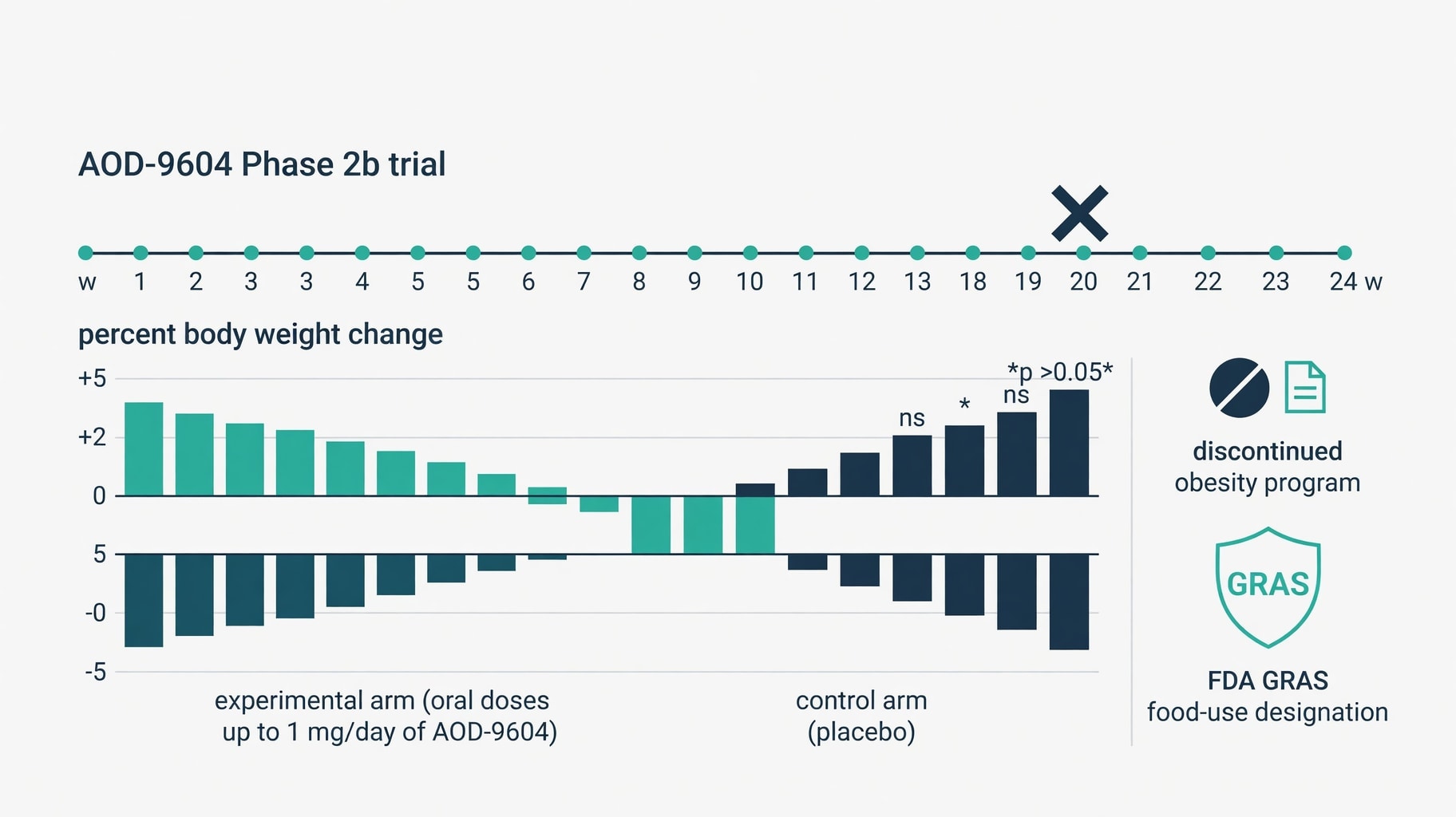
Figure 1: Phase 2b trial outcomes for oral AOD-9604 versus placebo in 534 obese adults showing failure to meet primary weight-loss endpoint.
Metabolic Pharmaceuticals designed the major Phase 2b study to determine whether oral administration of the synthetic hGH fragment could induce meaningful weight reduction in a human cohort. The protocol tested multiple dose levels against a placebo control over six months in 534 participants. Statistical analysis confirmed that while the compound was well-tolerated, it lacked sufficient efficacy to justify advancement to Phase 3 registration trials. None of the tested doses achieved the predefined primary endpoint for weight loss. This failure marked the terminal event in the drug development pathway for AOD-9604 as a metabolic therapeutic.
Following the trial's conclusion, the sponsor ceased clinical development for the obesity indication entirely. The Australian Therapeutic Goods Administration subsequently rejected an application for an obesity indication, reinforcing the global regulatory consensus that the available human data was insufficient to support therapeutic claims. Despite this definitive cessation of pharmaceutical research, the compound re-emerged years later in the dietary supplement and compounding markets, stripped of its failed clinical context. The divergence between the rigorous exclusion of the compound from drug registries and its availability in unregulated channels obscures the fact that no new human efficacy data has been generated since the program's collapse.
Post-hoc analyses and smaller early-phase studies suggested minor metabolic signals, but these were too weak or inconsistent to replicate in the adequately powered Phase 2b cohort. FormBlends notes that the distinction between a compound that produces a biological signal and one that achieves a therapeutic outcome defines the boundary between a research chemical and a medicine. AOD-9604 failed to cross this threshold in human obesity treatment. Modern obesity therapeutics now operate on entirely different pharmacological principles validated in massive Phase 3 registration trials. Clinicians evaluating weight loss peptides must recognize that AOD-9604 occupies a fundamentally different evidentiary category than approved multi-receptor incretin agonists that achieve weight loss through potent central appetite suppression and glycemic control.
Preclinical Lipolysis Mechanisms Versus Human Translation
Researchers at Monash University developed AOD-9604 to isolate the lipolytic domain of human growth hormone residues 176–191 while removing growth-promoting and insulin-desensitizing sequences. In obese mouse models, chronic treatment significantly reduced body weight gain and increased fat oxidation without elevating insulin-like growth factor 1 levels. Heffernan and colleagues demonstrated sustained fat loss with preserved lean mass in these animals, providing the scientific rationale for human testing. Mechanistic studies in rodents and in vitro systems indicate that the peptide stimulates lipolysis and inhibits lipogenesis through interaction with beta-3 adrenergic receptors on adipocytes. Activation of this receptor subtype triggers the breakdown of stored triglycerides into free fatty acids while simultaneously blocking new fat storage, independent of the classical hGH receptor and IGF-1 axis.
Human physiology differs markedly from murine models in beta-3 adrenergic receptor expression and function. While mice rely heavily on beta-3 receptors for thermogenesis and lipolysis, humans possess fewer functional beta-3 receptors in white adipose tissue, and their role in adult human metabolism remains debated. The FDA Pharmacy Compounding Advisory Committee has noted that beta-3 receptor density and coupling efficiency vary significantly across species, a translational disconnect that likely explains why potent fat-burning effects in rodents failed to manifest in the 534-subject human trial. Safety biomarker data from the human studies confirmed the intended molecular selectivity, as participants did not experience elevations in IGF-1, fasting glucose, or insulin resistance markers typically associated with hGH excess. The compound achieved its safety objectives regarding growth hormone side effects while failing its efficacy mandate for weight reduction.
Emerging preclinical research has pivoted toward cartilage and joint tissue repair following the obesity program's collapse. Laboratory studies suggest AOD-9604 may stimulate chondrocyte proliferation and extracellular matrix synthesis in models of osteoarthritis. This research remains exclusively preclinical, with no human clinical trials evaluating the peptide for musculoskeletal indications and no regulatory body reviewing it for joint health. Marketing the compound for cartilage repair currently relies entirely on extrapolation from animal and cell studies without human validation. The shift in research focus reflects an attempt to find utility in non-metabolic tissues after the primary indication proved unviable in humans, yet the evidentiary standard for these new applications remains at the earliest stages of discovery.
Regulatory Designations and Compliance Boundaries
Regulatory confusion surrounding AOD-9604 stems largely from a misunderstanding of what FDA GRAS status actually signifies. In 2014, the FDA issued a GRAS notice acknowledging AOD-9604 as safe for use as a food ingredient at specified levels. This determination was based on safety data, including the negative human obesity trials that established a benign adverse event profile. GRAS status certifies that qualified experts consider the substance safe for its intended use in food but does not evaluate, validate, or approve any therapeutic claims. A food ingredient cannot be marketed as a drug or dietary supplement intended to treat, cure, mitigate, or prevent disease without undergoing the New Drug Application process. Because AOD-9604 was investigated as a drug and failed, its status as a food additive exists in tension with its investigational history.
Recent enforcement actions highlight the agency’s focus on this distinction between food safety and drug claims. Regulatory enforcement against unapproved metabolic compounds demonstrates heightened scrutiny of products marketed with therapeutic assertions regardless of their GRAS status. Marketing AOD-9604 with specific fat-loss claims violates the Federal Food, Drug, and Cosmetic Act. International regulatory bodies have been even more explicit in their rejections. The Australian TGA’s refusal to list AOD-9604 for obesity provides a clear precedent that safety alone does not justify therapeutic approval. In Mexico, Regeneris Therapy states that COFEPRIS requires any off-label use to occur within notified clinical environments with informed consent acknowledging the negative Phase 2b endpoint, reflecting a global consensus that the compound’s therapeutic value remains unproven.
Athletes and competitive sports participants face additional regulatory barriers distinct from food or drug law. The World Anti-Doping Agency prohibits AOD-9604 under section S2 (Peptide Hormones, Growth Factors, Related Substances, and Mimetics) at all times. This prohibition applies regardless of whether the substance produces performance-enhancing effects in humans and reflects its classification as a growth hormone fragment rather than a validation of its efficacy. Testing positive for the compound results in sanctions identical to those for full-length hGH, creating substantial career risk for athletes who mistake GRAS safety for sports compliance. Metabolic Pharmaceuticals formally discontinued the obesity development program in 2007, and no subsequent sponsor has submitted a new drug application or initiated a Phase 3 trial to challenge the original negative findings.
Related reporting explores fda slaps 30 telehealth firms with warning letters over compounded glp-1 marketing.
Further Clinical & Regulatory Context
For deeper analysis and cross-referenced evidence, see: - Related Clinical & Pharmacological Analysis: AOD-9604 and PT-141: Divergent Lipolytic Mechanisms in Human Adipose Tissue