
Novo Nordisk CEO Mike Doustdar has little patience for the unapproved peptide injections promoted for injury recovery, muscle gain, and cosmetic use. In an interview published September 8, Doustdar said companies should put promising compounds through clinical testing before consumers gamble with their health.
His comments address a market that borrows credibility from medicines such as Wegovy while selling compounds that have followed a different path. Wegovy went through large human trials and regulatory review. Popular wellness peptides such as BPC-157 and TB-500 lack comparable evidence for the uses promoted online.
“Maybe they have benefits, maybe they have risks, maybe they don't,” Doustdar told Yahoo Finance. He urged drug developers to test molecules with commercial potential and produce regulated versions if the results support them.
Doustdar took over Novo Nordisk in August 2025 after more than three decades at the company. His position gives the remarks commercial weight. Novo sells one of the medicines that pushed peptide drugs into public conversation, yet its chief executive drew a firm boundary around compounds sold without the same clinical record.
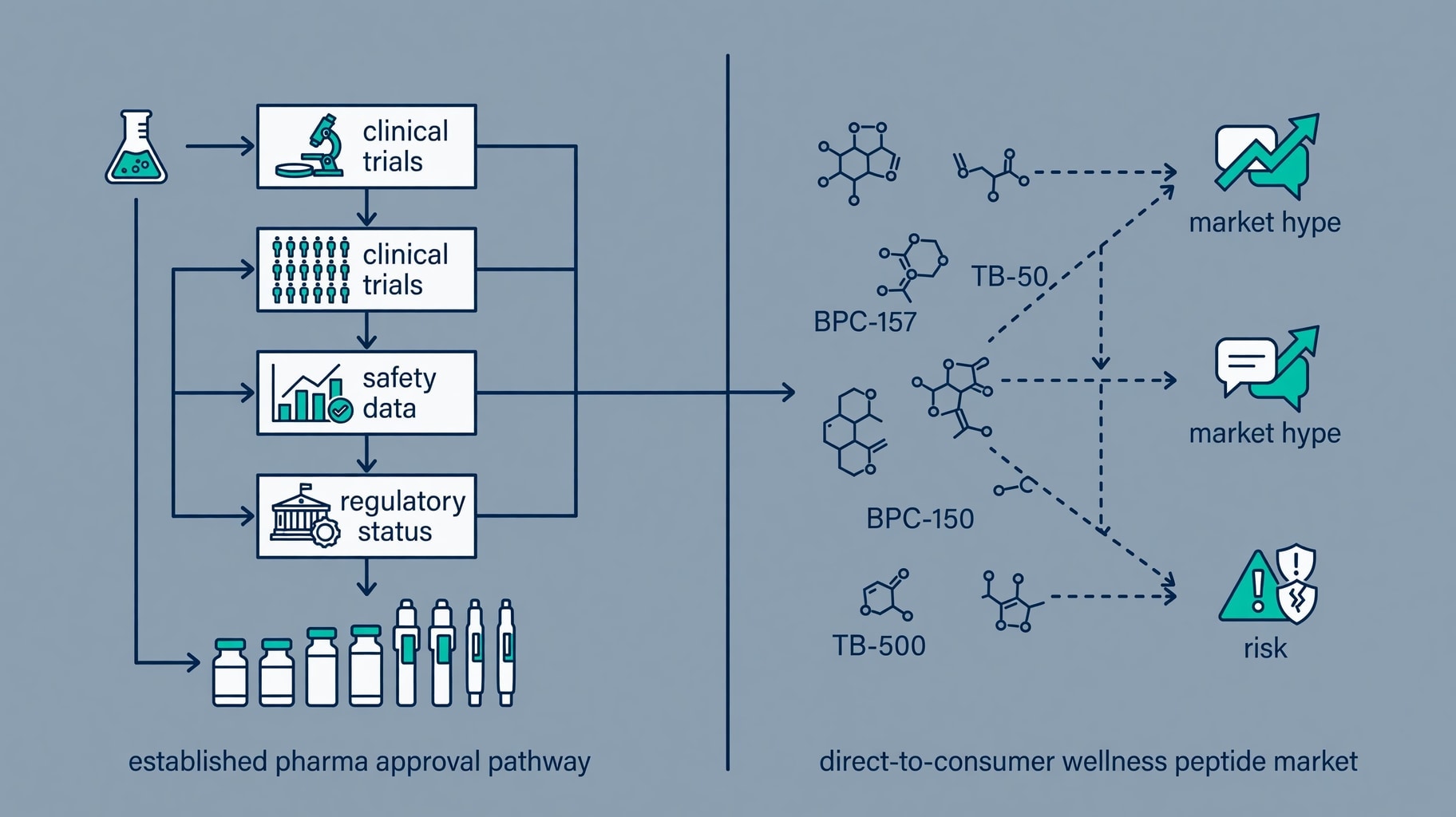
Figure 1: Approved peptide medicines pass through a different evidence and regulatory pathway from wellness compounds sold online.
One word, different standards
“Peptide” describes a broad class of amino-acid chains rather than a single standard of safety or proof. The term covers approved metabolic drugs, investigational candidates, and research compounds with little human evidence. Marketing compresses those categories into one label.
BPC-157 and TB-500 show the problem. Vendors and creators promote both compounds for recovery, and consumers often encounter them together as the Wolverine Stack. FDA reviewers have questioned the evidence and manufacturing controls behind these products. A social post about a personal result cannot answer the safety questions that a controlled trial tracks.
Yahoo Finance tied the growth of the underground market to federal compounding restrictions and social-media demand. The report also described Doustdar's concern about injections bought outside regulated channels. Buyers in that market may lack dependable information about identity, purity, or dose before a product reaches them.
The regulatory picture remains unsettled. Federal advisers have considered changes affecting access to several wellness peptides, but an advisory vote does not turn an experimental compound into an approved medicine. The FDA-approved versus experimental peptide index tracks that distinction compound by compound.
Novo has an interest in the argument
Novo Nordisk benefits when consumers trust the regulated drug-development process. The company competes with Eli Lilly in obesity medicine and faces pressure to improve Wegovy sales, expand its pipeline, and defend market share. Readers should weigh Doustdar's remarks with that commercial interest in view.
His argument still rests on a testable point. Researchers can publish trial design, participant counts, endpoints, adverse events, and follow-up periods. Sellers of unapproved wellness injections seldom provide that record. A polished product page cannot fill the gap.
Doustdar did not claim that every experimental peptide will fail. He left room for companies to study compounds that show promise. His objection concerns the order of events: developers should establish safety and benefit before sellers ask consumers to take the risk.
For readers following the peptide boom, the useful question is no longer whether a product uses the word peptide. Ask which compound appears in the vial, what human evidence supports the advertised use, and which regulator has reviewed it. Those details separate Wegovy from the underground market its manufacturer now condemns.