
Safety, tolerability, dose-limiting toxicities, and pharmacokinetics serve as the primary endpoints for the Phase 1 dose-escalation study of ACE723 in patients with unresectable or metastatic hepatocellular carcinoma that received U.S. Food and Drug Administration Investigational New Drug clearance on September 4, 2026 BioSpace. The sample size and starting dose for this initial clinical evaluation remain undefined in public disclosures.
This regulatory action permits human testing but does not constitute a finding of therapeutic benefit or confirm superiority over existing treatments. Acepodia announced the clearance as the first clinical advancement of a candidate generated by its proprietary Antibody-Dual-Drugs Conjugation platform BioSpace.
The U.S. IND clearance process validates that preclinical toxicology and manufacturing data meet minimum standards for human exposure. European Clinical Trial Authorization under the Clinical Trials Regulation operates through a distinct mechanism requiring joint ethical and competent authority assessment of the investigational medicinal product dossier. Both frameworks establish permission to proceed based on nonclinical safety packages rather than clinical efficacy signals.
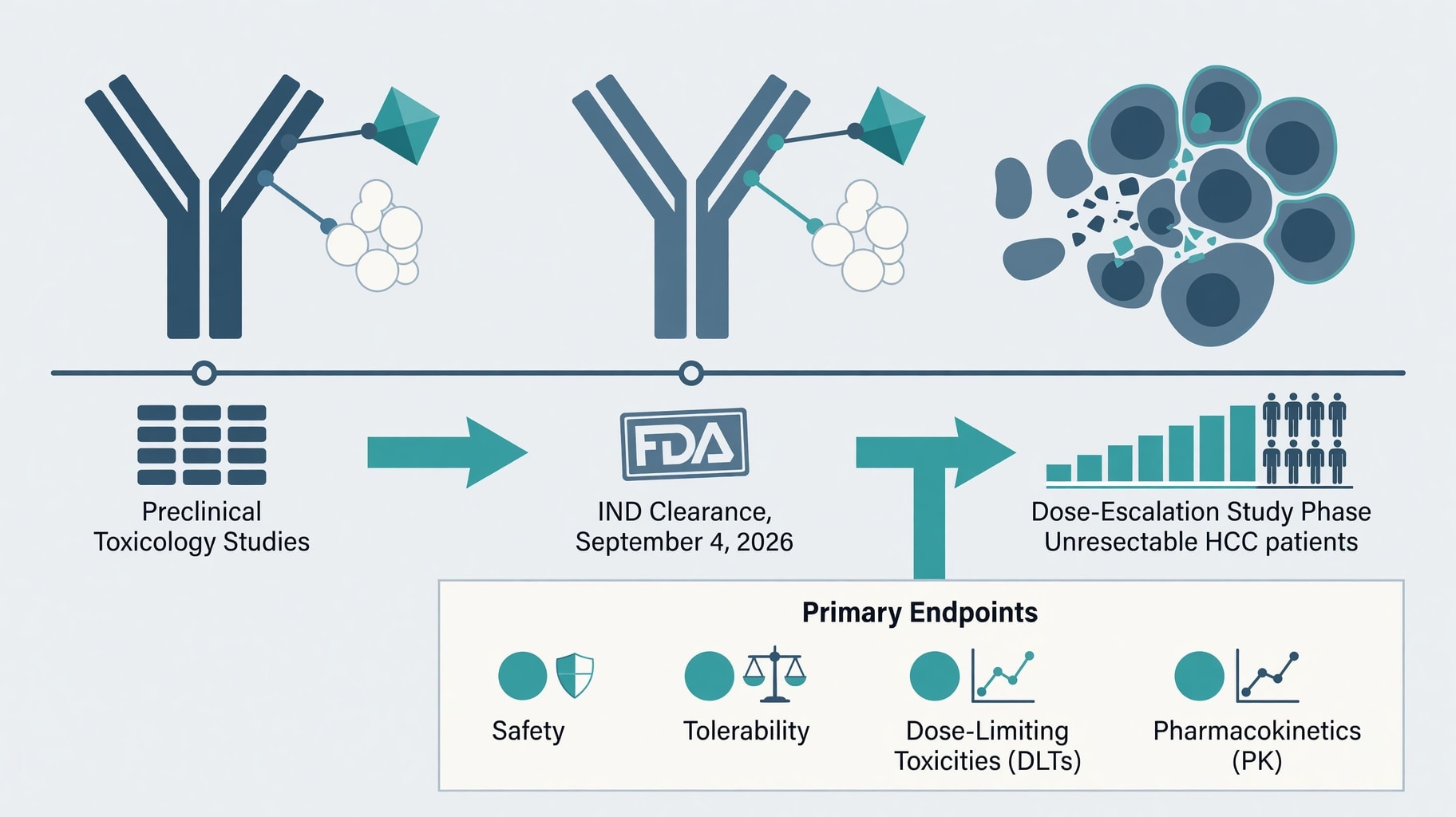
Figure 1: AD2C dual-payload ADC platform advancing from preclinical validation to first-in-human Phase 1 trial in hepatocellular carcinoma.
The upcoming ACE723 trial is designed exclusively to characterize the adverse event profile and establish a recommended dose for potential expansion cohorts BioSpace. No primary efficacy endpoint exists in this first-in-human protocol because dose-escalation studies map toxicity boundaries and pharmacokinetic parameters rather than test anti-tumor activity.
ACE723 targets glypican-3, a tumor-associated antigen frequently expressed on hepatocellular carcinoma cells. The investigational agent delivers two distinct cytotoxic payloads to GPC3-expressing tumor cells following receptor-mediated internalization. Acepodia states this dual-payload architecture is intended to address tumor heterogeneity and mitigate resistance mechanisms associated with single-payload antibody-drug conjugates BioSpace. This rationale remains a mechanistic hypothesis without human validation.
Preclinical evidence supporting target engagement is limited to an AACR 2025 abstract demonstrating parental-like binding affinity and cellular internalization in non-human models BioPharm International. Translating receptor affinity from rodent or cellular systems to human pharmacokinetics introduces variables that only controlled clinical observation can resolve.
The AD2C platform employs bioorthogonal click chemistry derived from Nobel laureate Carolyn Bertozzi’s laboratory to conjugate two payloads onto a single antibody without requiring antibody engineering BioSpace. Specific payload identities, linker chemistry, and drug-to-antibody ratios for ACE723 are not disclosed in available source records. The manufacturing consistency required for solid phase peptide synthesis and complex conjugation chemistry must now be demonstrated at clinical scale under FDA oversight.
As with any novel protein therapeutic, monitoring for peptide immunogenicity and safety during dose escalation will be critical to determining whether anti-drug antibodies alter pharmacokinetics or limit repeated dosing. Unlike metabolic indications where multi receptor incretin peptides demonstrate synergistic receptor engagement through well-characterized pathways, the dual-cytotoxin mechanism of ACE723 lacks established human biomarkers for predicting therapeutic window.
Acepodia submitted a parallel IND application for ACE723 to China’s National Medical Products Administration in August 2026 as part of a global development strategy BioSpace. That application remains under regulatory review. The company’s assertion that ACE723 is the first AD2C-generated candidate to enter clinical development is a verifiable corporate milestone BioSpace. The dose-escalation protocol represents a stated intention rather than completed enrollment. No patients have received the investigational agent.
No recommended Phase 2 dose has been established. The date of first human dosing remains unconfirmed.