
The FDA classifies peptide types through three distinct statutory frameworks: approved new drug applications under 21 U.S.C. § 355, bulk drug substance nominations under Section 503B of the Federal Food, Drug, and Cosmetic Act, and enforcement categories that prohibit distribution of compounds lacking either pathway. Biological function does not determine which framework applies.
A signaling peptide and a structural peptide of identical chain length face different regulatory thresholds depending on their manufacturing record, clinical trial history, and nomination status before the agency.
This distinction carries direct compliance consequences for 503B outsourcing facilities, compounding pharmacies, and importers of active pharmaceutical ingredient. The same molecule can occupy Tier 1 as a marketed drug and Tier 3 as a prohibited research chemical depending on whether a sponsor holds an approved application. Understanding where a given peptide sits in that statutory hierarchy is the first step in assessing supply chain liability.
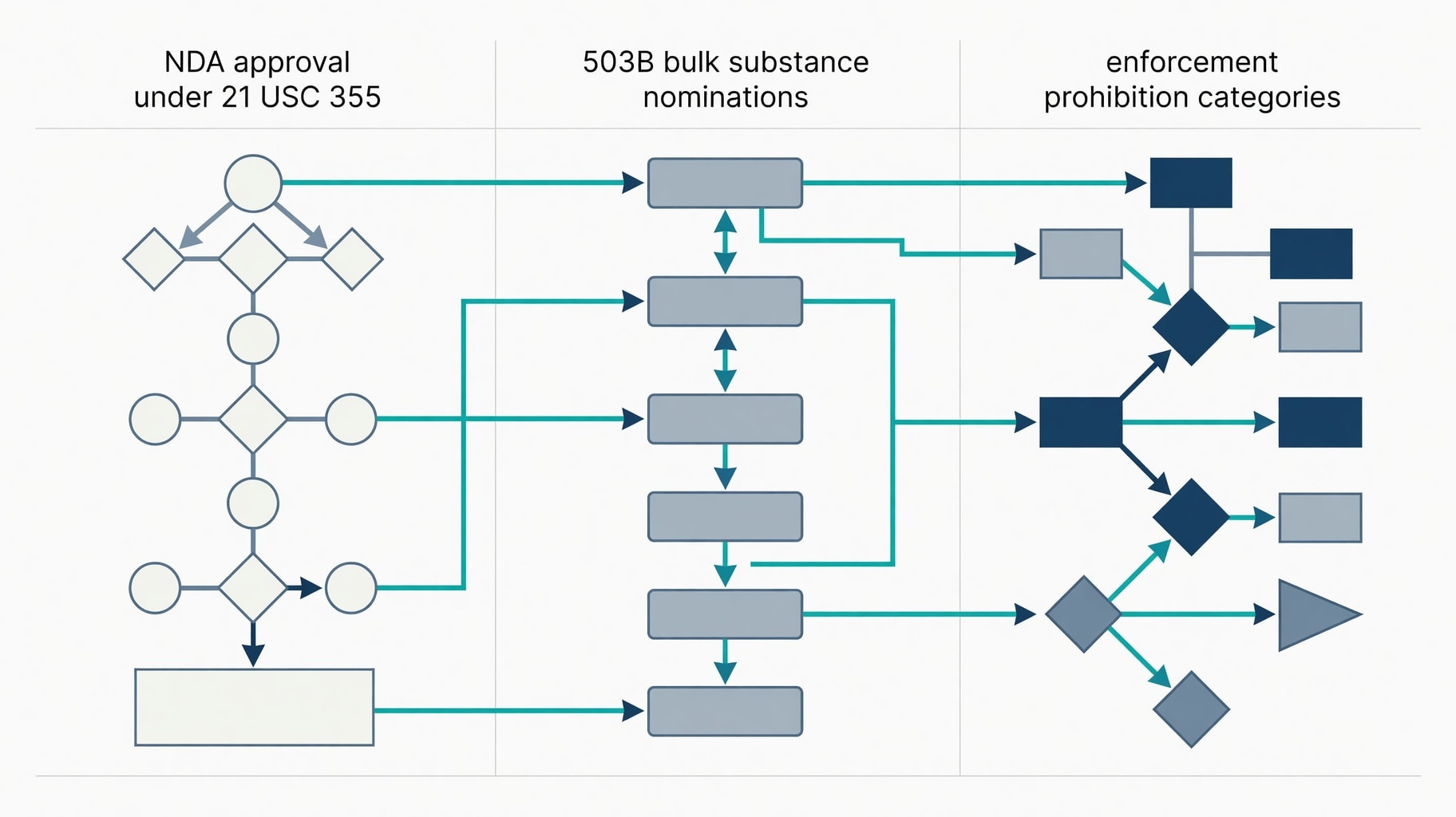
Figure 1: FDA statutory classification framework for peptide types based on approval status, 503B eligibility, and enforcement tiers.
For foundational context on peptide structure and nomenclature, see what are peptides.
Tier 1: Peptides With Approved New Drug Applications
The clearest regulatory category comprises peptides that have completed Phase 1 through Phase 3 trials and received FDA marketing authorization. Harvard Health identifies injectable insulin, semaglutide (Ozempic, Wegovy), and tirzepatide (Zepbound, Mounjaro) as the most widely recognized examples. Superpower's peptide-type guide catalogs additional approved compounds across therapeutic areas: leuprolide (Lupron) and octreotide (Sandostatin) in oncology and endocrinology, eptifibatide (Integrilin) in cardiovascular emergencies, enfuvirtide (Fuzeon) for HIV, and cosyntropin (Cortrosyn) for adrenal diagnostic testing.
Tesamorelin holds approval for HIV-associated lipodystrophy, while teriparatide and abaloparatide address osteoporosis.
Approval confers a defined safety profile established in thousands of trial participants. It also fixes the manufacturing standard: the active pharmaceutical ingredient must meet current Good Manufacturing Practice requirements, and the finished product carries FDA-reviewed labeling. Any deviation from the approved formulation, route, or indication moves the compound outside Tier 1 protections.
Tier 2: Compounding Pathways and Interim Status
Peptides that lack a full NDA but appear on the FDA's bulk drug substance lists may be compounded by registered 503A pharmacies or 503B outsourcing facilities under specific conditions. Healthline's peptide safety guide notes that peptide products on the market "fall into distinct categories depending on how they are made, tested, and regulated," and that the level of scientific backing and safety oversight varies accordingly.
The practical threshold here is nomination. A substance must be nominated to the FDA's 503B bulk drug substance list and accepted for evaluation before an outsourcing facility can compound it at scale. Until the agency publishes a final determination, enforcement discretion governs whether the compound remains available through compounding channels. Stakeholders should monitor the FDA's published Category 1, Category 2, and Category 3 lists for interim guidance rather than relying on supplier representations.
No peptide in Tier 2 carries the same evidentiary weight as a Tier 1 approval. Compounded preparations are not FDA-approved products, and their labeling, sterility testing, and adverse-event reporting obligations differ from those of marketed drugs.
Tier 3: Unapproved and Research-Only Peptides
Compounds that hold neither an NDA nor a valid 503B nomination occupy the most restricted tier.
GoodRx identifies BPC-157, KPV, and MOTS-c as experimental peptides promoted for wound healing, muscle recovery, and longevity, noting that "many experimental peptides don't have enough evidence to show that they work well or would be safe for people to use." FitMD confirms that BPC-157 "has not yet been approved by the FDA for therapeutic use" despite preclinical research on soft-tissue healing.
Distribution of Tier 3 peptides for human use exposes manufacturers and sellers to enforcement action, import alerts, and potential seizure. The statutory threshold is clear: without an approved application or a valid compounding pathway, the compound is an unapproved new drug under the FD&C Act. Research-grade material sold with a "not for human use" disclaimer does not gain legal protection if marketing, labeling, or distribution channels suggest therapeutic intent.
Manufacturing Origin as a Compliance Variable
How a peptide is produced affects its regulatory pathway and supply chain audit requirements. Innerbody's peptide therapy guide classifies therapeutic peptides into three production categories: bioactive peptides derived from natural protein hydrolysis, synthetic peptides assembled through solid-phase or liquid-phase chemistry, and recombinant peptides expressed in cell culture systems.
The distinction matters for 503B nomination viability. A synthetic peptide with a well-characterized impurity profile and a validated analytical method is more straightforward to nominate than a recombinant product whose manufacturing process introduces host-cell protein variability. Import alerts and FDA inspection findings frequently reference whether the active pharmaceutical ingredient was produced under GMP conditions or in a research-grade facility.
The production method does not change the statutory tier, but it shapes the evidentiary burden a sponsor must clear to move a compound from Tier 3 toward Tier 2 or Tier 1.
Applying the Taxonomy
Biological classification (hormonal, antimicrobial, cosmetic, neuropeptide) describes what a peptide does. It does not predict whether a 503B facility may legally compound it, whether an importer will face a detention at port, or whether a prescriber assumes malpractice exposure. Regulatory classification answers those questions.
Before sourcing, compounding, or distributing any peptide type, confirm its current position against the FDA's published bulk drug substance lists and approved product databases. The agency updates these records through rulemaking and interim guidance, and a compound's tier can shift following advisory committee review or a new NDA submission. Treating a functional category as a proxy for legal status is the most common compliance error in peptide supply chains.
This page is flagged for evidence review after 180 days. Regulatory classifications change through agency rulemaking and advisory committee action. Verify current FDA listings before making compliance decisions.