
Advisory Committee Votes and Statutory Authority
The FDA Pharmacy Compounding Advisory Committee voted on July 24, 2026, to recommend BPC-157, KPV, TB-500, MOTS-c, Semax, and epitalon for the 503A Bulks List. The recommendation authorizes nothing. It is a preliminary procedural step in a process that requires subsequent agency action before any compounding pharmacy may lawfully prepare these substances AJMC.
None of the six peptides has been added to the list. None holds approval as a drug. The FDA must issue a proposed rule, accept public comment, and publish a final rule. Only then would the statutory threshold shift. Alliance for Pharmacy Compounding CEO Scott Brunner confirmed the agency must formally adopt the recommendations before the peptides may be legally compounded AJMC.
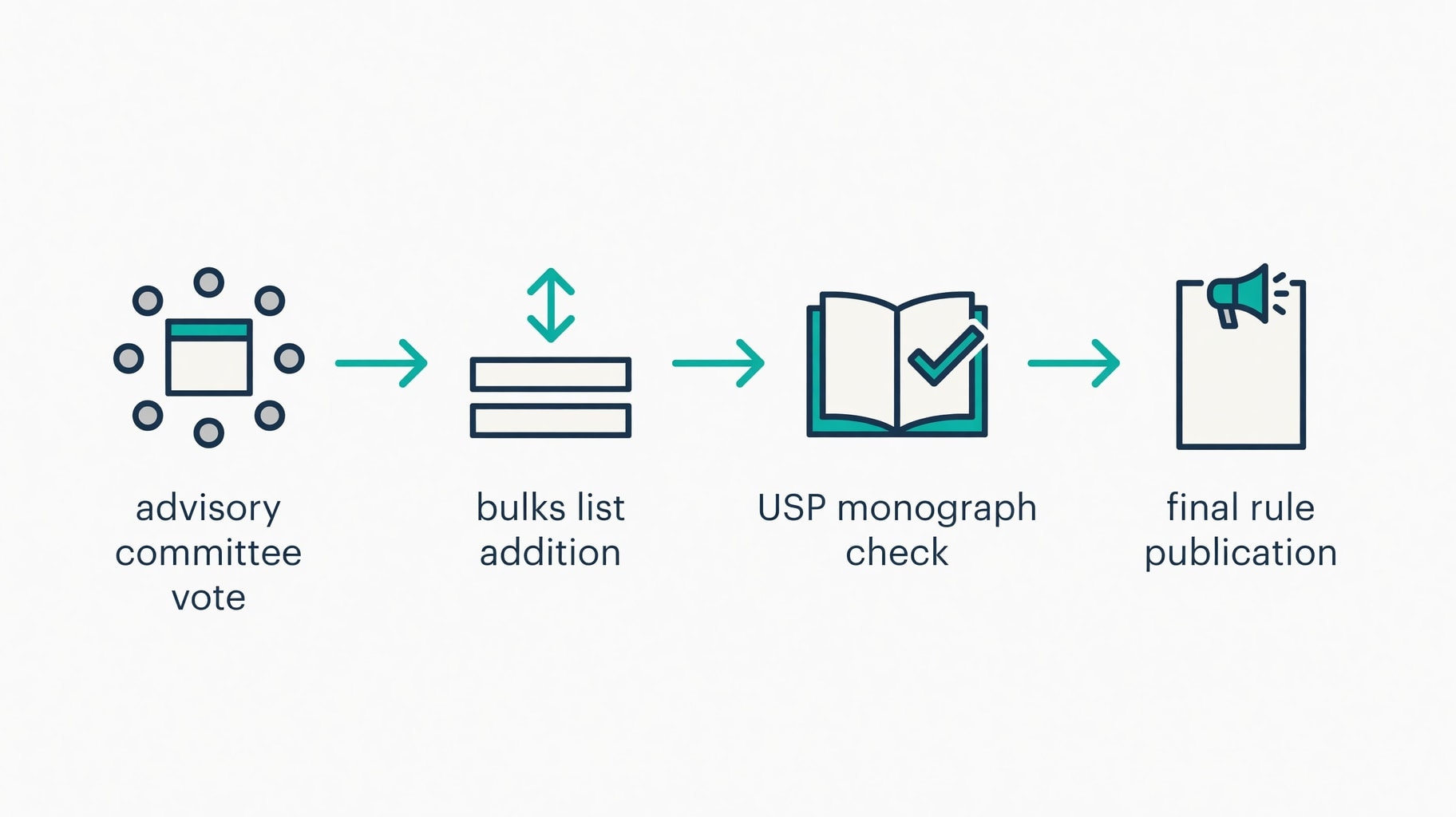
Figure 1: FDA 503A statutory pathway required before lawful peptide compounding can occur.
Under Section 503A of the Federal Food, Drug, and Cosmetic Act, a pharmacy may compound a peptide from bulk ingredients only when the active pharmaceutical ingredient appears on the 503A Bulks List, satisfies a USP monograph, or forms a component of an approved drug. An advisory vote alters none of those conditions. A pharmacy marketing a peptide that remains off the list operates under the same statutory constraints it faced before the meeting.
HHS Directive and Category Reclassification
The vote followed a February 27, 2026, directive from HHS Secretary Robert F. Kennedy Jr. The directive instructed the agency to explore moving approximately 14 of 19 peptides from Category 2 back to Category 1 AJMC. Reclassification was expected to take effect by April 23, 2026.
Category 1 status permits compounding with a prescription. It does not establish validated indications. It does not establish standardized dosing. The designation alters enforcement posture for nominated substances. It does not substitute for the statutory threshold a pharmacy must satisfy before preparing a specific molecule. The answer to whether are peptides legal depends on the specific peptide, its current category, and whether the active pharmaceutical ingredient satisfies a Section 503A criterion.
Verifying 503A Licensure and Accreditation
A lawful peptide compounding pharmacy operates inside the prescription system. A licensed prescriber issues a patient-specific order. A licensed pharmacy prepares the medication Take 10Rx.
503A pharmacies hold state licenses. They do not hold FDA approval. The FDA maintains a database of registered outsourcing facilities under Section 503B. That database is searchable by facility name Ivim Health. PCAB accreditation from the Pharmacy Compounding Accreditation Board provides a separate quality signal. A facility claiming PCAB accreditation should appear in the accreditation body's directory.
The distinction between 503a vs 503b compounding peptides dictates which registry applies. 503A facilities fall under state jurisdiction. 503B outsourcing facilities register with the FDA. A facility cannot apply one standard to satisfy the requirements of the other.
Active Pharmaceutical Ingredient Sourcing
For a peptide that can be compounded lawfully, the source material must arrive through a documented pharmaceutical supply channel. Pharmacies look for manufacturer information, ingredient records, and a Certificate of Analysis identifying the substance and its quality specifications Take 10Rx.
The Certificate of Analysis is the document a provider or patient should request. It identifies the active pharmaceutical ingredient, the testing laboratory, and the quality results for the specific lot. A pharmacy that cannot produce this document has not verified its supply chain. Injectable formulations require documented sterility testing. These are written procedures an inspector reviews.
State Board Jurisdiction and FDA Enforcement Discretion
State pharmacy boards license and inspect 503A facilities. Dr. Ryan Wooden stated he expects state boards to begin discussing peptides WREG. The FDA sets the federal framework through the 503A Bulks List and enforcement discretion. State boards enforce licensure.
The agency clarified recently that adding an ingredient such as vitamin B12 to an existing formulation like semaglutide does not exempt the product from being treated as a copy of a commercially available drug Drug Topics. The FDA intends to act if a pharmacy compounds more than four prescriptions per month of such products. This figure is an enforcement marker used by the agency, not a statutory right.
The popular peptides frequently discussed for recovery, such as the tb500 peptide, remain subject to these constraints. Demand does not alter the statutory threshold.
Verification Checklist Before Filling a Prescription
| Verification Step | Applicable Authority | | --- | --- | | Confirm active state license in the jurisdiction where the prescription originates | State pharmacy board | | Search the outsourcing facility database for 503B registration | FDA | | Verify PCAB accreditation through the issuing board's directory | Pharmacy Compounding Accreditation Board | | Request the Certificate of Analysis for the specific lot of active pharmaceutical ingredient | Compounding pharmacy | | Confirm the peptide appears on the 503A Bulks List or meets another Section 503A category | FDA | | Obtain sterility testing documentation for injectable formulations | Compounding pharmacy |
None of these steps replaces clinical judgment. They establish whether the facility operates within statutory boundaries. The July 2026 advisory committee vote initiated a procedural sequence. A pharmacy filling prescriptions for the nominated peptides today without a final rule or another statutory basis accepts the liability for operating outside the FD&C Act. Related reporting details how the fda advisory panel overrides agency scientists to recommend these specific substances.