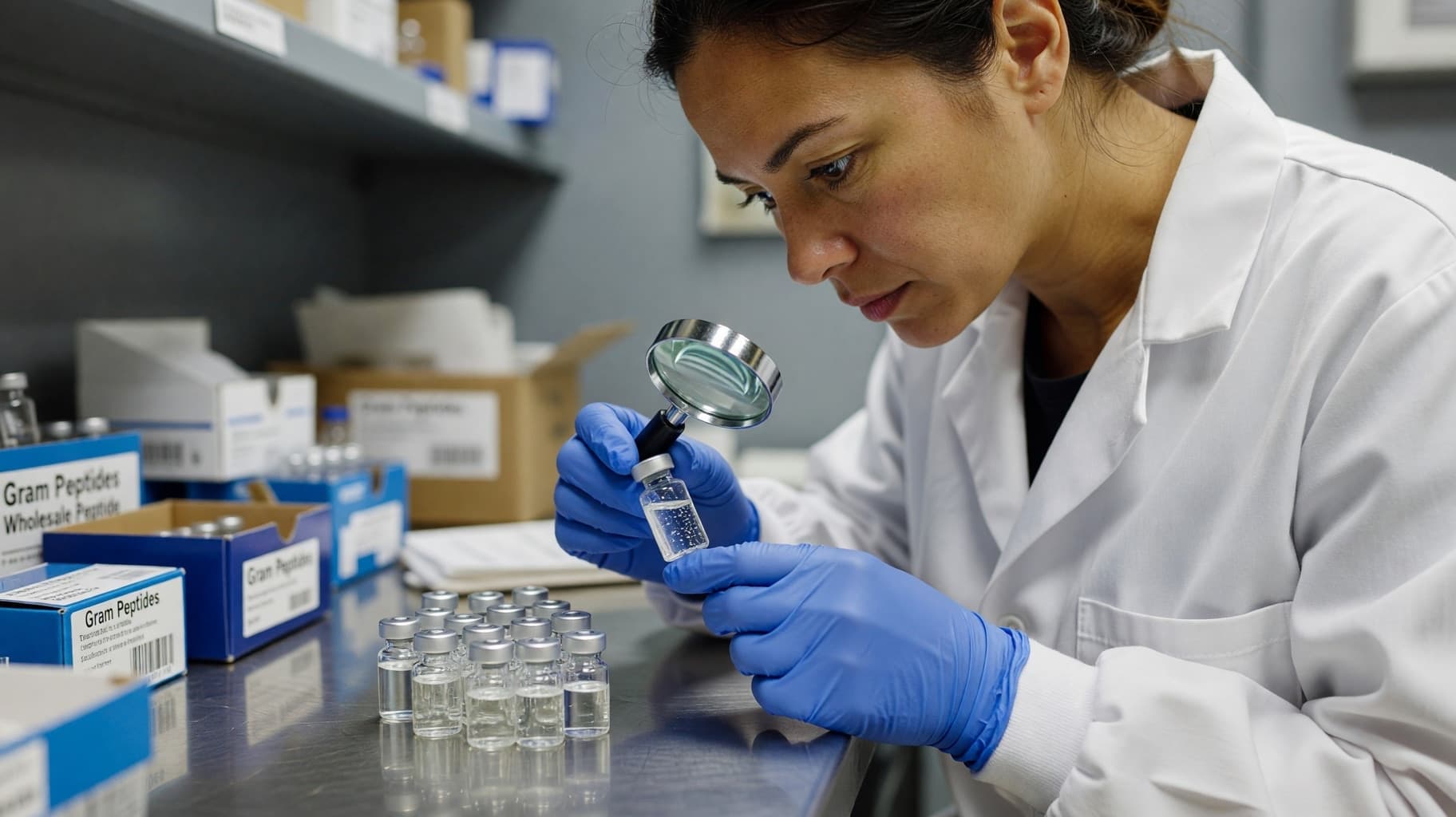
The U.S. Food and Drug Administration issued a warning letter to Gram Peptides on March 31, 2026, citing the distribution of unapproved new drugs and misbranded products, explicitly stating that failure to address these violations could result in seizure or injunction without further notice. This enforcement action targets a supply chain where independent laboratory analysis has identified mislabeling, improper dosing, or contamination in approximately 30% of tested vials.
The Banned Substances Control Group documented these specific failures, which include bacterial endotoxins capable of triggering sepsis-like systemic reactions and heavy metal residues exceeding injectable safety limits. These verified chemical and microbiological hazards define the operational reality of grey market peptide risks more precisely than the legal ambiguity of "Research Use Only" labeling.
A 2018 analysis published in Drug Testing and Analysis by Janvier et al. established that two-thirds of tested grey market vials failed basic purity standards, with some containing inorganic arsenic at ten times the injectable safety limit. This forensic evidence contradicts vendor marketing that positions RUO designations as benign regulatory classifications rather than liability shields.
For laboratory managers and clinical researchers evaluating supply chain integrity, the distinction between regulated and unregulated sources is no longer a matter of compliance philosophy but of verifiable testing data. Incorrect amino acid sequences, solvent residues, and falsified certificates of analysis appear consistently across unregulated products, creating a baseline failure rate that distinguishes this market segment from theoretical concerns surrounding novel therapeutics.
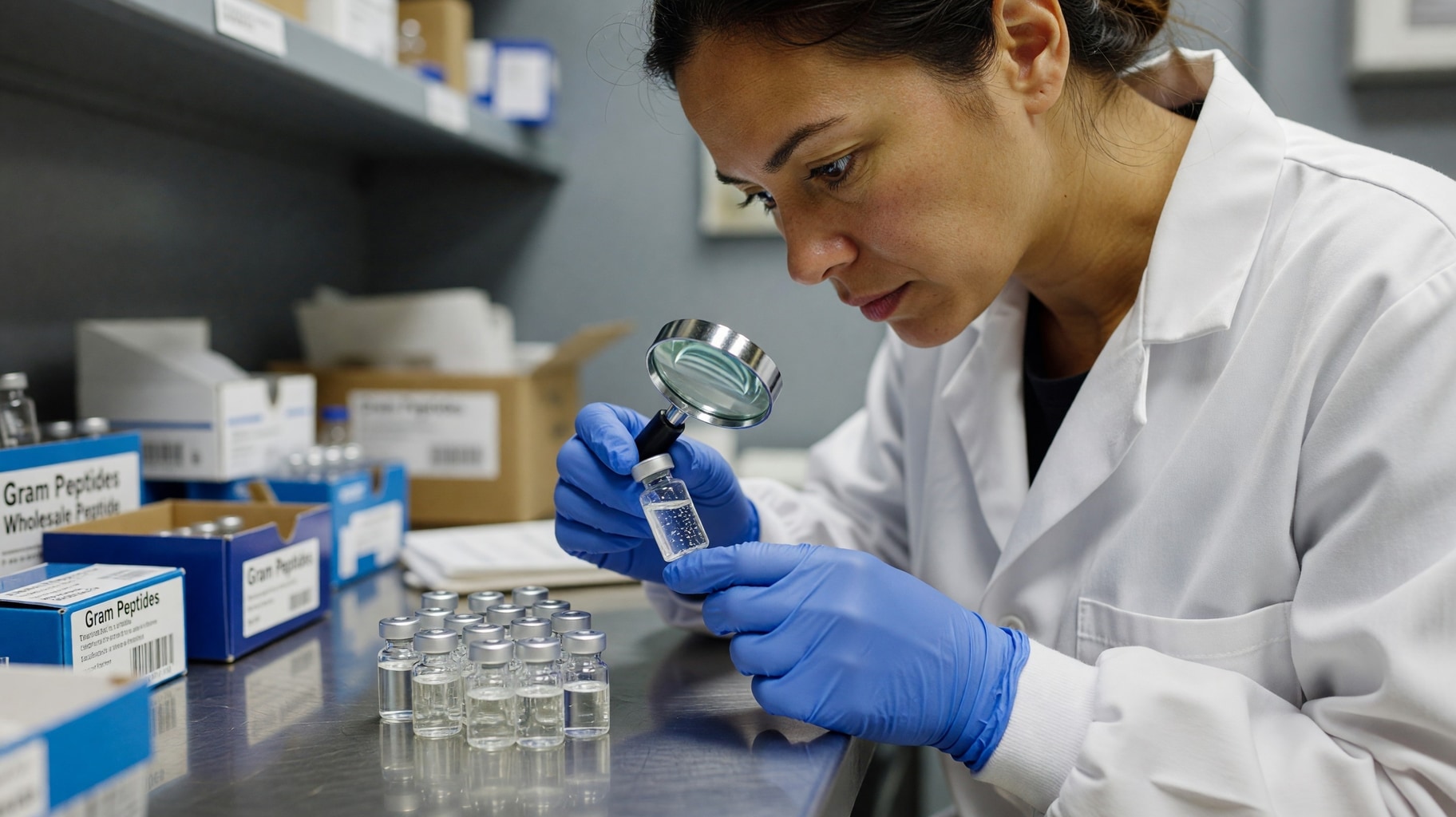
Figure 1: Contamination prevalence in independent testing of grey market peptide vials.
These quality failures represent the predictable outcome of manufacturing processes operating outside Current Good Manufacturing Practice requirements. While vendors utilize RUO labeling to circumvent FDA drug approval pathways, regulatory seizure records demonstrate that this designation functions primarily to shift liability rather than ensure quality. The commercial consequence is a marketplace where product identity cannot be assumed and where standard vendor-provided documentation frequently fails to reflect actual vial contents.
Understanding these documented failures requires examining the intersection of independent lab datasets, cross-border enforcement records, and the clinical surveillance gaps that allow adulterated products to persist despite active regulatory intervention.
Documented Contaminants and Purity Failures
Independent testing datasets provide the only reliable baseline for assessing product integrity because vendor-supplied Certificates of Analysis often lack method validation or third-party verification. A study published in the Journal of Medical Internet Research analyzed semaglutide products purchased from online sellers without a prescription and found endotoxin contamination in every tested sample.
Purity levels claimed at 99% on product labels actually ranged between 7.7% and 14.37% across tested batches, according to reporting by the Los Angeles Times.
These discrepancies indicate manufacturing environments lacking adequate depyrogenation steps or environmental controls necessary for injectable products.
Endotoxins represent a specific acute toxicological threat because these lipopolysaccharides from bacterial cell walls can trigger pyrogenic reactions even when products are sterile-filtered. Filtration removes bacteria but does not remove endotoxin molecules, making their presence in grey market samples a definitive marker of insufficient downstream processing. Chemical synthesis byproducts present parallel chronic toxicity risks.
Trifluoroacetic acid salts, residual solvents from solid-phase peptide synthesis, and deletion sequences are frequently detected in unregulated products due to cost-cutting measures in purification and lyophilization.
Regulated manufacturers must validate away these impurities through rigorous process controls that grey market suppliers routinely bypass.
Mislabeling extends beyond purity percentages to fundamental identity failures that transform dosing errors into medical emergencies. The Janvier et al. analysis found incorrect amino acid sequences in 30% of samples, meaning users injected completely different peptides than labeled. Published case reports have documented patients suffering hypoglycemic coma after injecting products labeled as semaglutide that actually contained insulin.
For researchers and clinicians, these findings necessitate a protocol where research peptides quality is verified through independent analytical chemistry rather than vendor assertions.
Standard high-performance liquid chromatography with ultraviolet detection, the testing method most commonly displayed on vendor certificates, cannot detect endotoxins, heavy metals, or non-UV-absorbing residual solvents. Comprehensive verification requires orthogonal testing methods including mass spectrometry for identity confirmation and Limulus amebocyte lysate testing for endotoxins. Laboratories relying on grey market sources must implement their own peptide testing protocols to establish baseline safety parameters before experimental use.
Enforcement Actions and Cross-Border Seizures
The FDA issued a separate warning letter to Wholesale Peptide on June 17, 2026, reiterating that failure to comply with federal law may result in regulatory or legal action including seizure and injunction. This enforcement activity targets domestic distributors operating within a jurisdictional gap created by RUO labeling.
Products bearing this designation are technically exempt from drug approval requirements until evidence of intended human use emerges, allowing vendors to maintain nominal compliance while marketing through influencer networks and wellness communities.
FDA Import Alert 66-40 specifically targets unapproved new drugs including BPC-157 and TB-500, authorizing detention without physical examination at ports of entry, yet substantial import volumes continue to reach U.S. consumers.
Pacific Rim regulators employ distinct enforcement strategies that provide complementary forensic data on supply chain contamination. The Therapeutic Goods Administration and Australian Border Force destroyed more than 94,500 unapproved peptide products in a single year, as detailed in coverage of Australia's TGA crackdown on influencer-driven peptide sales. Testing of seized retatrutide vials revealed that two out of three contained concentrations significantly higher than labeled, creating overdose risks for users relying on stated potency.
Robyn Langham, chief medical advisor at the TGA, noted that even when testing confirms the presence of a target peptide, it cannot verify the absence of other contaminants or mixed medications. This limitation mirrors findings from U.S. laboratories where comprehensive analysis still fails to capture the full toxicological profile of complex adulterated products.
U.S. enforcement focuses on warning letters and import alerts targeting domestic vendors and entry points, while Pacific Rim regulators emphasize border seizure and destruction. Both approaches confirm that contamination is a feature of unregulated manufacturing rather than an anomaly. The geographic concentration of peptide synthesis in specific industrial zones means that quality failures are often batch-level or facility-level issues affecting multiple vendors simultaneously.
When a single manufacturing source experiences a process deviation, the resulting contamination propagates through numerous grey market distribution channels before detection occurs. The FDA’s March 2026 warning letter to Gram Peptides and the TGA’s destruction of 94,500 units represent parallel responses to the same underlying supply chain failure, documenting a global enforcement effort that has yet to materially constrain aggregate availability.
Surveillance Gaps and Verified Adverse Events
Published case reports provide the most reliable evidence of harm resulting from these documented quality failures. Antonacci et al. (2025) documented a case of hypoglycemic coma resulting from counterfeit semaglutide containing insulin, demonstrating that adulteration produces life-threatening outcomes indistinguishable from legitimate drug side effects. Injection site infections requiring hospitalization, antibiotics, and surgical drainage have also been reported, linking non-sterile manufacturing directly to clinical morbidity.
The FDA has reported adverse events linked to grey market and compounded tirzepatide including pancreatitis requiring hospitalization, gallbladder disease, and acute kidney injury, with many serious events attributed to dosing errors from mislabeled products rather than contamination alone.
Systematic tracking of these events remains absent. An NBC News investigation revealed a patchwork of state oversight policies with no systematic adverse event reporting mechanism for grey market peptides, as reported by NBC News. Serious harms including sepsis, anaphylaxis, and autoimmune reactions appear in forum anecdotes and isolated case reports, but total user exposure and dose counts are not tracked.
The Peptide Access Alliance has noted that without this denominator, incidence rates cannot be calculated and the absence of reported harm cannot be interpreted as evidence of safety. This surveillance gap distinguishes grey market peptides from both FDA-approved drugs and regulated compounded medications, which operate within mandatory adverse event reporting frameworks.
For regulatory affairs professionals and laboratory managers, these evidence limitations define the operational risk of grey market sourcing. The absence of systematic surveillance means that safety signals emerge only after severe harm has occurred. Unlike regulated pharmaceutical supply chains where quality deviations trigger recall and notification procedures, grey market vendors have no obligation to report batch failures or contamination events. Purchasers assume the burden of verification entirely.
The Therapeutic Goods Administration reported destroying more than 94,500 unapproved peptide products in collaboration with the Australian Border Force this year, providing a concrete metric of interdiction volume that currently exceeds available U.S. seizure data for the same period.