
Current efficacy claims for dipeptide-2 in eye contour formulations derive exclusively from proprietary supplier dossiers evaluating multi-ingredient complexes via 3D morphometry, with no independent regulatory or clinical validation of isolated lymphatic drainage or capillary permeability mechanisms in public records.
While trade literature attributes specific angiotensin-converting enzyme inhibition and lymphatic drainage functions to this valyl-tryptophan sequence, authoritative databases from the FDA, EMA, and ClinicalTrials.gov contain no biomarker assays or Evans blue permeability models validating these physiological endpoints for the isolated molecule.
The evidentiary record establishes that dipeptide-2 functions commercially as a component of trademarked blends where efficacy data applies to the combination rather than the single ingredient. Technical documentation for the Eyeliss complex, as reported by Skinmiles, cites a 20-volunteer study using 3D morphometric evaluation to support claims of reduced bag volume and improved firmness.
This study tested the three-component association of hesperidin methyl chalcone, dipeptide-2, and palmitoyl tetrapeptide-3 simultaneously, meaning no parallel arm in the documented supplier research evaluated dipeptide-2 in isolation against a vehicle control to verify independent lymphatic activity.
This distinction between complex validation and single-ingredient verification creates a significant regulatory and scientific gap for compliance officers and formulators navigating a market where dipeptide-2 eye contour claims are substantiated by surface topography measurements of a blend, while the proposed biological mechanism of ACE-mediated lymphatic drainage remains theoretically cited but empirically unverified in the public domain for the isolated peptide.
Brands marketing products with this ingredient rely on mechanism claims that exist in trade reviews but lack corresponding entries in federal drug or cosmetic monographs, creating a liability profile that differs substantially between U.S. and Pacific regulatory jurisdictions. The commercial stakes are defined by this evidentiary asymmetry, as the ingredient’s market position depends entirely on supplier-generated data packages that satisfy cosmetic substantiation requirements for visual improvement without providing the physiological verification required for medical-grade assertions.
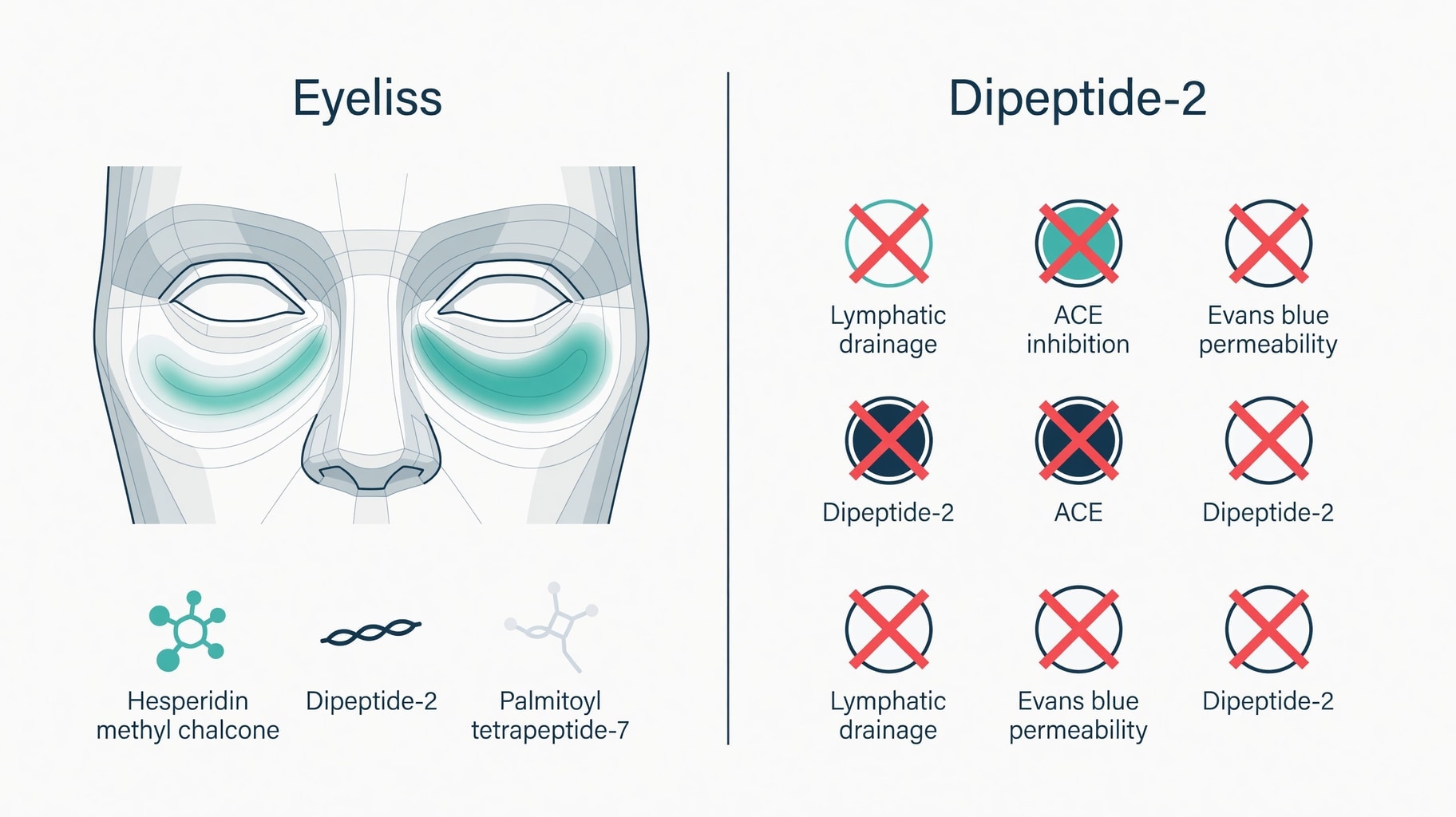
Figure 1: Comparison of proprietary 3D morphometry data for multi-ingredient complexes versus lack of independent lymphatic biomarker assays for isolated dipeptide-2.
Proprietary Complex Data Versus Isolated Ingredient Verification
The primary source of efficacy data for this peptide is inseparable from its commercial vehicle, as Eyeliss is a trademarked blend built around palmitoyl tripeptide-1 together with dipeptide-2 and hesperidin methyl chalcone. Trade reviews of under-eye peptide formulations (Klow Peptide) describe the design logic as three-pronged, wherein hesperidin methyl chalcone targets capillary permeability, dipeptide-2 theoretically inhibits angiotensin-converting enzyme locally to improve lymphatic drainage, and the palmitoyl tripeptide supports the extracellular matrix.
This theoretical framework is widely repeated in industry education materials and supplier technical sheets, yet it is not supported by published clinical trials isolating the dipeptide from the flavonoid and matrix peptide components. The supplier-generated evidence relies on 3D morphometry as the primary endpoint, an imaging technology that measures changes in skin surface volume and texture over time but does not measure lymphatic flow rate, interstitial fluid composition, or ACE enzyme activity in dermal tissue.
In the cited 20-volunteer study, participants applied the active association daily and results indicated improvements in bag volume and skin tone, but the correlation between reduced surface volume and enhanced lymphatic drainage is inferred rather than directly assayed.
Independent scientific literature offers robust methodologies for validating these specific physiological claims, yet none have been applied publicly to cosmetic-grade dipeptide-2 in a manner that would satisfy regulatory scrutiny for mechanism claims. Vascular permeability is routinely quantified using Evans blue dye leakage assays or FITC-dextran tracers in preclinical models, as reported by PubMed, which measure the actual extravasation of fluid and protein from capillaries into tissue rather than surface appearance.
Similarly, microcirculation-on-a-chip platforms now allow for the co-culture of blood and lymphatic endothelial cells to directly observe fluid transport, according to microfluidic validation studies, providing a level of mechanistic insight that is entirely absent from the available technical dossiers for dipeptide-2 as a standalone cosmetic ingredient.
The absence of direct biomarker data contrasts sharply with the evidentiary standards seen in ophthalmic drug development, where research into dry eye disease and diabetic retinopathy routinely employs tear proteomics, lactoferrin assays, and lymphotoxin-alpha biomarkers to quantify ocular surface inflammation and vascular health.
Reviews of tear fluid biomarkers demonstrate that molecular profiling can distinguish disease subtypes and track therapeutic response with high precision, establishing an analytical benchmark that cosmetic dipeptide-2 has not approached in the public record.
Regulatory Classification of Periorbital Peptide Claims
The evidentiary gap has direct consequences for how products are regulated across U.S. and Pacific markets, as claims regarding the appearance of puffiness or dark circles fall under the category of cosmetic structure-function claims in the United States and do not require pre-market approval or submission of mechanism data to the FDA.
A manufacturer may state that a product reduces the appearance of bags based on internal morphometry of a complex, but stating that the product enhances lymphatic drainage or inhibits ACE crosses into drug territory by implying a physiological effect on the structure or function of the body.
Without independent biomarker data filed in an Investigational New Drug application or New Drug Application, such mechanism claims remain regulatory liabilities that can trigger enforcement actions if substantiation is deemed inadequate during an audit.
Searches of FDA.gov, ClinicalTrials.gov, and EMA.europa.eu yield zero relevant records validating dipeptide-2 for lymphatic or permeability endpoints in human subjects, confirming that no entity has sought medical-grade validation for this specific cosmetic application and leaving the peptide in a regulatory limbo where it is commercially successful but scientifically unverified as a standalone lymphatic agent.
Pacific biotech markets and cross-border supply chains often operate under different evidentiary expectations, as functional cosmetics in some Asian regulatory jurisdictions require submission of efficacy data that bridges the gap between pure cosmetics and drugs. Suppliers exporting to these markets may face requests for mechanism substantiation that cannot be satisfied by U.S.-style morphometry alone, creating a vulnerability where the reliance on complex data fails to meet local requirements for ingredient-specific verification.
If a regulator demands proof that dipeptide-2 specifically drives lymphatic drainage, the supplier’s own technical sheets point only to a three-ingredient blend, making it impossible to disentangle the contribution of the dipeptide from the flavonoid and the matrix peptide without new, isolated testing.
Formulation scientists face a parallel challenge in product development because the theoretical ACE-inhibition mechanism suggests that dipeptide-2 should work synergistically with vasoconstrictors or capillary-stabilizing agents, yet without isolated dose-response data, formulators cannot optimize concentrations based on biological potency and must instead rely on the supplier’s recommended usage levels for the pre-formulated complex.
This limitation restricts innovation and prevents brands from creating novel combinations based on rational pharmacokinetic or pharmacodynamic predictions, effectively treating the ingredient as a black box component rather than a rationally selected active.
Evidentiary Standards for Lymphatic and Vascular Mechanisms
The verification status of dipeptide-2 does not negate its commercial utility or the validity of the complex-level morphometry, but it necessitates a precise distinction between verified formulation outcomes and unverified single-ingredient mechanisms in all regulatory and marketing communications.
Products containing the trademarked blend have documented visual benefits in supplier-sponsored studies, yet the industry has not publicly validated that dipeptide-2 alone alters lymphatic physiology in human periorbital skin, meaning the peptide’s mechanism will remain a theoretical construct supported by association rather than direct measurement until independent biomarker assays are conducted.
Ocular lymphatics themselves are characterized in medical literature using specific immunohistochemical markers such as LYVE-1, Prox-1, and VEGFR-3 to confirm vessel identity and function, as reported by Mdpi, providing a rigorous analytical framework that defines the gold standard for verifying lymphatic and vascular claims in ocular tissues.
Cosmetic dipeptide-2 has not been subjected to this level of scrutiny in the public record, creating a disparity between the sophistication of available biological tools and the actual evidence base supporting commercial claims.
Regulatory affairs professionals evaluating this ingredient should treat the lymphatic drainage claim as a supplier hypothesis rather than an established fact, ensuring that compliance strategies focus on structure-function language tied to visual appearance rather than physiological intervention.
Research teams seeking to validate the mechanism independently would need to employ Evans blue permeability assays, lymphatic endothelial biomarker panels, or microfluidic co-culture models to generate the missing physiological evidence that currently exists only as theoretical extrapolation from peptide chemistry.
The distinction between cosmetic and drug claims is binary in U.S. regulation, and the dipeptide-2 record makes the risk of overreach acute because the mechanism is plausible but unproven based on public clinical science. Marketing teams frequently translate supplier technical language into consumer-facing claims, and when phrases like "enhances lymphatic circulation" are transferred to retail packaging without qualification, they imply a verified physiological action that can serve as the basis for regulatory warning letters.
The current dossier supports a cosmetic claim for a blend based on surface topography, but it does not support a mechanism claim for a molecule based on independent biological verification, a boundary that must be maintained to ensure regulatory compliance across both U.S. and international markets.