
Third-party aggregators index 58 to 76 certificates of analysis attributed to Analytical Formulations Inc. Disclosed Labs records 58 certificates spanning two peptide vendors. Peptigrity lists 76 processed tests from the same entity Disclosed Labs Peptigrity.
Neither figure constitutes agency review. Both platforms describe the laboratory as US-based and independent. The indexed certificates establish a commercial footprint. They do not establish compliance with any statutory threshold.
Indexed Certificates and Vendor Relationships
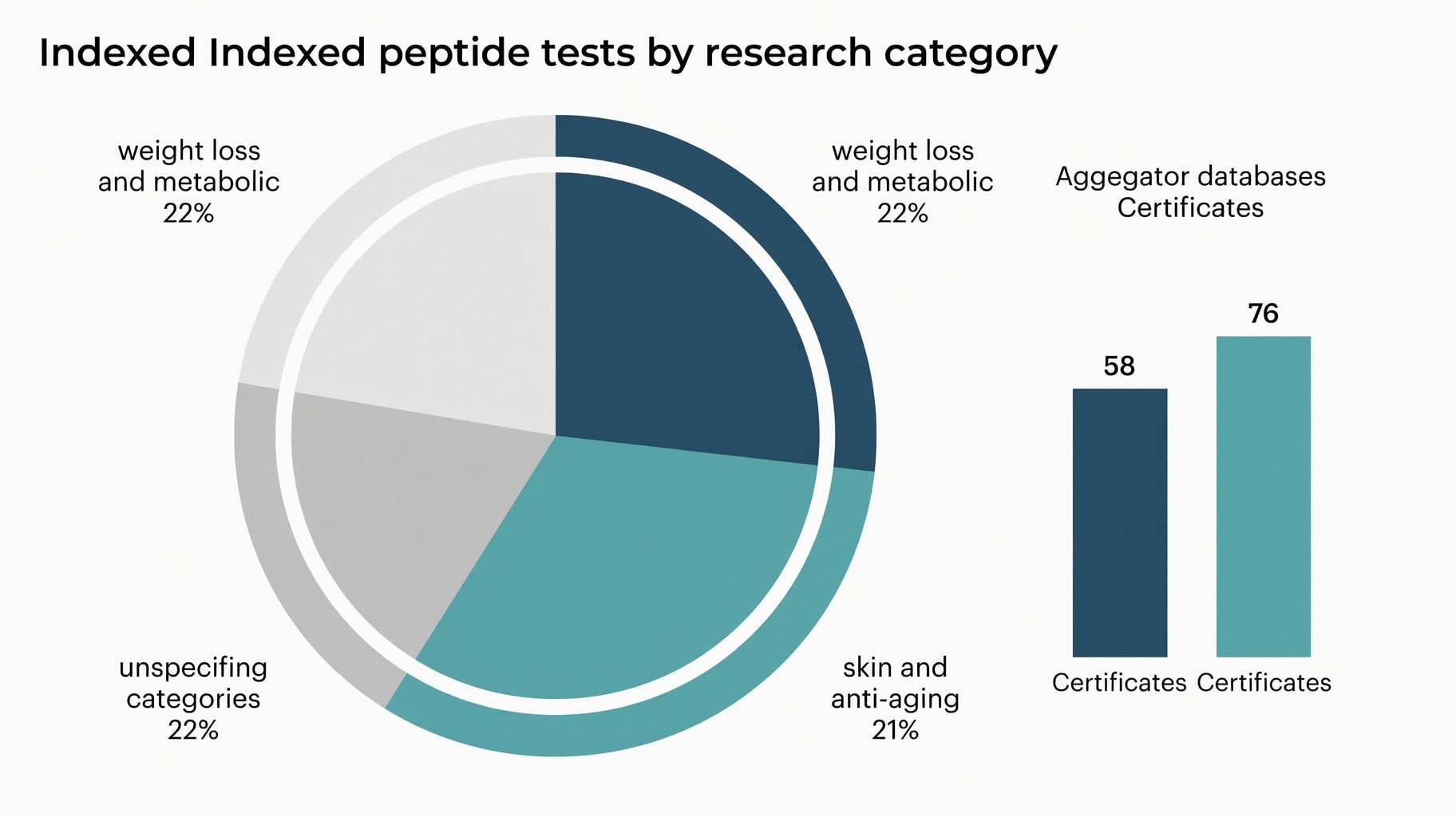
Figure 1: Distribution of indexed Analytical Formulations Inc. peptide purity tests by therapeutic category across third-party databases.
Disclosed Labs indexes certificates from Analytical Formulations Inc for Alpha Peptides and Ion Peptide. The database holds records for 34 distinct compounds Disclosed Labs. Recent entries include a 99.20% DSIP result from Alpha Peptides and a 99.50% Melanotan-II result from Ion Peptide.
Peptigrity reports an average HPLC purity of 99.6% across its indexed records Peptigrity. The discrepancy between the two counts reflects different indexing windows. It does not reflect a regulatory finding.
Peptigrity categorizes the indexed work by research application. Weight loss and metabolic compounds account for 22% of the tests. Skin and anti-aging compounds account for 21%. Immune support and longevity compounds account for 21%. Growth hormone compounds account for 13%. Cognitive enhancement compounds account for 10%. Tissue repair compounds account for 7% Peptigrity.
These distributions describe indexed certificates. They do not describe the total output of the laboratory. A vendor that withholds its full certificate archive cannot have its testing volume independently confirmed.
Claimed Analytical Scope
Analytical Formulations Inc describes its service as precision analytical testing for peptides, pharmaceuticals, and nutraceuticals. The laboratory website lists HPLC, LC-MS, and purity analysis as core methods. Sequence verification, degradation analysis, and stability studies appear as distinct service categories.
Peptigrity specifies HPLC purity verification paired with LC-MS identity confirmation. The profile notes a stated turnaround of three to five days for peptide analysis Peptigrity.
Neither source provides instrument specifications. Neither source publishes column chemistry, gradient conditions, or mass accuracy parameters.
The paired HPLC and LC-MS approach carries procedural weight for buyers evaluating certificate reliability. Chromatographic purity quantifies the dominant peak. Mass spectrometry verifies that the detected species matches the expected sequence. A laboratory offering both methods can produce the two data points that anchor peptide testing documentation.
The multi-category scope also requires scrutiny. A facility that processes pharmaceutical and nutraceutical samples alongside research peptides operates under different method validation expectations for each category. Buyers evaluating a certificate must confirm which category their sample fell under. They must confirm the method was fit for that purpose.
Verification Gaps and Pre-Submission Requirements
The public record contains no accreditation status for Analytical Formulations Inc. No detailed methodology is published. No physical location or pricing appears on the laboratory website.
Peptigrity states this absence directly. Buyers should request these details before submitting samples Peptigrity.
No FDA or EMA record mentioning this entity appears in the supplied discovery records. No enforcement action, administrative stay, or pre-litigation notice involves this laboratory. The absence of an agency record does not confirm compliance. It means the laboratory has not entered the public enforcement record under this name.
Buyers preparing a submission should request four items in writing before shipping material:
- Accreditation status and scope, including any ISO 17025 certificate and the specific methods covered - Instrument specifications and method validation data for the requested analysis - Turnaround commitments and pricing for the specific peptide and test panel - Sample handling and chain of custody procedures
The request must be specific to the compound and matrix. A certificate for a lyophilized single peptide does not transfer to a multi-component formulation. Buyers comparing certificates across vendors should review the methods in our guide to reading a peptide COA.
Regulatory Boundaries and Market Context
Analytical Formulations Inc operates in a market segment that includes contract research organizations and independent analytical laboratories. BOC Sciences advertises peptide quality control covering structure confirmation and impurity detection using LC-MS/MS and NMR. Intertek positions its peptide characterization work around ICH thresholds and GMP release testing.
Analytical Formulations Inc does not publish comparable regulatory language. Its stated methods stop at HPLC purity and LC-MS identity. The laboratory does not claim GMP release testing or regulatory filing support. Buyers requiring those services for an active pharmaceutical ingredient must confirm capability directly.
The distinction carries financial and legal consequences. A buyer submitting a sample for research-grade verification needs different method controls than a buyer preparing material for a 503B outsourcing facility. The statutory threshold changes with the intended use. A certificate that satisfies one purpose does not satisfy the other.
Recent market activity shows the same structural requirement. The Verlytix QC platform tied to Lyogenesis and Australia's TGA crackdown on influencer-driven peptide sales both demonstrate that testing claims gain weight only when the underlying method and accreditation are disclosed. Clinical development programs such as the trial in which aleniglipron posts 12 1 weight loss in phase 1b operate under an evidentiary standard defined by regulatory statute.
The third-party indexes provide evidence of testing volume and vendor relationships. They do not replace direct verification. A laboratory that declines to publish accreditation, methodology, or pricing transfers the verification burden onto the buyer. Procurement managers evaluating Analytical Formulations Inc should treat the indexed certificates as evidence of activity. The certificates do not substitute for the written confirmation that a pre-submission review requires.