
The Center for Food Safety and Applied Nutrition prohibits the declaration of protein content on products containing only free amino acids. This administrative determination appears in Chapter IV of the FDA Dietary Supplement Labeling Guide. FDA A manufacturer listing protein grams for a free-form amino acid blend incurs immediate misbranding liability. The rule codifies a biochemical reality into a compliance obligation. Free amino acids lack the peptide bonds that define protein structure.
Statutory Residue Thresholds
Two distinct federal boundaries govern amino acid polymers. The first is the labeling prohibition against declaring protein for non-polymeric ingredients. The second is the drug classification threshold. FDA interpretation of Public Health Service Act § 351 defines a protein as an amino acid polymer containing greater than 40 residues. Superpower This specific numeric value does not appear in the statutory text. It exists solely as an agency interpretive line.
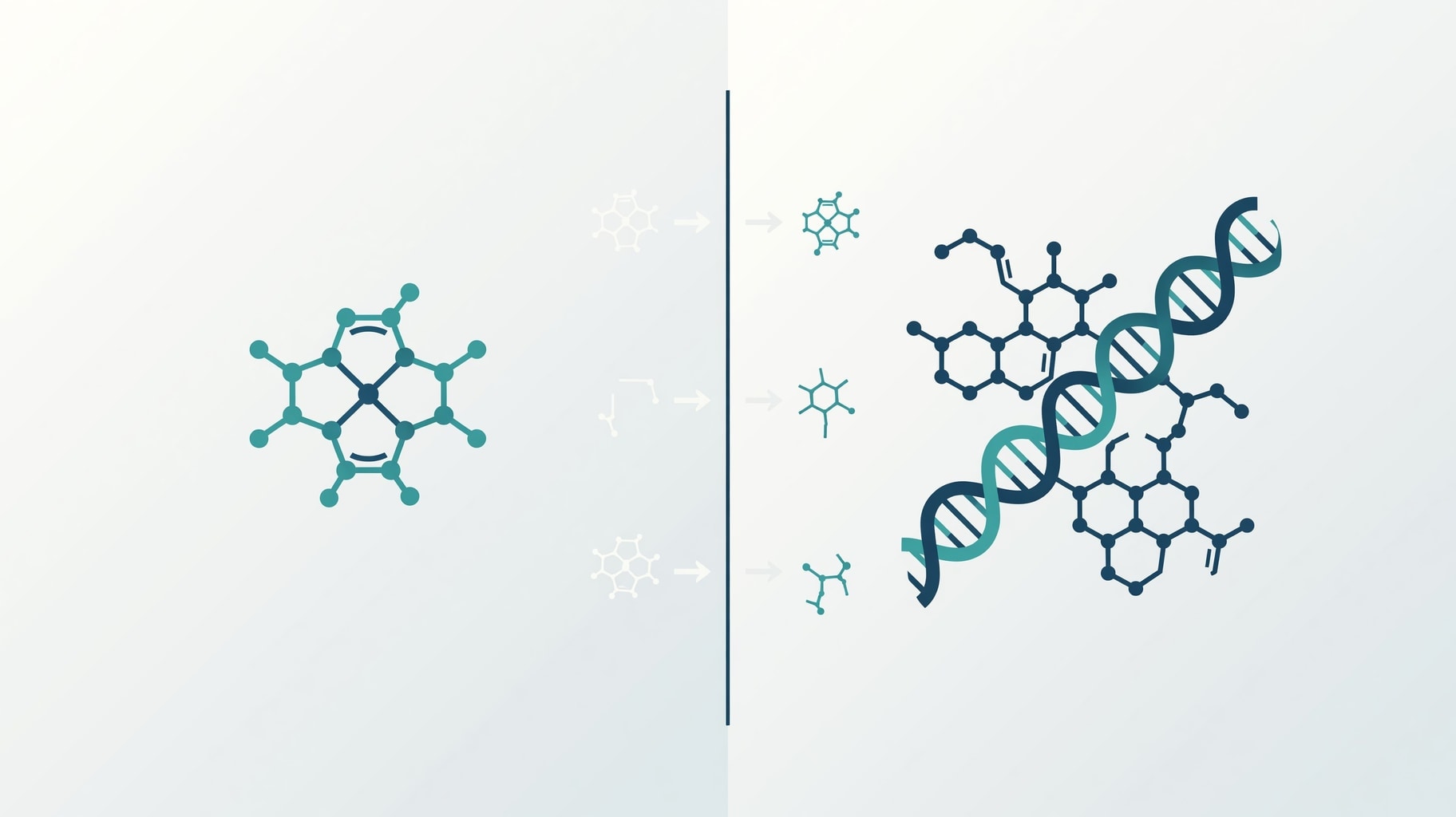
Figure 1: Regulatory and biochemical distinctions between free amino acids and peptide/protein polymers under FDA labeling and biologics rules.
This threshold determines the regulatory approval pathway. Polymers with 40 or fewer residues generally proceed through peptide drug channels. Polymers exceeding 40 residues require a Biologics License Application under PHSA § 351. Superpower Insulin contains 51 amino acid residues. It falls on the biologic side of this administrative boundary despite frequent characterization as a peptide hormone. Superpower The distinction is legal rather than purely biological. Congress defined the category without specifying a residue count.
The agency established the operational metric to manage review jurisdiction.
Structural Folding Requirements
Cleveland Clinic defines proteins as amino acid chains whose specific sequence dictates three-dimensional folding and biological function. Cleveland Clinic Polymerization alone does not constitute a protein. An unfolded polypeptide chain lacks functional activity until side chain interactions drive conformational stability. Cleveland Clinic These intramolecular forces determine whether a linear chain functions as a biologically active macromolecule or remains an inert polymer.
Biochemistry recognizes no fixed residue count where a peptide becomes a protein. The transition depends on structural maturity rather than length. Regulatory frameworks impose artificial numeric boundaries for administrative convenience. The FDA 40-residue threshold serves as a jurisdictional trigger. It separates entities based on manufacturing complexity and statutory authority. Functional proteins require both sufficient length and correct folding. Free amino acids possess neither characteristic.
They exist as discrete metabolic substrates without sequence information or higher-order structure. Understanding what are amino acids clarifies why monomers cannot substitute for folded polymers in regulatory or functional contexts.
Labeling and Nitrogen Accounting
Medtrition identifies the specific compliance consequence of this structural divergence. Free amino acids contribute to total nitrogen load but cannot be declared as protein on nutrition panels. Medtrition Manufacturers may not sum individual amino acid masses to calculate protein content. The FDA explicitly forbids this substitution. FDA Nitrogen accounting methods treat these entities as chemically distinct.
A protein product contributes to daily protein intake requirements. A free amino acid supplement does not satisfy this nutritional parameter regardless of nitrogen content. Sports Medicine Weekly The labeling prohibition prevents manufacturers from conflating metabolic substrates with complete macronutrients. This distinction protects consumers from misrepresentations of nutritional equivalence. Formulators must maintain separate declarations for free amino acids and intact proteins. The amino acid chart provides reference data for identifying individual monomer properties within these constraints.
Absorption Kinetics Versus Classification
Free amino acids enter systemic circulation without enzymatic hydrolysis. Cambrooke notes that free-form amino acids absorb rapidly and simultaneously. Protein vs. Amino Acids | Cambrooke Intact proteins require gastric and intestinal proteolysis before absorption. This kinetic difference influences formulation strategy but not regulatory status.
Mercy Fitness Center cites research showing essential amino acids can stimulate muscle protein synthesis more rapidly than whey protein. Mercy Fitness Center Faster absorption does not alter classification. A free amino acid product remains a dietary supplement subject to labeling restrictions regardless of its pharmacokinetic profile. The regulatory boundary depends on chemical structure rather than biological response. Synthesis stimulation is a physiological outcome. Protein classification is an administrative determination based on covalent bonding and residue count.
Operational Classification Framework
The following table translates biochemical structure into regulatory consequences for manufacturers and researchers.
| Entity Type | Structural Definition | Regulatory Classification | Compliance Consequence | | :--- | :--- | :--- | :--- | | Free Amino Acid | Discrete monomer, no peptide bonds | Dietary Supplement Ingredient | No protein declaration permitted FDA | | Peptide | Polymer ≤40 residues | Synthetic Drug (FD&C Act) | New Drug Application pathway | | Protein Biologic | Polymer >40 residues, folded structure | Biological Product (PHSA § 351) | Biologics License Application Superpower |
This framework operationalizes the distinction for compliance and development decisions. Products lacking peptide bonds cannot declare protein. Polymers are routed by residue count. The 40-residue threshold applies specifically to drug classification under PHSA § 351. Nutritional labeling rules apply independently to all food and supplement products. Manufacturers must evaluate both boundaries when formulating amino acid-containing products.