
FDA Panel Backs 6 Compounded Peptides as Agency Moves to Exclude GLP-1s
The FDA's Pharmacy Compounding Advisory Committee voted on July 23 and 24, 2026, to recommend six wellness peptides for the 503A Bulks List, overriding the agency's own career scientists who had advised against every compound on the docket. Three months later, that advisory recommendation sits unacted upon, while a parallel FDA proposal to permanently exclude semaglutide, tirzepatide, and liraglutide from the 503B Bulks List advances through the rulemaking pipeline. Two peptide categories. Two opposite regulatory trajectories. One agency.
The vote margins were razor-thin. BPC-157, KPV, and TB-500 each cleared on an identical 8-to-6 split with one abstention. MOTS-c passed 7-to-5 with two abstentions. Epitalon and semax followed on day two. Only emideltide failed, losing 6-to-7, as reported by Pharmacy Times. FDA scientists had reviewed the evidence for all seven peptides and recommended against each one, citing absent human safety data, unresolved immunogenicity concerns, and impurity risks. The panel overruled them across the board.
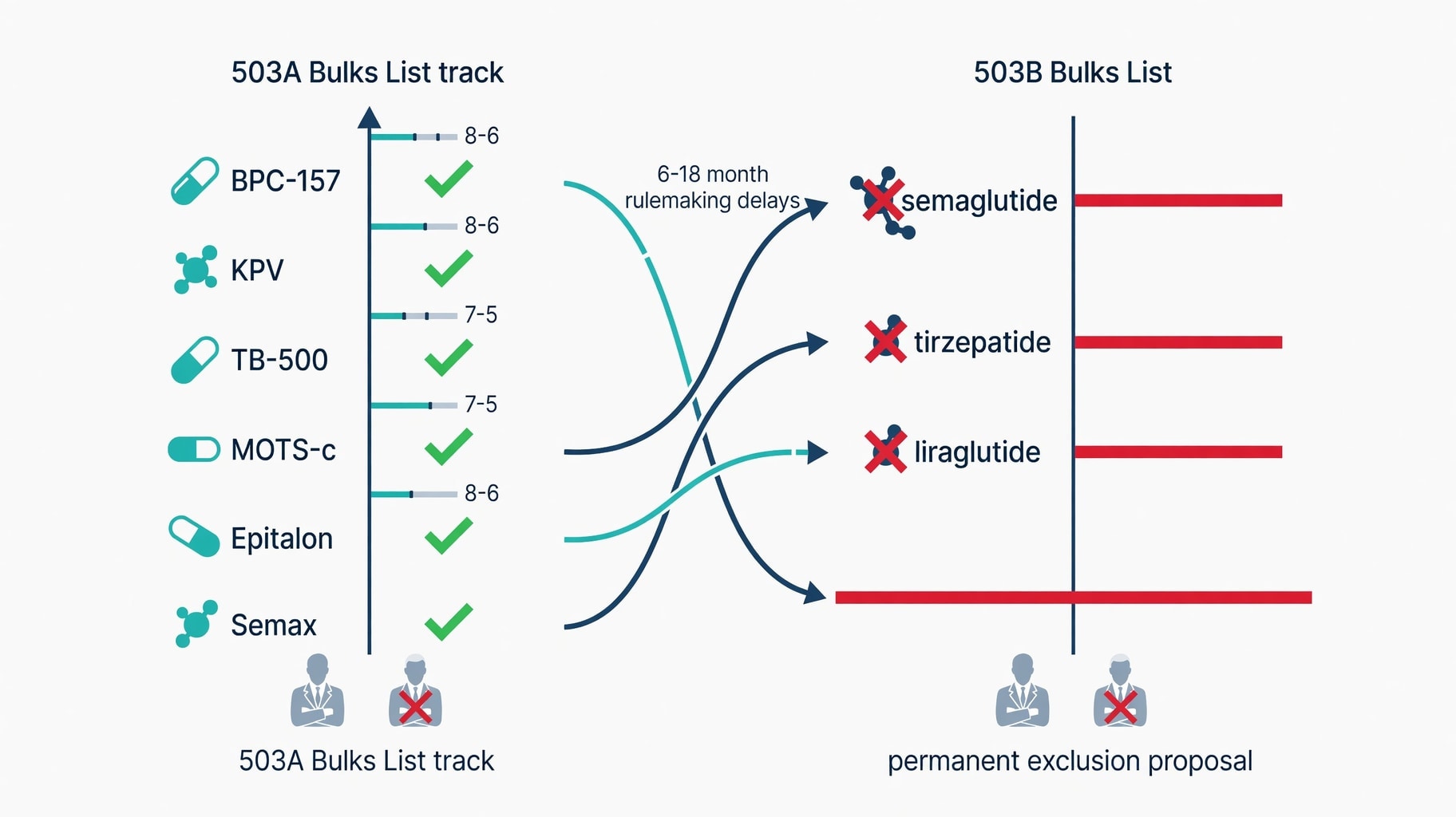
Figure 1: Divergent FDA regulatory pathways for 503A wellness peptides versus 503B GLP-1 compounds following the July 2026 PCAC votes.
What makes this moment consequential is not the vote itself. It is the regulatory architecture splitting in two directions at once. The six peptides enter a protracted rulemaking process that typically requires six to eighteen months of notice-and-comment before any compounding pharmacy can legally prepare them. The GLP-1 exclusion, proposed by the FDA on April 30, 2026, would close the last legal pathway for large-scale compounding of semaglutide, tirzepatide, and liraglutide by outsourcing facilities. For compounders navigating both tracks, the compliance math has never been more asymmetric.
A Vote Against the Agency's Own Science
The PCAC convened at the FDA's White Oak campus in Silver Spring, Maryland, to evaluate whether these peptides belonged on the roster of substances that state-licensed pharmacies may compound under Section 503A of the Food, Drug, and Cosmetic Act. That list governs patient-specific preparations. Inclusion does not constitute FDA approval. No validated indication, no standardized dosing, no established safety profile attaches to a 503A listing.
Yet FDA scientists told the panel the available evidence consisted largely of animal studies and in-vitro work, with no human exposure data for the proposed routes of administration, according to reporting by NPR. The advisory committee nonetheless voted to recommend six of seven. The reconstituted panel included eight new members, several with reported financial ties to peptide-related businesses, a composition that drew the label the 'grifter' panel from critics and prompted a Genetic Literature Project analysis questioning whether the vote "legitimizes the cure-all peptides craze."
The recommendations are not binding. HHS Secretary Robert F. Kennedy Jr. retains final authority over whether the FDA accepts them, as noted by Politico's coverage of the proceedings. A positive vote starts rulemaking. It does not change what is legal today.
Meanwhile, the commercial reality on the ground has outpaced the regulatory one. Wellness entrepreneur Gary Brecka sells a BPC-157 nasal spray blend for $375 and a one-month supply of patches for $575 on his own website, products with no approved indication and no established safety profile, according to AJMC's reporting on the reversal. The fda panel's narrow vote leaves bpc-157 and semax in regulatory limbo, caught between a favorable advisory signal and the absence of any enforceable federal standard.
Two Lists, Two Futures
The GLP-1 side of the ledger tells a different story. The FDA's April 30 proposal would exclude semaglutide, tirzepatide, and liraglutide from the 503B Bulks List on a finding of no clinical need, as detailed by Pharmacy Times. Outsourcing facilities, which operate under Section 503B and compound larger batches under greater federal oversight, would lose the legal basis to prepare these agents from bulk substances. The reasoning is straightforward: shortages that once justified compounded copies have resolved. Branded Ozempic, Wegovy, Mounjaro, and Zepbound are commercially available.
The agency cited more than 455 adverse-event reports tied to compounded semaglutide as part of its justification. If finalized, the exclusion would block bulk compounding of these agents regardless of future supply disruptions, unless the drugs return to the FDA's shortage list. Legal challenges by the Outsourcing Facilities Association already failed at the district-court level, according to an Orrick analysis of the rulemaking.
Patient-specific 503A compounding of GLP-1s remains technically legal under a documented medical-necessity standard. But the enforcement environment has tightened sharply. The FDA slaps 30 telehealth firms with warning letters over compounded glp-1 marketing, targeting mass-marketing models that lack individualized prescriber relationships. More than forty state attorneys general sent a coordinated letter to the FDA in 2025 raising contamination and safety concerns, and states including New York, California, and Connecticut have imposed their own restrictions.
What Remains Unresolved
Neither track is settled. The six peptides recommended by the PCAC require formal FDA acceptance and notice-and-comment rulemaking before any 503A pharmacy can legally compound them. No Federal Register notice has been issued for that rulemaking as of this reporting. The GLP-1 exclusion remains a proposal subject to public comment and potential revision.
The enforcement picture is a fifty-state patchwork. Florida and Texas remain permissive. Other states have moved to ban or inspect. Federal inaction at the 503A level has left state attorneys general filling the gap, as AJMC's reporting documents.
For pharmacy compliance officers, the immediate task is not to reposition inventory but to track two separate rulemaking dockets moving at different speeds. The peptide side may take eighteen months or longer. The GLP-1 side could finalize within months. The FDA has not indicated when it will act on the PCAC's recommendations, and Kennedy's office has not publicly stated whether the advisory vote will be accepted, modified, or set aside. The next concrete signal will be a Federal Register filing. Until then, nothing at the compounding counter has changed.