
Jara MacDermott, a 50-year-old weightlifter from Kensington, Maryland, accepted a two-year period of ineligibility on August 20, 2026, after testing positive for three prohibited substances at the United Masters Weightlifting Federation World Championships. USADA's sanction record confirms the violation involved canrenone, a metabolite of the diuretic spironolactone, along with amphetamine and testosterone or its metabolites, detected in a urine sample collected December 4, 2025.
The announcement did not name a peptide. MacDermott's substances fall under traditional anabolic and stimulant categories on the WADA Prohibited List, and USADA determined she had taken them at the direction of a physician without obtaining a valid Therapeutic Use Exemption. Her ineligibility period runs from December 23, 2025, the date of her provisional suspension.
What makes the timing conspicuous is what USADA published eight days earlier. On August 12, the agency posted a pointed warning on X stating that BPC-157 is prohibited under the WADA Prohibited List and is "making its way into wellness and anti-aging treatments," linking to an explainer titled "Experimental Peptide Creates Risk for Athletes". That social-media push, paired with a wave of ultrarunning admissions and a narrow FDA advisory vote on compounding access for the same peptide, has compressed the distance between recovery-culture marketing and anti-doping enforcement. MacDermott's case did not involve BPC-157, but it landed squarely inside the enforcement window USADA is constructing around peptides.
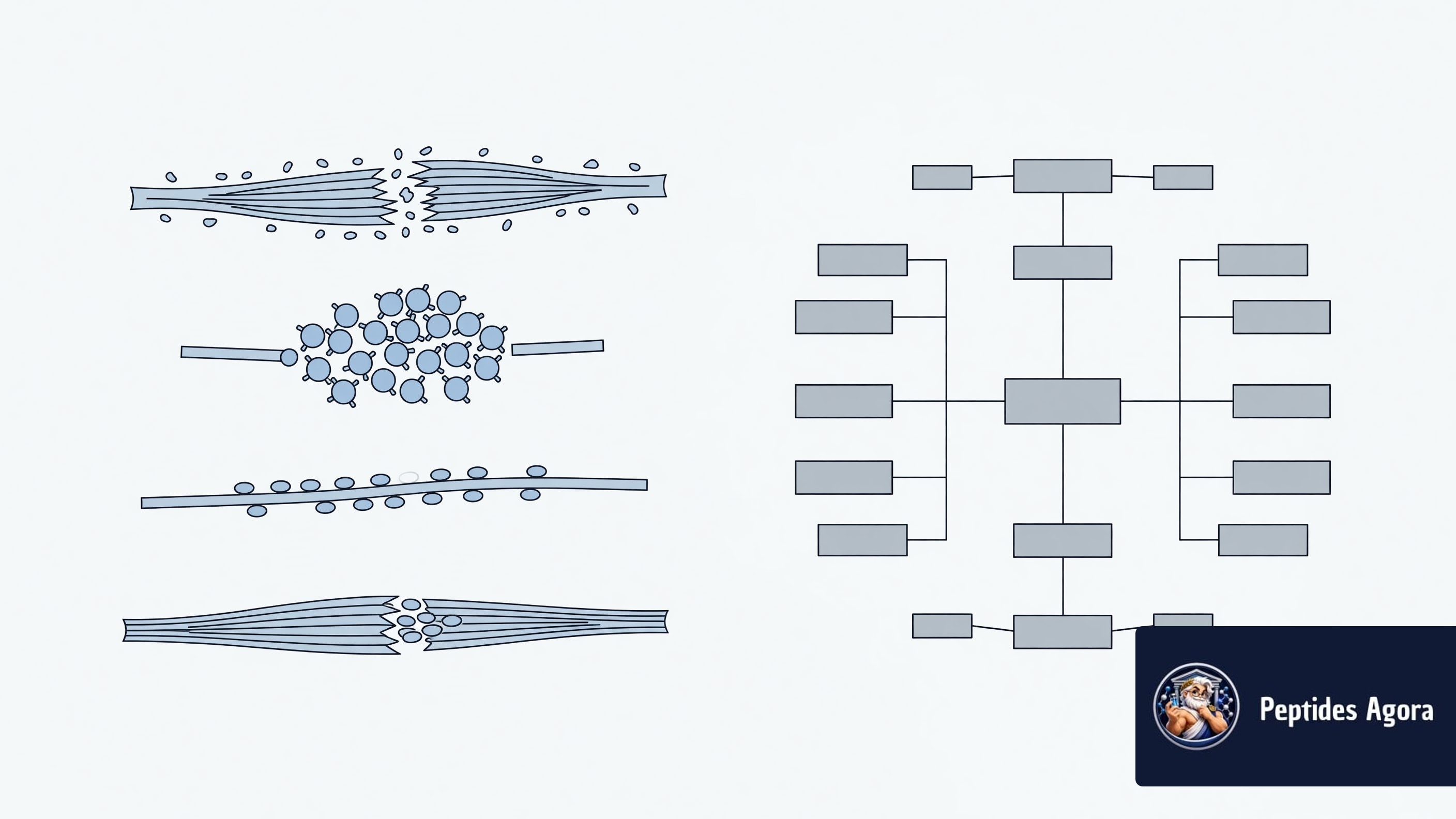
Figure 1: Cellular tissue recovery mechanism and anti-doping regulatory analysis for USADA Suspends Weightlifter for Peptide Use, Igniting 'Peptide Ban' Debate in Elite Sports.
The Ultrarunning Admissions That Forced the Conversation
The peptide debate in endurance sport crystallized in July 2026 when Utah ultrarunner Mike McKnight publicly admitted taking BPC-157 while trying to avoid back surgery. McKnight, a 200-mile specialist who set a course record at the Arizona Monster 300, first disclosed the use on a podcast and then posted a longer statement to Instagram, as reported by Canadian Running Magazine. He said he later learned the peptide appeared on WADA's prohibited list.
The admission followed a parallel disclosure by Cam Hanes, the 58-year-old ultrarunner who ran a 2:39 marathon in Eugene for a 13-minute personal best and publicly confirmed receiving a BPC-157 injection. Elite ultrarunner Sage Canaday subsequently reported Hanes to USADA. McKnight estimated that 95 percent of the response he received was supportive, with athletes and followers describing their own BPC-157 experiences in recovery contexts. When asked how he would advise a coached athlete considering the peptide, McKnight told Canadian Running Magazine he was unsure: "The human side of me would want to tell them my experience and tell them to look into it. But, the safe side of me would want to not say anything at all."
That language, "recovery," "healing," "avoiding surgery," is the vocabulary of online wellness communities and gym forums where peptides circulate as alternatives to orthopedic intervention. Slowtwitch's reporting on the ultra-running controversy noted that BPC-157 is a synthetic pentadecapeptide originally isolated from gastric juice, and that "extremely little is known about the peptide, its benefits, and side effects." The compound sits under WADA's S0 category, Non-Approved Substances, meaning it is prohibited at all times regardless of competition schedule, and no TUE pathway exists for it. The same classification framework governs ghrp peptides and other growth-hormone-releasing compounds that circulate in the same online spaces.
A Wellness Pipeline Meets an Enforcement Apparatus
The regulatory collision sharpened on July 23 and 24, when the FDA's Pharmacy Compounding Advisory Committee voted 8-6 to recommend adding six peptides, including BPC-157, TB-500, KPV, MOTS-c, Epitalon, and Semax, to the Section 503A Bulks List. BBC News reported that the vote represented a win for Health Secretary Robert F. Kennedy Jr., who has called himself a supporter of the compounds, while FDA staff opposed the recommendation citing insufficient safety and efficacy data. Panel member Elizabeth Rebello, a pharmacist and anaesthesiologist, voted against BPC-157 "because of the lack of efficacy data" and "safety concerns." The recommendation is advisory; a formal rulemaking process must follow before compounding pharmacies could legally produce the peptides, and the vote does not constitute drug approval.
For athletes subject to the WADA Code, the FDA deliberation changes nothing in the short term. BPC-157 remains a non-approved substance under S0, and USADA's own guidance states the peptide "is not approved for human clinical use, may lead to negative health effects, and could be added to the Prohibited List at any time." That prohibition applies whether the peptide enters an athlete's system through an injection sourced from a compounding pharmacy, a research-chemical vendor, or a wellness clinic. The question of whether peptides are banned by NCAA institutions adds another layer for collegiate athletes who encounter the same marketing.
USADA's sanction records show that peptide violations in weightlifting are not hypothetical. Andrew Vrabel of Chicago received a suspension after admitting out-of-competition peptide use, according to USA Weightlifting's sanctioned-members page. The distinction between MacDermott's traditional-substance violation and Vrabel's peptide admission matters for the record, but both sit in the same testing pipeline that USADA administered at the December 2025 World Championships.
The cultural pipeline runs in the opposite direction. Wellness influencers and longevity clinics have popularized BPC-157 alongside compounds like TB-500, sometimes marketed together as a wolverine stack peptide protocol for tissue repair. CBS News reported that among 24 public speakers at the FDA panel hearing on BPC-157, twenty were doctors, chemists, or peptide-business owners who favored approval, while four scientists urged the committee to keep restrictions in place. NYU Langone's Dr. Rachel Pessah-Pollack told CBS Mornings that BPC-157 has been tested in roughly 30 humans, compared with the hundreds of thousands of patients in GLP-1 trials.
MacDermott's two-year ban will run through December 22, 2027. USADA has not announced any further sanctions connected to the McKnight or Hanes admissions, and the agency's X post on August 12 did not reference a specific pending case. The FDA's compounding recommendation awaits formal rulemaking, and WADA's next Prohibited List update will determine whether S0 language expands to address the growing volume of peptides moving through wellness channels into athlete populations.